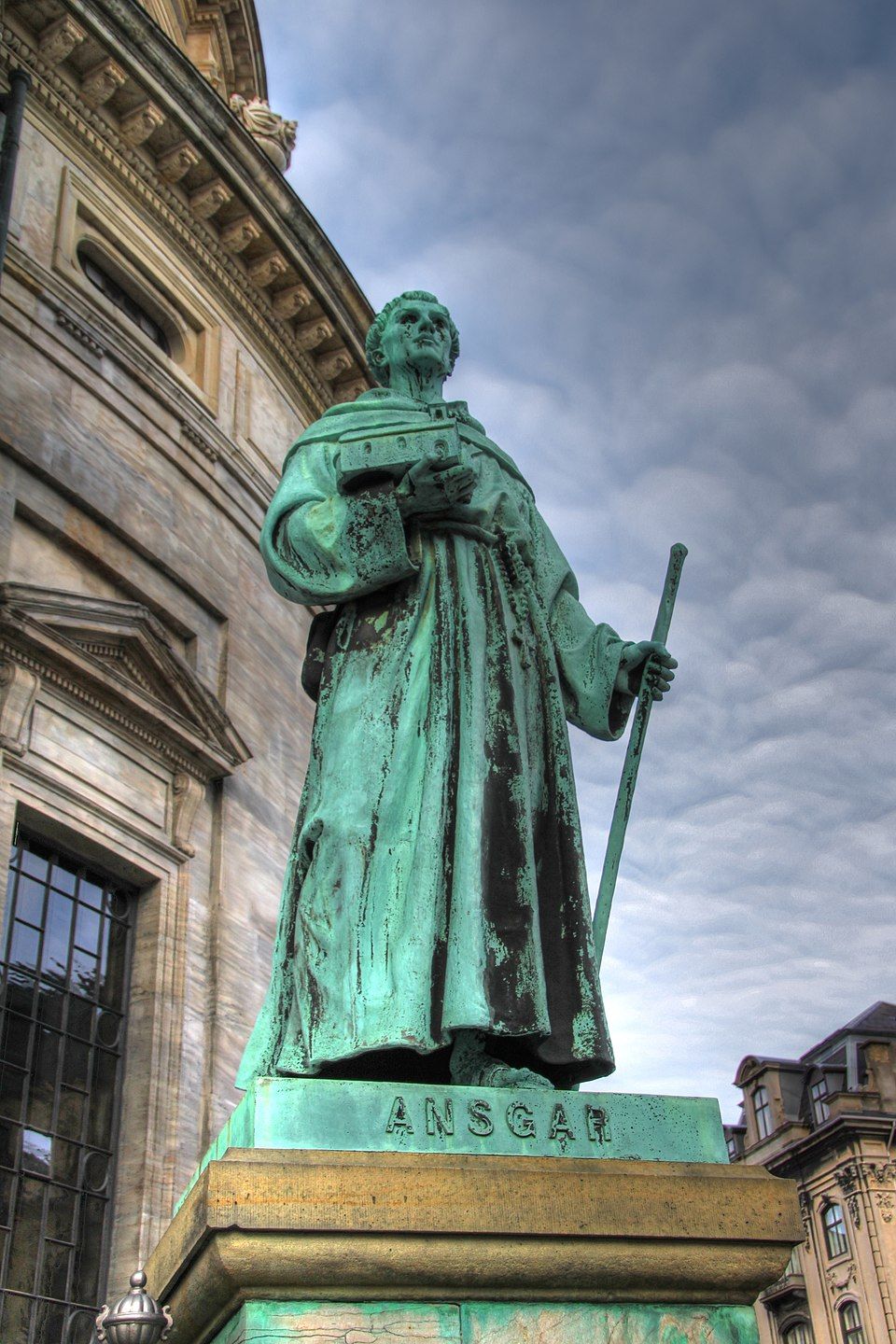
Saint Ansgar - Bishop of Hamburg and Missionary in Denmark and Sweden
Ansgar, known as the 'Apostle of the North,' was a Frankish Benedictine monk who dedicated his life to the evangelization of Scandinavia in the 9th century. Despite challenges such as Viking invasions and pagan setbacks, he founded the first churches in the region and was the first archbishop of Hamburg-Bremen.
Life and Formation
Ansgar was born in 801, near Amiens, in France, to a Saxon noble family, in the year following the coronation of Carolus Magnus as emperor. Educated at the monastic school of Corbie, he became a Benedictine monk at the age of 13. His missionary vocation was awakened by divine visions, including one that called him to martyrdom among barbarian peoples.
In 826, he accompanied the exiled Danish king Harald back to Denmark, beginning his mission in Schleswig (Hedeby and Ribe). Despite the initial enthusiasm, Harald's fall in 827 and the death of his assistant Autbert frustrated the efforts.
Ministry in Sweden and Elevation to Bishop
In 829-830, Ansgar traveled to Sweden at the invitation of King Björn, settling in Birka, where he built the first Christian church in Scandinavia. Despite pirate attacks that left him stripped of his possessions, he converted many and organized a small congregation with the help of a local widow.
Returning in 831, he was appointed abbot of Corvey and bishop of Hamburg in 832, with the approval of Pope Gregory IV, who made him papal legate to Scandinavians and Slavs. He founded a monastery and school in Hamburg. After the destruction of Hamburg by Vikings in 845, he became archbishop of Hamburg-Bremen in 847, with jurisdiction over Denmark, Norway, and Sweden.
Second Missions and Challenges
In 851, he sent missionaries to Sweden and converted the Danish king Haarik II. He returned to Birka in 853-854, under King Olaf, quelling a pagan rebellion and obtaining permission to preach. Despite initial successes, Sweden relapsed into paganism after his departure.
Ansgar worked tirelessly among the Danes and northern Germans, building churches such as in Sleswick and maintaining relations with local kings. His biography, written by Rimbert, highlights visions that sustained him: 'Go and proclaim the work of God to the nations'.
Legacy
He died on 3 February 865, in Bremen. Canonized immediately by Rimbert and approved by Pope Nicholas I, he is patron of Scandinavia. He symbolizes perseverance in difficult missions, planting seeds that others later harvested, such as Sigfrid in the 11th century. Honored as apostle of Sweden and a historical link between Anglicans and the Church of Sweden.
'Keep your Church from discouragement in the days of small things, knowing that, when you begin a good work, you will bring it to a faithful completion.' (Prayer in his honor)
- First to preach the Gospel in Sweden.
- Founded the missionary diocese of Hamburg-Bremen.
- Faced Vikings, pirates, and paganism with unwavering faith.
Birth
Date: 801
Place: Near Amiens, France
Death
Date: 3 February 865
Place: Bremen, Germany
Liturgical Feast
3 February
Patronage
- Denmark
- Scandinavia
- Hamburg
- Bremen
Recommended Books
To deepen your knowledge about this person, we recommend:
- Life of Ansgar - Rimbert (9th century)
Contemporary biography written by his successor, an essential primary source for facts about his missionary life.
Sources and References
This article was prepared based on the following sources:
- Anskar, Archbishop of Hamburg, Missionary to Denmark and Sweden, 865 (website)
Detailed biography with emphasis on visions and missions in Denmark and Sweden. - Saint Ansgar | Encyclopaedia Britannica - Encyclopaedia Britannica (website)
Authoritative encyclopedia entry with precise chronology of missions and titles. - Ansgário de Hamburgo – Wikipédia (website)
Portuguese article with details about missions in Birka and Scandinavian kings. - Anskar, Bishop and Missionary To Denmark and Sweden (website)
Anglican biography highlighting his role as apostle of Scandinavia. - Ansgar - Vikingeskibsmuseet (website)
Museum perspective on the first church in Birka.