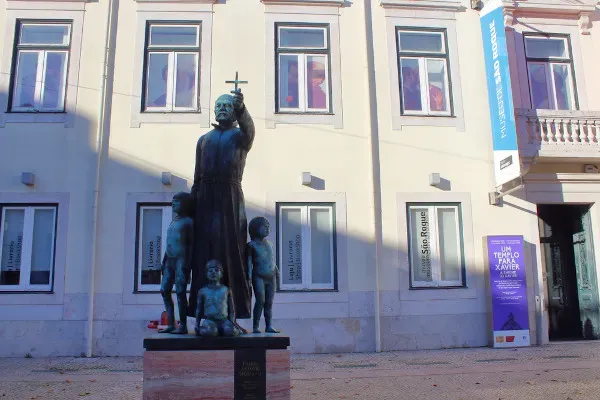
Father Antônio Vieira - Jesuit, Orator, and Prophetic Witness for Freedom
Father Antônio Vieira (1608-1697) was a Portuguese Jesuit, philosopher, writer, and one of the greatest orators of his time. He dedicated his life to defending Indigenous peoples and Jews, fighting against slavery and religious persecution, and became a prophetic voice for freedom and justice in the 17th century.
Life and Education
Antônio Vieira was born on February 6, 1608, in Lisbon, Portugal, the son of Cristóvão Vieira, an official of the Portuguese crown. His family was sent to Salvador, Bahia, where Vieira spent his childhood and youth, growing up in a context of political and religious transformations in Portuguese America.
In 1624, during the Dutch invasion of Salvador, the young Vieira took refuge in the interior of the captaincy, where he began his missionary vocation. A year later, in 1625, he took vows of chastity, poverty, and obedience, formally entering the Society of Jesus in 1623. His intellectual formation was remarkably broad: in addition to Theology, he studied Logic, Physics, Metaphysics, Mathematics, and Economics, becoming versed in seven Indigenous languages.
In 1627, he moved to the Jesuit College of Olinda, where he began teaching Rhetoric, a discipline in which he stood out for his brilliance. His talents as a writer were recognized early: in 1626, still a novice, he was tasked with writing and translating into Latin the Annual Letter, the annual report of the Province of the Society of Jesus sent to the Superior General in Rome.
In 1633, he delivered his first public sermon at the Church of Our Lady of Conception of the Shore in Salvador, entitled Mary, Mystical Rose. The following year, on December 10, 1634, he was ordained a priest, celebrating his first Mass on December 13 of the same year.
Ministry and Prophetic Work
Preacher and Defender of the Indigenous Peoples
After his ordination, Vieira began his career as a preacher in the villages of Bahia, where he started his struggle against the enslavement of Native peoples. In 1653, he delivered the famous Sermon for the First Sunday of Lent in São Luís do Maranhão, in which he tried to convince plantation owners to free their Indigenous slaves. His preaching was based on the belief that Portuguese colonization had the mission of converting those peoples to the Catholic faith, not enslaving them.
Between 1658 and 1660, Vieira wrote the Regulation of the Villages, better known as the Vieira Visit, a document that established guidelines for religious missions in the Amazon. This regulation, which remained in force for more than a century with few changes, dealt with the daily life of missionary work, covering everything from methods of indoctrination to the arrangement of living spaces for missionaries and Indigenous people. Its rules were not limited to the Jesuits and were also followed by other religious orders.
Traveling along the Pará and Tocantins rivers, Vieira carried out numerous conversions to Christianity and European civilization among Indigenous tribes. However, after two years of relentless work and obstacles imposed by the colonial authorities, he understood that Indigenous peoples needed to be removed from the governors' jurisdiction to prevent their exploitation. In June 1654, he traveled to Lisbon to plead the Indigenous cause, obtaining in April 1655 a series of royal decrees placing the missions under the control of the Society of Jesus, with Vieira as superior, and forbidding the enslavement of Native people except in specific cases.
Preacher at the Portuguese Court
Around 1640, at the request of King Dom João IV, Vieira returned to Portugal at a crucial moment: after six decades of subordination to the Spanish throne, Portuguese rule was restored with the Portuguese Restoration, which ended the Iberian Union. His sermons, full of patriotism and eloquence, won over the king and Queen D. Luísa. In 1641, at the age of 33, he became the Royal Preacher of the Royal Chapel, a trusted man of the monarch, and received several diplomatic missions in Holland, France, and Italy.
During this period, Vieira became involved in court intrigues, particularly in defending the new Christians (converted Jews) before the Inquisition, which had expelled them from Portugal. His defense of religious freedom and his closeness to Jews aroused suspicion among the inquisitors.
Return to Brazil and Persecution
He returned to Brazil in 1652-1653, dedicating himself to preaching and catechesis in Maranhão. His struggle against the slave-owning interests of the colonists provoked violent reactions: in 1661, plantation owners and slaveholders, greatly angered by his ideals of liberation, expelled him from Maranhão. The Jesuits were also expelled from the region that same year.
Imprisonment by the Inquisition and Rehabilitation
Vieira returned to Lisbon, where his vision of religious freedom continued to trouble the Inquisition. Accused of associating with Jews and practicing heresy, he was arrested by the inquisitors in 1666. He remained imprisoned between 1666 and 1667, facing the tribunal of the Holy Inquisition. However, six months later, the sentence was annulled. With the regency of D. Pedro, future D. Pedro II of Portugal, he regained favor and his freedom.
Pardoned, he traveled to Rome, where he was absolved by the Pope in 1675. In that city, he continued his work as a preacher and denounced the abuses of the Portuguese Inquisition.
Legacy and Death
Father Antônio Vieira died on July 18, 1697, in Salvador, Bahia, at the age of 89, leaving an extraordinary legacy as a defender of human rights, religious freedom, and the dignity of Indigenous peoples.
Vieira is considered the emperor of the Portuguese language and one of the greatest Portuguese orators of all time. His sermons drew thousands of people, and his eloquence was legendary. In addition to being an orator, he was a philosopher, diplomat, writer, and missionary, dedicating his life to defending the marginalized and persecuted.
His work represents a prophetic witness against injustice, slavery, and religious persecution, anticipating values of freedom and equality that would only be widely recognized centuries later. Vieira remains an emblematic figure of Christian resistance to oppression and a symbol of the struggle for human dignity.
Birth
Date: February 6, 1608
Place: Lisbon, Portugal
Death
Date: July 18, 1697
Place: Salvador, Bahia, Brazil
Patronage
- Indigenous peoples
- Religious freedom
- Defense of the persecuted
Written Works
- Sermon for the First Sunday of Lent (1653) - Sermon delivered in São Luís do Maranhão, in which Vieira tried to convince plantation owners to free their Indigenous slaves
- Regulation of the Villages (Vieira Visit) (1658-1660) - Document that established the guidelines for religious missions in the Amazon, addressing indoctrination and the organization of missionary villages
- Annual Letter (1626) - Annual report of the works of the Province of the Society of Jesus, which Vieira wrote and translated into Latin
Recommended Books
To deepen your knowledge about this person, we recommend:
- Father Antônio Vieira: Orator, Philosopher, and Missionary - Various authors
Academic studies on Vieira's life and work, available in institutions such as the Instituto Humanitas Unisinos
Sources and References
This article was prepared based on the following sources:
- Antônio Vieira – Biographical Notes - Instituto Humanitas Unisinos (website)
Academic source with verified biographical information about Vieira's birth, death, education, and main life events - António Vieira – Wikipedia - Wikipedia (website)
Encyclopedia with a detailed chronology, precise dates of ordination, sermons, and main works - Father Antônio Vieira - Toda Matéria - Toda Matéria (website)
Educational article about Vieira's life, work, and legacy as a defender of Indigenous peoples and Jews - Biography of Father Antônio Vieira - eBiografia - eBiografia (website)
Biography focused on sermons, his role at the Portuguese court, and imprisonment by the Inquisition - Father Antônio Vieira: biography, works, quotes - Brasil Escola - Brasil Escola (website)
Educational article about his education, career as a preacher, defense of enslaved people, and persecution by the Inquisition - António Vieira - Wikipedia (English) - Wikipedia (website)
English source with information about missions in the Amazon and royal decrees of 1654-1655 - Father António Vieira, the emperor of the Portuguese language - RTP Ensina (website)
Article about Vieira's importance as an orator and his influence on the Portuguese language