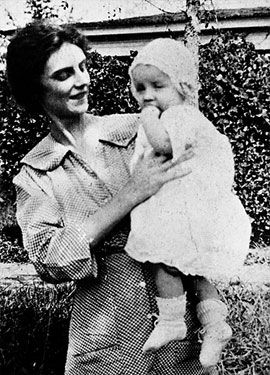
Billy Graham - The Evangelist Who Preached to Billions of People
William Franklin Graham Jr., known as Billy Graham, was an American evangelist ordained by the Southern Baptist Church who became one of the most prominent Christian figures of the 20th century, preaching the Gospel to more than 215 million people in his lifetime through evangelistic crusades in more than 185 countries.
Life and Formation
William Franklin Graham Jr., better known as Billy Graham, was born on November 7, 1918 in Charlotte, North Carolina, into a deeply religious family that valued the Christian faith. Although he was raised in a devout, churchgoing environment, Billy Graham did not make a personal commitment to Christ until shortly before turning 16.
In 1934, at age 16, during a revival meeting led by evangelist Mordecai Ham, Graham experienced a transformative religious experience and made his "decision for Christ". This moment marked the beginning of his spiritual journey, which would last more than seven decades. After his conversion, Graham was brought by his family to the Association of Reformed Presbyterian Churches.
His education included studies at the Florida Bible Institute and later a degree in anthropology from Wheaton College. These formative years were crucial in preparing Graham for his future evangelistic ministry.
First Steps in Ministry
After his ordination in 1939 at Peniel Baptist Church in Palatka, Florida, Graham began his pastoral work. He served as pastor of United Gospel Tabernacle in Wheaton, Illinois (1941-1943) and later of The Village Church of Western Springs in Western Springs, Illinois (1943-1945).
After a brief period as a pastor, Graham decided to become an itinerant evangelist. In 1945, he joined the staff of Youth for Christ, a non-denominational youth- and military-focused evangelistic organization. As the organization’s first full-time evangelist, Graham preached in 47 U.S. states during his first year. During this period, he traveled extensively across the United States and Europe in the immediate postwar years, making his first trip abroad in 1946.
From 1947 to 1952, Graham also served as president of Northwestern Schools in Minneapolis, Minnesota, combining his educational responsibilities with his evangelistic work.
Rise to International Prominence
The turning point in Billy Graham’s career came in 1949 during an evangelistic crusade in Los Angeles. Originally scheduled to last three weeks, the meeting ran for eight weeks. Night after night, crowds overflowed from a huge tent that became known as the "Canvas Cathedral". Media coverage was massive, with major newspapers and magazines featuring the story, and almost overnight, Billy Graham became a household name across the country.
Graham pioneered the use of new media technologies for evangelism. He began broadcasting his sermons on the radio through a Christian program called "Songs in the Night". Later, he founded and hosted "The Hour of Decision", a weekly program that was initially broadcast by ABC to 150 stations, reaching a peak of 1,200 stations across America.
In 1950, Graham founded the Billy Graham Evangelistic Association (BGEA), an organization dedicated to world evangelism, training, and outreach ministries. This was a crucial step in the professionalization and expansion of his ministry.
A 12-week crusade in London in 1954 brought Graham international recognition, and a 16-week crusade in New York in 1957 confirmed his position as one of the leading Christian evangelists in history. During this period in New York, Graham also invited Martin Luther King Jr. to preach jointly at a revival, demonstrating his commitment to civil rights advocacy.
Ministry and Evangelistic Work
Throughout his career, which spanned more than six decades, Billy Graham held more than 400 crusades, missions, and evangelistic meetings in more than 185 countries and territories. He preached the Gospel of Jesus Christ to approximately 215 million people in live audiences.
According to his team, more than 3.2 million people responded to the invitation at Billy Graham Crusades to "accept Jesus Christ as their personal Savior". His lifetime audience, including radio and television broadcasts, likely exceeded billions of people. As a result of his crusades, Graham preached the Gospel to more people, live and in person, than anyone else in the history of Christianity.
Graham was an advocate for civil rights and worked for racial reconciliation within the Christian community. His willingness to work with leaders like Martin Luther King Jr. demonstrated his commitment to social justice, although he faced criticism from some quarters for being considered too liberal.
Media and Communication Innovation
Graham was a visionary in using communications technology to spread his Christian message. In addition to radio and television, he was one of the pioneers of satellite evangelism. Beginning in 1989, a series of satellite crusades extended his preaching to live audiences in more than 185 countries and territories, reaching from remote tribal villages to world capitals.
In addition to his radio and television programs, Graham was a cofounder of Christianity Today, published the magazine Decision, and wrote the syndicated newspaper column "My Answer". Over time, he also embraced the Internet as a tool for proclaiming the good news of Christ, demonstrating his adaptability to technological change.
Relationship with Presidents and Political Influence
Graham maintained friendships with numerous U.S. presidents, which allowed him to exert significant influence on the country’s politics. His access to political leaders and his ability to shape the worldviews of millions of people made him a figure of great importance not only religiously, but also culturally and politically.
A Time magazine reporter nicknamed him "the Pope of American Protestantism", reflecting his unique and influential position in the American religious landscape.
Legacy and Final Years
Billy Graham ended his public career with a preaching mission in Queens, New York, in June 2005. After his retirement, he remained a respected and influential figure in evangelical Christianity.
Graham died on February 21, 2018, in Montreat, North Carolina, at the age of 99. His death marked the end of an era in Christian evangelicalism, leaving a lasting legacy that continues to influence contemporary evangelical Christianity.
Billy Graham’s impact on the history of Christianity is immeasurable. He helped shape the worldview of a vast number of people from different backgrounds, leading them to find a relationship between the Bible and contemporary secular perspectives. His dedication to the Gospel, his innovation in communication, and his commitment to social justice made him one of the most important religious figures of the 20th century.
Birth
Date: November 7, 1918
Place: Charlotte, North Carolina, United States
Death
Date: February 21, 2018
Place: Montreat, North Carolina, United States
Written Works
- Information not available in search results - Although Graham wrote several books, the specific titles were not detailed in the available search results
Recommended Books
To deepen your knowledge of this person, we recommend:
- Information not available in search results
No specific book recommendations about Billy Graham were found in the search results
Sources and References
This article was prepared based on the following sources:
- Billy Graham - Wikipedia (website)
Comprehensive article on Billy Graham’s life, career, and legacy with detailed information about his crusades and impact - Billy Graham | Biography, Evangelistic Association, & Facts | Britannica (website)
Reliable Britannica biography with information about his life, career, and significant events - Billy Graham - Sermons, Books & Death - Biography (website)
Detailed biographical profile covering his career as an evangelist and his media impact - Biography - Wheaton College, IL (website)
Biography from Wheaton College, the institution where Graham studied, with information about his education and career - Biography - Billy Graham Memorial (website)
Official Billy Graham Memorial source with verified information about his life and ministry - Biography: Billy Graham - Samaritan's Purse (website)
Biography from Samaritan's Purse with a detailed timeline of his career and ministerial roles - Biografia de Billy Graham - eBiografia (website)
Biography in Portuguese with information about his life, career, and religious influence - ¿Quién era Billy Graham? | GotQuestions.org/Espanol (website)
Spanish-language article about Billy Graham with information about his life, ministry, and legacy