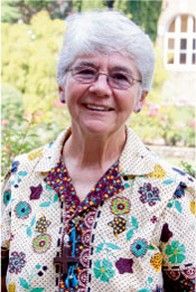
Sister Dorothy Stang - Religious Woman and Martyr of Charity in the Amazon in 2005
Dorothy Mae Stang, known as Sister Dorothy, was a Brazilian naturalized American Catholic missionary who dedicated more than 30 years to defending the poor, rural workers, and the Amazon rainforest. Murdered in 2005 by loggers and land grabbers, her death resonated internationally as a symbol of the struggle for social justice and sustainability.
Life and Education
Dorothy Mae Stang was born on June 7, 1931, in Dayton, Ohio, in the United States, the fourth of nine children in a Catholic family of Irish-German origin. At 17, she decided to pursue religious life, joining the Congregation of the Sisters of Notre Dame de Namur, whose main mission is volunteer work with underserved communities.
Before coming to Brazil, she spent eight years studying and teaching in the United States, making her perpetual vows of poverty, chastity, and obedience in the 1950s. Her formation included preparation for apostolic work in poor regions, aligned with the Catholic Church's preferential option for the poor.
Arrival in Brazil and Early Ministry
In 1966, Sister Dorothy arrived in Brazil accompanied by other women religious from the congregation, beginning her ministry in Coroatá, Maranhão. There, she focused on generating jobs and income through reforestation in degraded areas projects, together with rural workers.
In the 1970s, during the military dictatorship, she moved to the Amazon, working in the Xingu and Transamazonian regions. A member of the Pastoral Land Commission (CPT) of the CNBB since its founding, she followed the struggle of peasants against major road, agribusiness, and logging projects.
Work Across Multiple States
Her trajectory spanned seven Brazilian states: Amazonas, Pará, Tocantins, Maranhão, Piauí, Ceará, and Paraíba. As a popular educator in the Base Ecclesial Communities (CEBs), she promoted dialogue with peasant, political, and religious leaders to resolve land conflicts.
Work in the Amazon and the PDS Esperança
From 1982 onward, she settled in Anapu, Pará, defending small farmers against land grabbers, loggers, and large landowners. She implemented the Sustainable Development Project (PDS) Esperança, a settlement model that generated income through selective timber harvesting, agroecology, reforestation, and environmental education, without destroying the forest.
"The poorest among the poor", as she referred to rural workers, were the focus of her charity. She faced constant threats but maintained an intense agenda in defense of just agrarian reform and the balance between production and environmental preservation.
Martyrdom and Legacy
On February 12, 2005, at age 73, Sister Dorothy was shot dead in an ambush in Anapu, ordered by ranchers and loggers. The crime, which shocked the world, led to five convictions, but only one person remained in closed custody years later.
Her body was buried in Anapu, the region she chose to defend. A naturalized Brazilian, she received an OAB-PA human rights award in 2004. Her death broadened the global debate on land exploitation in the Amazon, inspiring activists, especially Indigenous women and members of local communities.
The struggle of Dorothy Stang reflects the leading role of women in defending land and forest, promoting sustainable development as a viable alternative.
Her legacy includes the strengthening of projects such as PDS Esperança and international visibility for agrarian conflicts, consolidating her as a martyr of charity in the Amazon.
Birth
Date: June 7, 1931
Place: Dayton, Ohio, United States
Death
Date: February 12, 2005
Place: Anapu, Pará, Brazil
Sources and References
This article was prepared based on the following sources:
- Who was Sister Dorothy Stang? (website)
Detailed biography about her life, work in PDS Esperança, and legacy in the Amazon. - Dorothy Stang – Wikipedia (website)
Encyclopedic entry with biographical data, work in the CPT, and murder. - Who was Dorothy Stang? (website)
Activist trajectory, defense of communities, and sustainable development model. - Biography of Sister Dorothy (website)
Focus on pastoral ministry and reforestation projects on the Transamazonian highway. - Death of Dorothy Stang marks 20 years (website)
History of the murder, agrarian context, and work in the CPT. - Sister Dorothy Stang is shot dead in PA (website)
Details about PDS Esperança and the crime ordered by loggers.