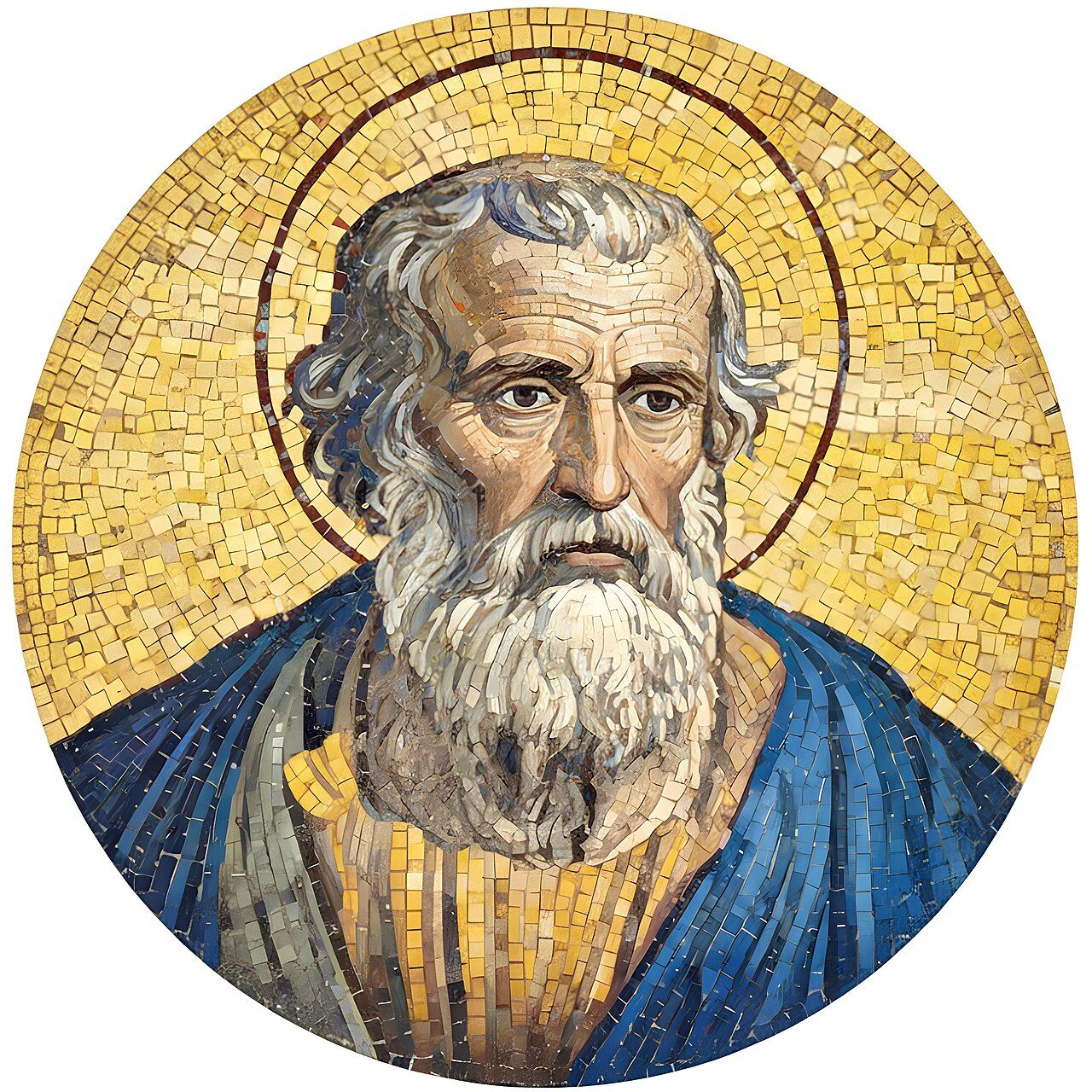
Saint Fabian - Pope and Martyr of the Early Church (236-250)
Fabian was the twentieth pope of the Catholic Church, elected miraculously in 236 and martyred in 250 during Emperor Decius's persecution. Originating from a family of Roman farmers, he implemented important administrative reforms in the Church that lasted for centuries.
Life and Formation
Fabian was born in Rome around the year 200 into a family of Christian farmers. He was a layman, meaning he was not a priest, but he had deep Christian faith and a reputation for virtue among Roman Christians. His humble origin and simple life as a farmer would not prevent him from reaching the Church's highest office.
Miraculous Election as Pope
Fabian's election as pope occurred in an extraordinary way. When the assembly of Roman Christians gathered to decide on the succession of Pope Anterus, the members were divided and could not reach a consensus on who should be the next pontiff. At that critical moment, according to historical accounts, a white dove, a symbol of the Holy Spirit, descended from heaven and landed on Fabian's head, as he had happened to arrive at the place. The Christians present interpreted this sign as a divine manifestation, and unanimously named him the new pope.
Fabian was ordained simultaneously as deacon, presbyter, and bishop on the same day, January 10, 236, becoming the twentieth successor of Saint Peter in the Chair of Rome. After his consecration, he went to the tomb of Saint Peter to pray, strengthening his bond with apostolic tradition.
Ministry and Pastoral Work
During his pontificate of 14 years, Fabian led with great integrity and wisdom. His early period was marked by relative peace for Christians in the Roman Empire, allowing him to implement important structural reforms in the Church.
Administrative Reforms
Taking advantage of the period of peace, Fabian carried out a new administrative division of the ecclesiastical regions, reorganizing the Church's structure in such a way that these divisions would remain in force for many centuries. In addition, he built structures over the Christian cemeteries, consolidating places of worship and veneration of the martyrs.
Missionary Expansion
Fabian is credited with being responsible for the first expedition of missionaries to Gaul (present-day France and Belgium), expanding the Christian presence beyond Italian borders. This initiative marked an important step in the evangelization of Western Europe.
Ecclesiastical Authority
His authority as pope was recognized and respected. He exercised ecclesiastical discipline by deposing Bishop Privatus, who served in Africa, demonstrating his ability to maintain order and orthodoxy in the early Church.
Relations with the Roman Empire
During Fabian's pontificate, the Roman Empire was undergoing severe political upheaval. Several emperors succeeded one another, often through assassinations: Maximinus Thrax, the two Gordians, Philip the Arab, and finally Decius. According to tradition, Fabian would have baptized Philip the Arab, who is considered the first Christian Roman emperor, although he was later assassinated by Decius.
Persecution by Decius and Martyrdom
The emperor Decius, facing serious problems in his rule as Roman territories shrank due to constant rebellions, decided to blame the Christians for the Empire's troubles. He then unleashed a fierce persecution against the entire Christian Church, marking the seventh great persecution of Christians.
According to Saint Cyprian, bishop of Carthage, Emperor Decius himself admired Fabian's competence and is said to have declared:
"I would rather have a rival in the Empire than a bishop like Fabian in Rome."This statement shows the recognition, even by the persecuting emperor, of the pope's importance and influence.
Faced with persecution, many Christians of Rome fled to the East, seeking refuge in the religious communities of the deserts, which offered greater protection. This exodus marked the beginning of eremitic life among the anchorites, better known as the Desert Fathers. However, Fabian remained in his post, did not renounce his faith, and courageously faced trial before the emperor.
Imprisoned and brought before Decius, Fabian steadfastly upheld his Christian faith during the proceedings. Condemned to death, he was beheaded on January 20, 250, winning the palm of martyrdom. His body was buried in the Catacomb of Saint Callixtus, where his epitaph remained as a witness to his faith.
Legacy and Veneration
After Fabian's martyrdom, the pontificate remained vacant for 14 months due to Decius's violent persecution, which had imprisoned all possible successors. His successor was Pope Cornelius.
Fabian is venerated as a saint and martyr of the Catholic Church. His liturgical feast is celebrated on January 20, together with Saint Sebastian. He was especially admired in the East as a great miracle-working saint. His reputation was so high that even the Christian philosopher Origen addressed a treatise to him in his defense against accusations of heresy, as recorded by Eusebius in his Ecclesiastical History.
The administrative reforms implemented by Fabian in the structure of the early Church demonstrate his long-term vision and leadership ability, leaving a lasting legacy that influenced ecclesiastical organization for centuries. His courageous death during Decius's persecution established him as an example of Christian fidelity and readiness for the supreme sacrifice for the faith.
Birth
Date: c. 200
Place: Rome
Death
Date: January 20, 250
Place: Rome
Liturgical Feast
January 20
Patronage
- Potters
- Tinsmiths
Recommended Books
To deepen your knowledge about this person, we recommend:
- Ecclesiastical History - Eusebius of Caesarea (c. 325)
Fundamental work that documents Fabian's life and his period as pope, including references to correspondence from Origen and Saint Cyprian
Sources and References
This article was prepared based on the following sources:
- Pope Fabian - Biography - InfoEscola (website)
Detailed biography of Pope Fabian, his reforms, and martyrdom - Saint Fabian - Saint of the Day - Comece o Dia Feliz (website)
Information about the life, miraculous election, and martyrdom of Saint Fabian - Saint Fabian [or Fabião] pope - Brasil Escola (website)
Academic biography with information about his pontificate and Decius's persecution - Saint Fabian - Santinhoz (website)
Information about Fabian's life story and patronage - Pope Fabian – Wikipedia (website)
Encyclopedia with complete biographical data, precise dates, and historical context of Fabian's pontificate - 20/01 - Saint Sebastian, Fabian (pope) - Parish Mother of God (website)
Information about the liturgical feast and context of Decius's persecution