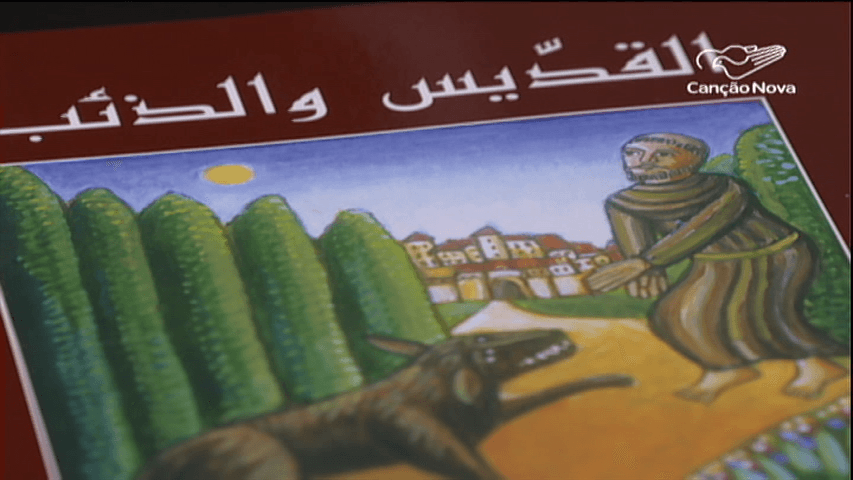
Saint Francis of Assisi - Founder of the Franciscan Order and Reformer of the Church
Saint Francis of Assisi (1181/1182-1226) was an Italian friar, founder of the Franciscan Order, and one of the most influential figures in Christian history. Known for his life of radical poverty, his devotion to the Gospel, and for receiving the stigmata in 1224, Francis transformed medieval spirituality and left a lasting legacy in the Catholic Church.
Life and Formation
Francis of Assisi was born in 1181 or 1182 in the city of Assisi, in the region of Umbria, the son of the wealthy cloth merchant Pietro Bernardone and Pica, a lady of the Provençal nobility. Raised in an environment of comfort and wealth, Francis received his education at the church school of Saint George of Assisi and grew up with great aspirations for glory and honor.
In his youth, Francis was an outgoing and ambitious young man, with a desire to achieve dignity and prestige. Around 1198, he took part in the uprising of the citizens of Assisi against the power of Prince Conrad of Urslingen. Later, in 1202, he became involved in the war between Assisi and Perugia, where he was captured at the Battle of Collestrada (also known as Ponte San Giovanni) and remained a prisoner for at least a year. During his captivity, a serious illness led him to rethink his life deeply.
Spiritual Conversion
After his release in 1203, Francis returned to Assisi, but initially went back to his carefree life. Later, in 1204, while preparing to leave for battle once again, he experienced a heavenly vision that would completely transform his existence. In this vision, a heavenly voice urged him to serve the master and not the servant, leading him to abandon his military ambitions for glory.
Francis then embarked on a profound spiritual journey. He met lepers, whom he embraced with compassion, and had a vision of the Crucified One who called him to rebuild the Church. These encounters constituted successive stages in his conversion process. Around 1206, Francis began an austere eremitic life, dedicating himself to rebuilding ruined churches near Assisi.
His decisions caused ongoing tension with his father, who publicly denounced him. In response, Francis expressed his desire to marry Lady Poverty, stripping himself of his clothes before Bishop Guido, symbolizing his radical commitment to evangelical poverty.
Foundation of the Franciscan Order
In 1209, during the feast of Saint Matthias, Francis received a divine revelation at the Porziuncola, a small chapel dedicated to Our Lady of the Angels located about four kilometers from Assisi. This place, which had been abandoned and lay in ruins, became the center of his spiritual life and the cradle of his religious order.
Francis began to attract followers who shared his vision of radical evangelical life. In 1210, when the group already had twelve members, Francis drafted a brief and informal rule based mainly on the evangelical counsels for achieving perfection. This first core of brothers traveled on foot to Rome, singing and praying, to present the rule to Pope Innocent III, who was impressed by that young man of small stature and burning eyes and approved the Rule.
The Order was later definitively confirmed in 1223 by Pope Honorius III. Under Francis's leadership, the Franciscan Order expanded rapidly, and by the time of his death, the brothers had already traveled through much of Europe, the Mediterranean region, and North Africa, even having their first martyrs.
Ministry and Apostolic Work
Francis devoted himself intensely to active Christian ministry, although he spent less than twenty years in this dedication. His approach was marked by the uncontainable joy of being loved and called by the Father, leading him to live by Divine Providence and to give all his possessions to the poor.
In 1219, in the context of the Fifth Crusade (1217-1221), Francis set out for the East, passing through Cyprus, Acre, and Damietta in the Nile delta, where the crusaders were under the command of Duke Leopold VI of Austria. On this journey, he attempted unsuccessfully to convert Muslims to Christianity, demonstrating his missionary zeal.
One of his most significant contributions to the Christian tradition was the creation of the first living nativity scene in 1223, during the Christmas celebration in Greccio. This innovation, which combined theatrical dramatization with religious devotion, became a widely adopted practice in the Church and remains popular to this day.
The Stigmata
In June 1224, Francis took part in his last general chapter of the Order. At the beginning of August, he decided to make a pilgrimage to a remote place called Mount La Verna, located approximately 160 kilometers north of Assisi. He was accompanied by several companions: Leo, Angelo, Illuminato, Rufino, and Masseo.
In September 1224, during a period of forty days of fasting in the mountain hermitage, Francis had a profound mystical vision. He saw Christ in the form of a six-winged Seraph who pierced his hands, feet, and side. In this extraordinary moment, Francis received the stigmata - the marks of Christ's wounds - becoming the first saint in history to receive this mark.
The stigmata were a sign of God's special election, but they involved intense physical suffering. From then on, Francis became increasingly ill, almost blind, and unable to walk without pain. It is said that he could not bear the sunlight during the day or the firelight at night.
Final Years and Death
Despite his delicate state of health, Francis continued visiting towns and villages in Tuscany and Umbria until the end of the summer of 1226. When his condition worsened, he was taken to the bishop's palace in Assisi. At the end of September, when it became clear that his death was imminent, Francis insisted on being taken to the Porziuncola, the place where he had received the gift of the indulgence of Pardon.
On the afternoon of October 3, 1226, at the age of 44 or 45, Francis died. According to accounts, in his final hours he asked the brothers to sing psalms of praise, which he joined. Wanting to die in absolute poverty, he asked to be laid on bare earth, stripped of everything, possessing nothing.
Two years after his death, in 1228, Pope Gregory IX (formerly Cardinal Ugolino of Segni) proclaimed him a saint, officially recognizing his holiness and his extraordinary contribution to the Christian faith.
Legacy and Influence
Saint Francis of Assisi left a deep and lasting legacy in the history of the Catholic Church and Christian spirituality. His emphasis on radical poverty, obedience to the Gospel, and conformity to Christ transformed medieval spirituality.
The Franciscan Order, which he founded, became one of the Church's most influential religious orders, spreading throughout the world and keeping his vision of evangelical life alive to the present day. Francis is venerated as the patron of various causes and is recognized as one of the most important figures in Christian history.
His life exemplifies the transformation possible through genuine conversion, dedication to the Gospel, and radical love for the poor and marginalized. Francis remains an inspiration for Christians of all denominations and for people of goodwill around the world.
Birth
Date: 1181 or 1182
Place: Assisi, Umbria, Holy Roman Empire
Death
Date: October 3, 1226
Place: Assisi, Papal States
Liturgical Feast
October 4
Patronage
- Animals
- Merchants
- Ecology
- Italy
- Poor
- Franciscans
Written Works
- Franciscan Rule (1210 (initial version); 1223 (final confirmed version)) - Brief and informal rule consisting mainly of the evangelical counsels for achieving perfection, approved by Pope Innocent III and confirmed by Honorius III
Recommended Books
To deepen your knowledge about this person, we recommend:
- The Little Flowers of Saint Francis - Unknown author (Franciscan tradition) (14th century (later compilation))
Collection of stories and anecdotes about the life of Saint Francis, including accounts of his last days - Life of Saint Francis - Thomas of Celano (1228-1229)
The first official biography of Saint Francis, written shortly after his canonization
Sources and References
This article was prepared based on the following sources:
- Francisco de Asís - Wikipedia - Wikipedia (website)
Encyclopedia with detailed information on Francis's life, conversion, stigmata, and death - Saint Francis of Assisi - Capuchin Friars Minor - Capuchin Franciscan Order (website)
Official source of the Franciscan Order with information on life, conversion, and legacy - Saint Francis of Assisi - Franciscanos.org - Franciscan Community (website)
Detailed chronology of the main events in Saint Francis's life - Saint Francis of Assisi - Mercaba - Mercaba (website)
Biography with details about childhood, conversion, founding of the Order, and death - Saint Francis of Assisi - Primeros Cristianos - Primeros Cristianos (website)
Information on life, aspirations, conversion, and first living nativity scene - Saint Francis of Assisi - Franciscan Missionaries - Franciscan Missionaries (website)
Information on austere life, the Gospel as guide, and model of life - Saint Francis of Assisi - Sbfranciscans.org - Franciscanos de São Bom (website)
Detailed biography with information on death, stigmata, and the Order's expansion