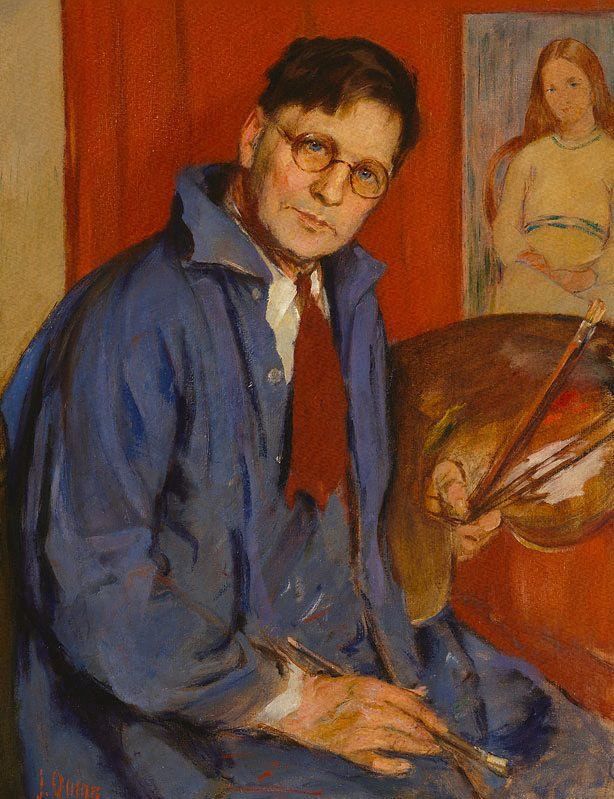
George Bell - Defender of the Confessing Church, Bishop of Chichester and Ecumenist
George Kennedy Allen Bell (1883-1958) was an Anglican theologian and Bishop of Chichester who stood out as a defender of the German Confessing Church during Nazism, a leader of the international ecumenical movement, and a promoter of Christian unity in the 20th century.
Life and Education
George Kennedy Allen Bell was born on 4 February 1883 and became one of the most important voices in the Anglican Church during the 20th century. During his education, he learned much from the Methodists, whose connection between personal faith and social engagement impressed him deeply and served as a model for his vision of the Anglican Church.
Early Ministry and Ecumenical Work
In 1914, Bell was appointed chaplain to the Archbishop of Canterbury, Randall Davidson, a position that marked the beginning of his influence in international and interdenominational relations. During the First World War, he played a crucial role in ensuring that, in 1915, Indian Lutheran missionaries could continue the work of the Leipzig and Goßner missions in Chota Nagpur after the German missionaries were interned.
In addition, he worked for the Order of St John, a trans-confessional organization dedicated to helping war orphans, and collaborated with the Swedish Lutheran archbishop Nathan Söderblom, who became one of his closest lifelong friends. Together, they worked for the exchange of prisoners of war.
Defense of the Confessing Church and Opposition to Nazism
Bell became a central figure in ecclesiastical resistance to Nazism. On 1 June 1934, he signed the Barmen Declaration, the founding manifesto of the Confessing Church, which proclaimed that Christian belief and National Socialism were incompatible and condemned German pro-Nazi Christianity as false doctrine or heresy.
Using his authority as a leader of the Ecumenical Movement and, from 1938, as a Lord Spiritual, Bell influenced British public opinion and the Nazi authorities in Berlin on behalf of those persecuted by the regime. His public support is credited with helping to ensure the survival of Pastor Martin Niemöller, making his imprisonment in Sachsenhausen in February 1938 (and later in Dachau) widely known in the British press, which led Hitler to abandon his plans for execution in 1938.
As early as 1939, Bell stated that the Church should not be merely a spiritual aid to the state, but rather a defender of peaceful international relations and a critic of expulsions, slavery, and the destruction of morality. He published an article in November 1939 asserting that the Church in wartime should not hesitate to criticize retaliatory attacks and the bombing of civilian populations.
Leadership in the Ecumenical Movement
Bell's most lasting legacy is his work as an ecumenist. After the First World War, he took a leading role in promoting the work of the World Council of Churches. Throughout his episcopate, he devoted considerable time to ecumenical projects and the reunion of the churches.
As Bishop of Chichester, Bell developed a significant friendship with Giovanni Montini, Cardinal Archbishop of Milan, who later, as Pope Paul VI, brought the Second Vatican Council to its conclusion. Bell was a supporter of Protestant ecumenism and, after the First World War, hoped for a Europe united by shared Christian values. He called for an Anglo-German alliance as the cornerstone of postwar Europe, in opposition to the Soviet Union, which he saw as a threat to the European family of nations.
Writings and Legacy
Among his writings are a biography of Archbishop Davidson (1935) and several works on Christian unity and ecumenism from an Anglican perspective. Bell died on 3 October 1958, leaving a profound legacy in the international ecumenical movement.
In November 2021, Archbishop Welby announced that a statue of Bell would be erected on the west front of Canterbury Cathedral, recognizing his historical and spiritual importance for the Anglican Church and world Christianity.
Birth
Date: 4 February 1883
Place: United Kingdom
Death
Date: 3 October 1958
Place: United Kingdom
Written Works
- Biography of Archbishop Davidson (1935) - Biographical work on Randall Davidson, his mentor and Archbishop of Canterbury
- Works on Christian Unity and Ecumenism - Various works on ecumenism and the reunion of the churches from an Anglican perspective
Recommended Books
To deepen your knowledge about this person, we recommend:
- The Church and Humanity: The Life and Work of George Bell, 1883-1958 - Andrew Chandler (Editor) (2012)
A comprehensive work on the life and work of George Bell, covering his involvement in the ecumenical movement, support for refugees from dictatorships, and his international reputation
Sources and References
This article was compiled based on the following sources:
- George Bell, Bishop of Chichester and Ecumenist, 1958 (website)
Detailed biographical article on George Bell, his background, ecumenical work, and legacy - George Bell (bishop) - Wikipedia (website)
Encyclopedic article with information about his life, signing of the Barmen Declaration, defense of the Confessing Church, and opposition to Nazism - George Bell, Bishop of Chichester, Ecumenist, Peacemaker, 1958 (website)
Memorial page about George Bell as bishop, ecumenist, and promoter of peace - The Church and Humanity: The Life and Work of George Bell, 1883-1958 - Andrew Chandler (Editor) (book)
A comprehensive academic work on George Bell's life and work, his international reputation, and involvement in the ecumenical movement