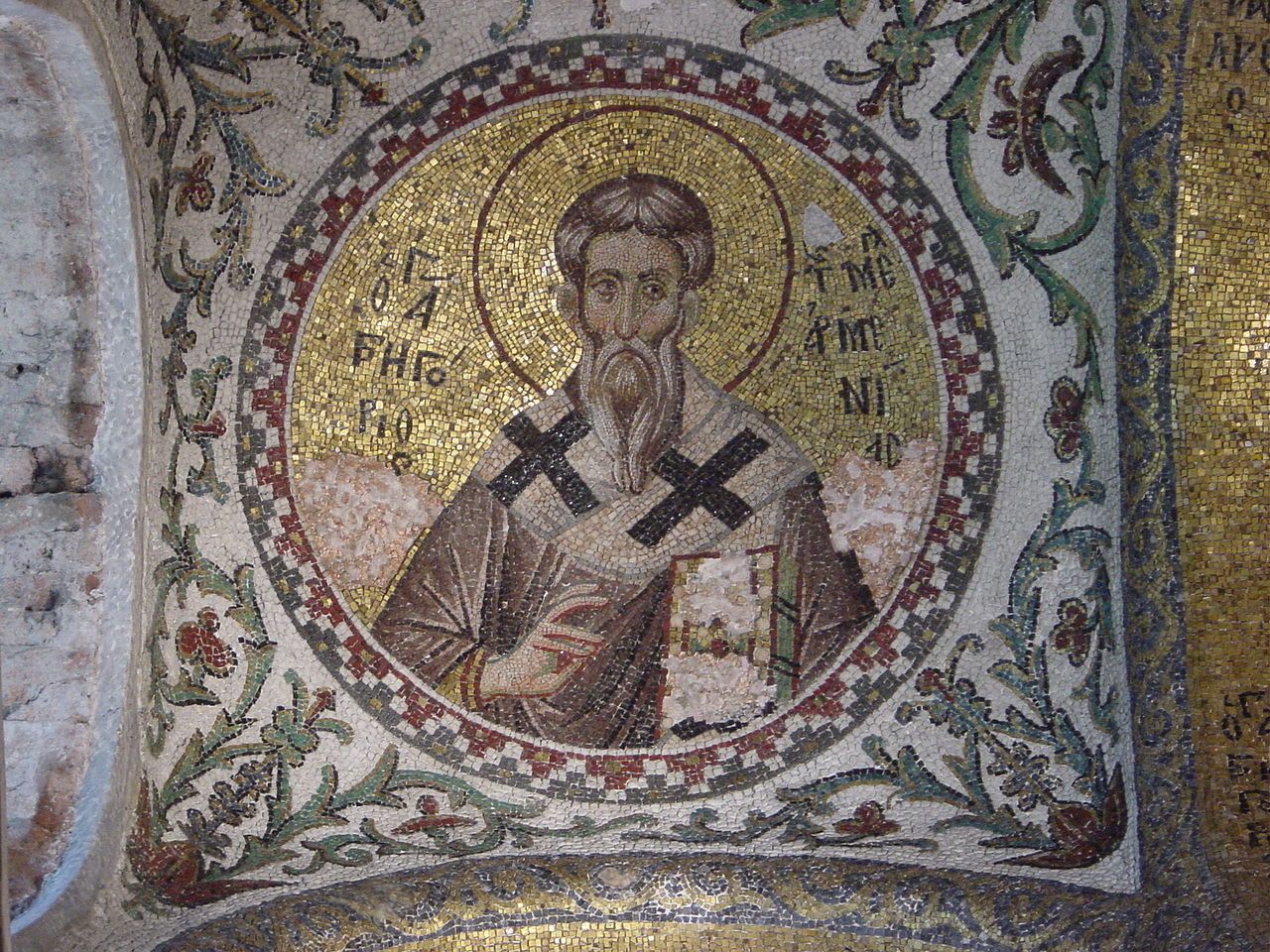
Gregory the Illuminator - Apostle of Armenia and Founder of the Armenian Apostolic Church
Gregory the Illuminator (c. 257 - c. 331) was the founder and first official bishop of the Armenian Apostolic Church. He converted Armenia from Zoroastrianism to Christianity in the early 4th century, making Armenia the first country to adopt Christianity as its official religion in 301 AD.
Life and Formation
Gregory the Illuminator, also known as Grigor Lusavorich, was born around 257 AD in Parthia, a region corresponding to present-day Iran. His father, Anak, was a Parthian noble who assassinated the Arsacid king of Armenia, Khosrov II, at the instigation of the Sasanian king Ardashir I. As a consequence of this crime, Anak was executed by Armenian nobles together with his entire family, leaving Gregory orphaned in early childhood.
Gregory was raised by Christians and received a Christian education, which deeply shaped his faith and religious vocation. He kept his identity and religious creed secret during his early years in Armenia, allowing him to serve at court without being persecuted.
Ministry and Conversion Work
The Conversion of King Tiridates IV
Around 297 AD, Gregory was summoned to attempt to cure King Tiridates IV, who had lost his sanity after being betrayed by the Roman emperor Diocletian, who invaded and conquered much of the territory of the western provinces of Greater Armenia. Gregory placed himself in the king's service without revealing his true identity and Christian faith.
When his Christian identity was discovered, Tiridates IV recognized him as a Christian and ordered his torture. Gregory was denounced as the son of Khosrov II's murderer, and the monarch sentenced him to death, casting him into the bottom of a deep dungeon, where he remained forgotten for 14 years.
Later, Tiridates IV contracted an incurable disease. The monarch's sister, Khosrovidukht, had revelatory dreams indicating that only Gregory, who had been thrown into the dungeon, would be able to heal him. Gregory was freed and, miraculously, cured the king. Touched by Tiridates's faith and healing, the monarch decided to convert to Christianity.
In 301 AD, Gregory baptized Tiridates IV together with the members of his court and the ruling classes. The king issued a decree granting Gregory full rights to carry out the conversion of the entire nation to the Christian faith. In that same year, Armenia became the first country to adopt Christianity as its official religion, a unique historical distinction.
Establishment of the Armenian Apostolic Church
Gregory traveled to Caesarea in Cappadocia, where he was ordained priest and bishop by the metropolitan Leontius of Caesarea, being consecrated as the first katholikos (bishop) of Armenia around 314 AD. Returning to Armenia, he formally began the establishment of the Armenian Apostolic Christian Church.
Tiridates IV granted Gregory up to 15 provinces of territory to establish the Armenian Church. Gregory used two main methods to expand Christianity in Armenia:
- Education: He established schools where children from the pagan priestly class were prepared for the Christian priesthood
- Military Power: He dispatched military units to destroy pagan temples, confiscate their wealth, and use it to finance Christian building projects
Gregory presided over mass baptisms in the Euphrates River and appointed bishops from Armenian noble families. He traveled throughout Armenia, destroying pagan temples and building churches in their place, facing armed resistance from pagan priests and independent feudal principalities.
Succession and Regional Expansion
In 318 AD, Gregory appointed his second son Aristaces as the next archbishop in the line of the Apostolic Church, to stabilize and continue strengthening Christianity not only in Armenia, but also in the Caucasus and Anatolia. He placed one of his grandsons, son of Vertanes, in charge of evangelizing missions to the peoples and tribes throughout the Caucasus region and Albania.
Final Years and Martyrdom
Gregory was martyred by a fanatical mob while preaching in Albania. In his final years, he had withdrawn to a small sanctuary near Mount Sepu, in the district of Daranali in Upper Armenia, where he remained with a small group of monks until his death around 331 AD.
Legacy and Veneration
Gregory the Illuminator is venerated as a saint in the Armenian Apostolic Church and in other Christian churches. The title Illuminator refers to his work of bringing the light of Christ to the Armenian people, representing the passage from the darkness of paganism to the light of Christianity.
He is the patron saint of Armenia and his figure is central to Armenian religious and cultural identity. Armenians celebrate three liturgical feasts dedicated to Gregory, including the commemoration of his entry into the deep pit. His work laid the foundations of the Armenian Apostolic Church, which remains one of the oldest Christian churches in the world.
Gregory's impact transcended Armenia: the adoption of Christianity as the official religion created a religious identity that helped Armenia resist the cultural and political pressure of the Sasanian Empire, which sought to impose Zoroastrianism. At the same time, it brought Armenia closer to the Roman cultural sphere, consolidating its geopolitical position between two great empires.
Birth
Date: c. 257 AD
Place: Parthia (present-day Iran)
Death
Date: c. 331 AD
Place: Mount Sepu, Daranali district, Upper Armenia
Liturgical Feast
September 30 (Armenian Apostolic Church); November 23 (some Western traditions)
Patronage
- Armenia
- Armenian Apostolic Church
Recommended Books
To deepen your knowledge about this person, we recommend:
- History of Saint Gregory the Illuminator, Patron Saint of Armenia - Communications Department of the Armenian Catholic Parish of Saint Gregory the Illuminator of São Paulo
Audiovisual documentary that presents the life and work of Gregory the Illuminator, with emphasis on his conversion of King Tiridates and the Christianization of Armenia
Sources and References
This article was prepared based on the following sources:
- Gregório, o Iluminador – Wikipédia - Wikipedia (website)
Encyclopedic article in Portuguese about Gregory the Illuminator, with information about his life, conversion of Armenia, and legacy - Gregory the Illuminator - Wikipedia - Wikipedia (website)
Encyclopedic article in English with detailed information about Gregory the Illuminator, founder of the Armenian Apostolic Church - Saint Gregory the Illuminator - World History Encyclopedia - World History Encyclopedia (website)
Academic article about Saint Gregory the Illuminator with historical context, evangelization methods, and geopolitical impact - Gregory the Illuminator, Missionary to Armenia, 333 - Commemoration - Daily Office 2019 (website)
Liturgical commemoration page for Gregory the Illuminator with information about his life and work - History of Saint Gregory the Illuminator, Patron Saint of Armenia - YouTube - Communications Department of the Armenian Catholic Parish of Saint Gregory the Illuminator of São Paulo (website)
Audiovisual documentary in Portuguese about the life of Saint Gregory the Illuminator, his imprisonment, release, and work of converting Armenia - The Armenian Church of Saint Gregory the Illuminator - 100 Anos 100 Fatos (website)
Article about the Armenian Church of Saint Gregory the Illuminator in Singapore and Gregory's legacy in the Armenian diaspora