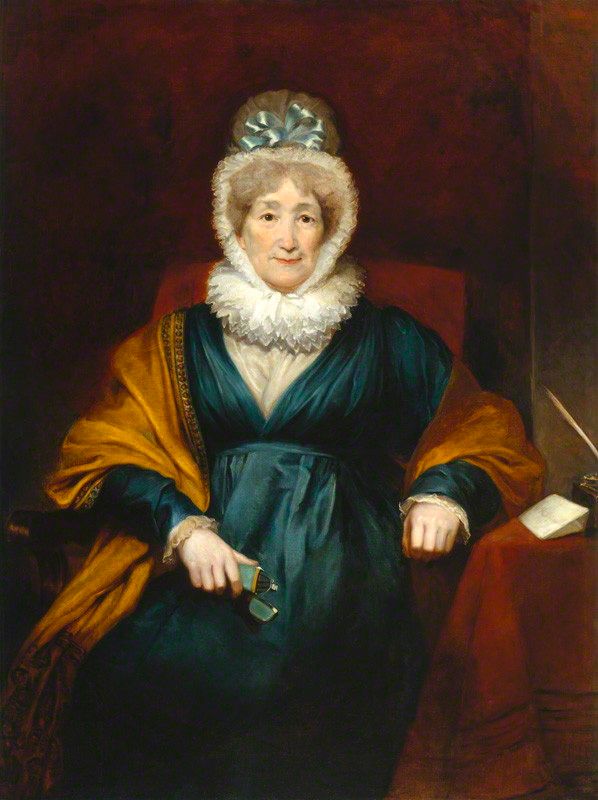
Hannah More - Reformer of Society and Founder of Sunday Schools
Hannah More was an English religious writer, philanthropist, and educator of the 18th and 19th centuries, known for her moral works, opposition to the slave trade, and for establishing Sunday schools for the poor, promoting literacy and Christian catechism.
Early Life and Education
Born on February 2, 1745 in Stapleton, Gloucestershire, near Bristol, England, Hannah More came from a humble family. She was the fourth of five daughters of Jacob More, a private school teacher of French Huguenot origin. From an early age, she showed brilliance in languages and writing, teaching at her father's school in Bristol.
In her youth, Hannah moved in elite literary circles in London, becoming a prominent bluestocking. She wrote plays and poems that were praised by figures such as Samuel Johnson, Joshua Reynolds, and David Garrick. She was briefly engaged to William Turner, but the engagement was broken off.
Conversion and Spiritual Transformation
Always a High Church Anglican Christian, her life changed drastically in 1780 when she read Cardiphonia by John Newton (author of "Amazing Grace"). This reading touched her mind and heart, leading her to a deep evangelical faith. She abandoned writing for the theater and the corrupt cultural life of London, organizing her routine according to the rhythms of biblical piety.
"These writings illuminated my sin, weakness, and the need for the sufficient work of Christ."
This conversion brought her closer to evangelicals such as William Wilberforce and John Newton, shifting her focus to moral and social reform.
Abolitionist Activism and Literary Works
Hannah More joined the fight against the slave trade, publishing the poem Slavery in 1788, which awakened the nation to the humanity of enslaved people. Her friendship with Wilberforce and other abolitionists, such as Granville Sharp and Beilby Porteus, was crucial. She wrote tracts such as Thoughts on the Importance of the Manners of the Great to General Society (1788), defending traditional values against the French Revolution.
In the 1790s, she produced the Cheap Repository Tracts, moral and religious pamphlets distributed to literate poor people, countering radical works such as Rights of Man by Thomas Paine. These pamphlets promoted morality, faith, and civil obedience.
Sunday Schools and Philanthropy
After retiring to a cottage in Somerset, in the Mendips, Hannah and her sisters founded schools for poor children, teaching Christian catechism, Bible reading, and basic skills. These Sunday schools multiplied, combating illiteracy and immorality among the lower classes. Despite opposition from rural neighbors and clergy, who feared a loss of agricultural labor, the schools prospered.
- They taught the Bible and catechism on Sundays.
- They promoted family reading of Scripture.
- Hannah and Patty More traveled on horseback between villages, even in fragile health.
Her work aimed at lasting spiritual reform, not merely material improvement, filling the religious vacuum left by negligent clergy.
Legacy and Death
Hannah More died on September 7, 1833, in Bristol, leaving a legacy as a bridge between the Georgian and Victorian periods. Her Sunday schools influenced the education of the poor in England, and her writings shaped Victorian moralism. Known as "Holy Hannah," she exemplified the transition from the Enlightenment to pietistic evangelicalism.
Her dedication to practical faith inspired missionaries such as David Livingstone and social reformers, emphasizing that true change comes from the Word of God and compassion for the oppressed.
Birth
Date: February 2, 1745
Place: Stapleton, Gloucestershire, England (near Bristol)
Death
Date: September 7, 1833
Place: Bristol, Gloucestershire, England
Written Works
- Slavery (1788) - An abolitionist poem that highlighted the humanity of enslaved people and the horrors of the trade.
- Thoughts on the Importance of the Manners of the Great to General Society (1788) - A tract defending traditional values and morality among the upper classes.
- Cheap Repository Tracts (1790s) - A series of moral and religious pamphlets for literate poor people.
- Sacred Dramas (1782) - Dramatic works with sacred themes, which went through 19 editions.
Recommended Books
To deepen your knowledge of this person, we recommend:
- Hannah More: Abolitionist, Writer, Teacher, Businesswoman - Susan An
A detailed biography highlighting her multifaceted role in evangelical faith and philanthropy.
Sources and References
This article was prepared based on the following sources:
- The Story of Hannah More (website)
A biography focused on her conversion, legacy, and Sunday schools. - Hannah More: Abolitionist, writer, teacher, businesswoman - Susan An (website)
Details on conversion, activism, and schools in the Mendips. - Hannah More | English Writer, Abolitionist, Educator - Britannica (website)
An encyclopedia with precise dates, works, and historical context. - Hannah More - Wikipedia (website)
A comprehensive overview of her life, works, and activism. - Hannah More | Research Starters (website)
A summary of literary and reformist contributions.