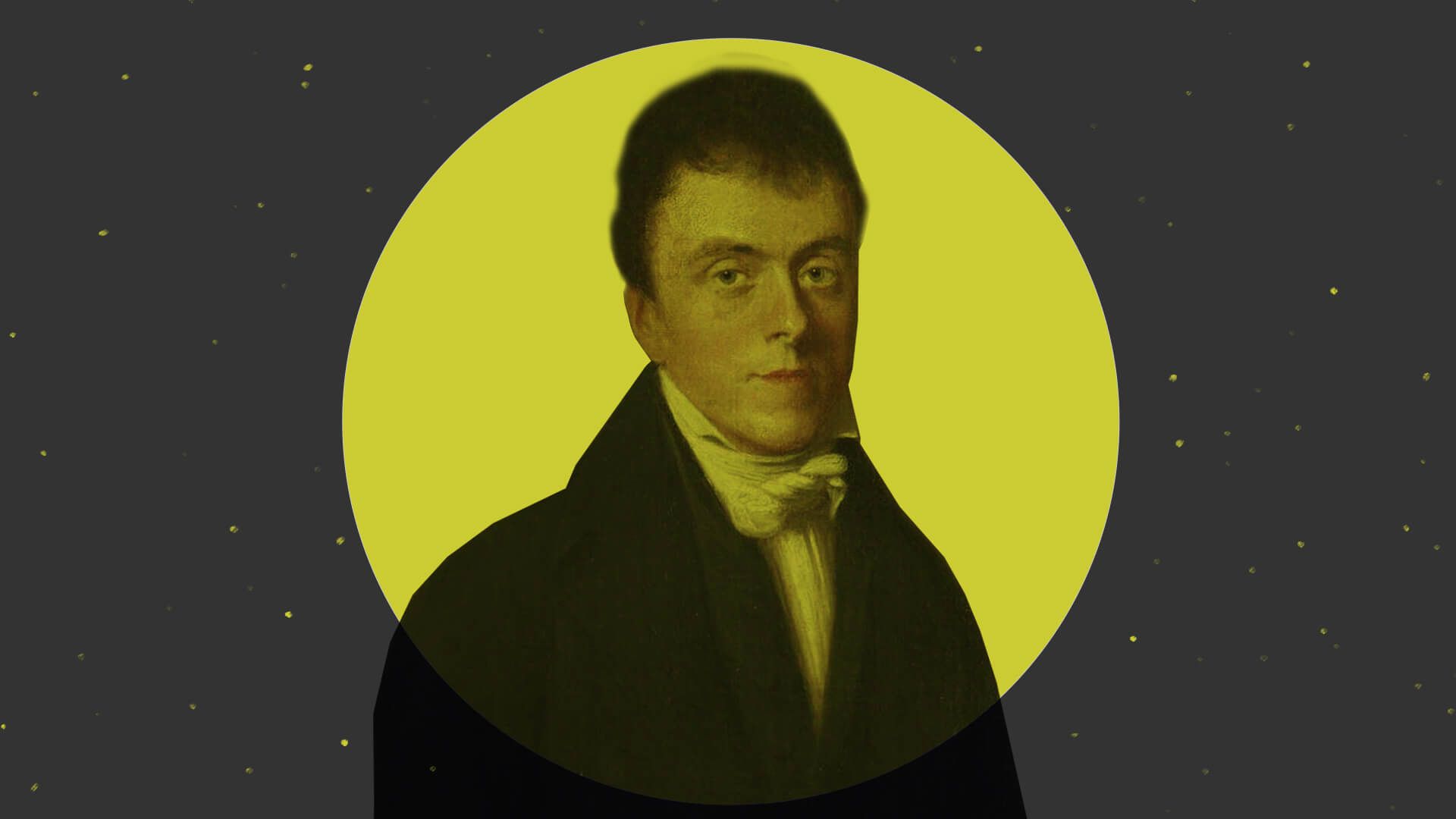
Henry Martyn - Anglican Priest and Pioneering Missionary in India and Persia
Henry Martyn (1781-1812) was an Anglican priest and English missionary who devoted his short life to Bible translation and evangelism in India and Persia, leaving a lasting legacy that inspired generations of missionaries.
Life and Formation
Henry Martyn was born on 18 February 1781 in Truro, Cornwall, England, the son of the chief clerk of a trading house. He was educated at Truro Grammar School and later studied mathematics at St John's College, Cambridge, where he excelled as Senior Wrangler in 1801 and won the Smith's Prize. In 1802, he became a fellow of St. John's College.
His conversion to evangelical Christianity was influenced by his younger sister and by the pastor Charles Simeon of Holy Trinity Church, Cambridge. A chance meeting with Simeon in October 1802, when he heard stories about the missionary work of William Carey in India, changed his life. Later, reading the life of David Brainerd, a Puritan missionary among Native Americans, confirmed his missionary calling. Martyn took a vow of celibacy if necessary to serve Christ, and practiced extreme self-discipline, eating while standing and living in an unheated room.
He was ordained a deacon on 22 October 1803 in Ely and later became a priest. He served as Charles Simeon's curate at Holy Trinity Church, Cambridge, and also cared for the parish of Lolworth, Cambridgeshire.
Ministry and Missionary Work
Call to Missions
Martyn wanted to offer his services to the Church Missionary Society, but a financial disaster in Cornwall deprived him and his unmarried sister of the income left by their father. Needing to earn an income that would support himself and his sister, he accepted a chaplaincy under the British East India Company and departed for India on 5 July 1805.
Work in India
During the 305-day voyage to Calcutta, Martyn studied Urdu and Bengali. He arrived in India on 12 November 1805, briefly stopping in Salvador, Brazil, where he recorded profound reflections on evangelism in his diary. He served as East India Company chaplain from 1806 to 1809 in Dinapore and from 1809 to 1810 in Cawnpore.
Although officially assigned as chaplain for company families, Martyn devoted himself to ministry among Indians. His refusal to regard Indians as inferior and his respect for Indian culture caused discomfort among his peers. He organized religious services for Urdu-speaking women and beggars, founded schools to teach children to read, and assisted the Serampore Baptists in Bible translation work.
His extraordinary linguistic ability enabled remarkable achievements: in less than a year he translated parts of the Anglican Book of Common Prayer and a commentary on the parables into Hindustani (February 1807). In March 1808, he completed the version of the New Testament in Hindustani.
Work in Persia
Martyn had originally planned to go to Arabia to master that language and revise an Arabic translation of the Bible, but circumstances led him to Persia (present-day Iran). He arrived in Bushehr, a port in Persia, on 21 May 1811, becoming the first Protestant missionary to live in Persia.
He lived in the house of an open-minded Muslim Sufi and devoted long hours to translating and revising the New Testament into Persian, completing this work in February 1812. His final work was the translation of the Psalms into Persian. Martyn also prepared Controversial Tracts on Christianity and Mohammedanism, published posthumously in 1824, in which he engaged respectfully with Muslim scholars (ulema).
Spiritual Legacy
In letters to his beloved Lydia Grenfield, a young English woman who never replied affirmatively, Martyn expressed his devotion:
"Pray that eloquence may be given me, that I may open my mouth boldly and make known the mystery of the Gospel."On another occasion he wrote:
"If God has work for me to do, I cannot die."Martyn lived and died unmarried, devoting himself fully to ministry.
Death and Legacy
Henry Martyn died on 16 October 1812 in Tokat, Turkey, at the age of 31, after only one year in Persia. He was cared for and buried by Armenians, whose ancient church he had long admired.
His legacy transcended his brief six-year ministry. The Bibles he translated continue to be used for evangelism and church-planting movements centered on discipleship, from the Middle East to India. His ecumenical openness, desire to implant the gospel in Indian culture, and concern for spiritual exchange with Muslims inspired later missionaries such as Thomas Valpy French and Temple Gairdner to adopt a more irenic approach toward Muslims and Islam.
Martyn is remembered as a model of missionary devotion, spiritual humility, and linguistic excellence. His life shows what it means to burn intensely for the Lord Jesus Christ, answering the call to world missions with total personal surrender.
Birth
Date: 18 February 1781
Place: Truro, Cornwall, England
Death
Date: 16 October 1812
Place: Tokat, Turkey
Patronage
- Protestant missionaries
- Bible translators
- Ministry among Muslims
Written Works
- Controversial Tracts on Christianity and Mohammedanism (1824 (published posthumously)) - A collection of tracts in which Martyn respectfully engaged Muslim scholars (ulema) on theological issues, demonstrating his irenic approach to interreligious dialogue
- Translation of the New Testament into Hindustani (1808) - First complete translation of the New Testament into Hindustani, completed in less than three years
- Translation of the New Testament into Persian (1812) - Translation and revision of the New Testament into Persian, completed in February 1812
- Translation of the New Testament into Arabic (Not completed) - Project begun to translate and revise an Arabic version of the New Testament
- Translation of the Psalms into Persian (1812) - Final translation work carried out by Martyn before his death
Recommended Books
To deepen your knowledge about this person, we recommend:
- Henry Martyn - Constance Padwick (Unknown)
Comprehensive biography that explores the life, ministry, and legacy of Henry Martyn, recommended by The Gospel Coalition
Sources and References
This article was prepared based on the following sources:
- Henry Martyn - Gospel Fellowship Association Missions - Gospel Fellowship Association (website)
Detailed biography with information about his life, conversion, ministry in India and Persia, and Bible translation work - Henry Martyn - Wikipedia - Wikipedia (website)
Encyclopedic article with biographical data, education, ordination, and missionary work - Martyn, Henry (1781-1812) - History of Missiology - Boston University (website)
Academic analysis of his life, influences, missionary work, and legacy for future generations of missionaries - Henry Martyn Forsook All for Christ - Christianity.com (website)
Narrative about his conversion, influences from Charles Simeon and William Carey, and translation work - Episode 184: Unknown Missionary Henry Martyn - Living Faith Bible Institute (website)
Profile of Henry Martyn as an obscure missionary, emphasizing his legacy in church-planting movements - Review: 'Henry Martyn' by Constance Padwick - The Gospel Coalition (website)
Review of an important biography on Martyn, highlighting his ministry among Indian communities and translation work - Henry Martyn: A Love That Would Not Let Him Go - IBLP (website)
Biographical article about Henry Martyn's personal and spiritual life - Henry Martyn: A Life to Inspire - Christian Study Library (website)
Inspirational article about Henry Martyn's life and ministry during his missionary journey - Henry Martyn - Who Was He? Biography of the First Mission - YouTube (website)
Portuguese audiovisual resource about Henry Martyn's biography and mission - Henry Martyn: the tourist who spent fifteen days in Salvador in 1805 - Guia-me (website)
Article in Portuguese about Henry Martyn's stop in Salvador, Brazil, and his missionary reflections recorded in a diary