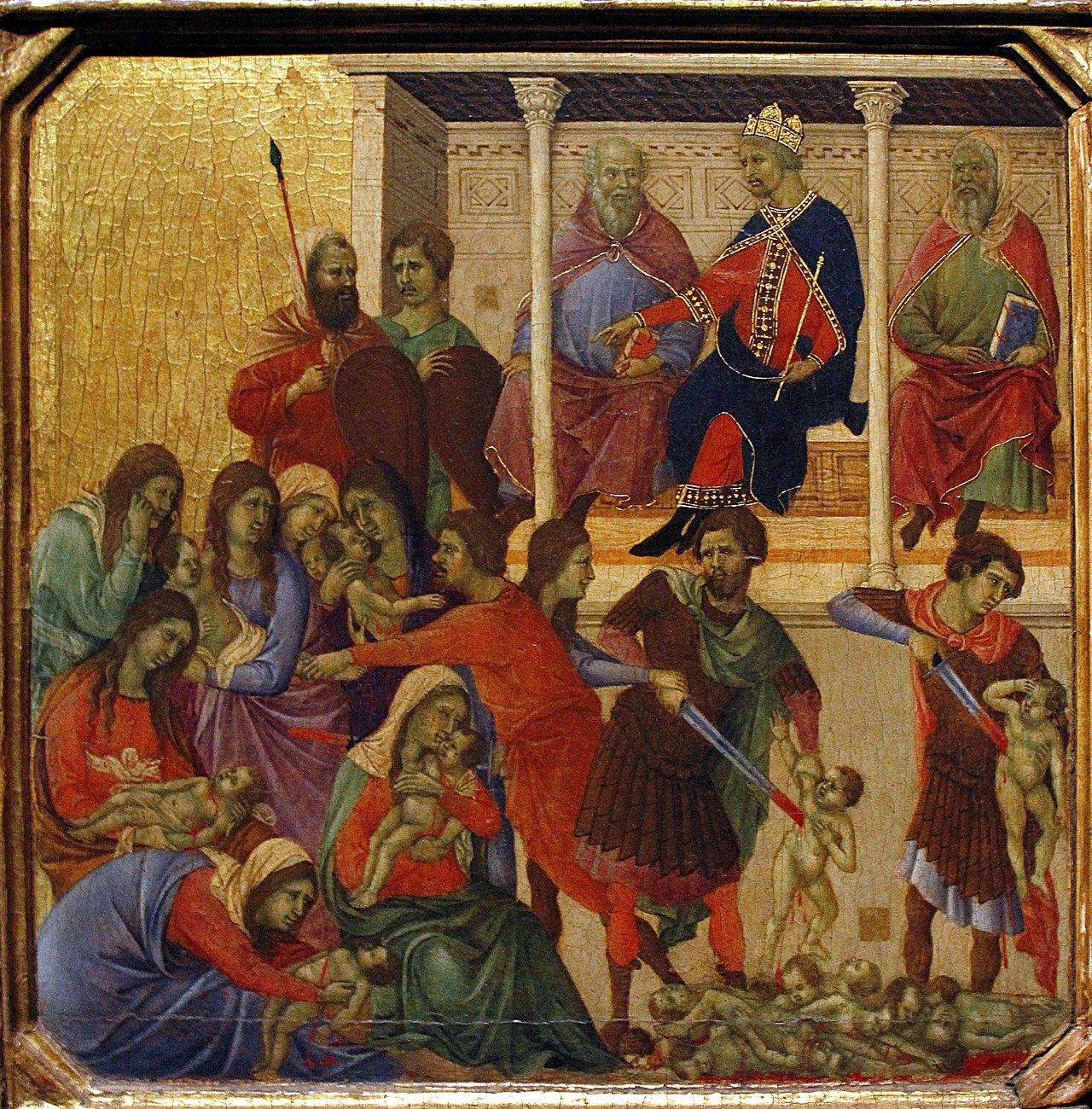
Holy Innocents - The First Martyrs of Christ
The Holy Innocents are the children under two years old murdered by order of King Herod in Bethlehem, in order to eliminate the Child Jesus. Venerated as the first Christian martyrs, their feast is celebrated on December 28.
The Holy Innocents: The First Christian Martyrs
The Holy Innocents represent one of the most tragic and symbolic episodes of the New Testament. They are the children of Bethlehem, under two years old, massacred by order of King Herod the Great, in a desperate attempt to eliminate the newborn Messiah. This event, narrated exclusively in the Gospel of Matthew (Mt 2:16-18), is commemorated by the Catholic Church as the feast of the first martyrs, those who shed their blood for Christ without even knowing of his existence.
The Historical and Biblical Context
At the end of the 1st century BC, Herod I the Great, king of Judea under Roman protection, ruled with an iron hand. Known for systematically eliminating his enemies and for a life of intrigue and excess, Herod felt threatened by the news of the birth of a new king of the Jews. The Magi from the East, when they visited Jerusalem in search of the 'king of the Jews', alerted the monarch to the prophecy of Micah (Mic 5:1), which announced the birth of the Messiah in Bethlehem.
Deceived by the Magi, who did not reveal the exact location after being warned in a dream, Herod ordered the killing of all boys under two years old in Bethlehem and the surrounding area. The evangelist Matthew cites the prophecy of Jeremiah (Jer 31:15): "A voice was heard in Ramah, weeping and loud lamentation; Rachel weeping for her children", interpreting the massacre as the fulfillment of Scripture and a prelude to redemption.
The Date of the Massacre
The episode took place around 6-4 BC, close to the birth of Jesus, estimated for that time. Although historians note the absence of extra-biblical records, Christian tradition preserves it as a central hagiographic fact.
Veneration in the Early Church
From the earliest centuries, the Church honored these innocents as martyrs. The poet Prudentius, in the 4th century, called them "flowers of the martyrs", tender shoots cut down by the persecutor. Raised to feast day status by Pius V, the celebration takes place on December 28, right after Christmas, highlighting them as the vanguard of the army of martyrs. Their innocence makes them unique: baptized by blood, they entered heaven without sin, foreshadowing Christ's sacrifice.
"They were honored as martyrs from the first centuries of the Church, the first fruits of all those who were to shed their blood for God and the Lamb."
This theological vision presents them as involuntary companions of Jesus, victims of hatred toward the Savior.
Liturgical and Spiritual Meaning
In the liturgy, the day of the Holy Innocents uses red, the color of martyrs, symbolizing their innocent blood. They are seen as patrons of abandoned and wronged children, reminding us that evil attacks the most vulnerable. The episode anticipates the Passion of Christ, turning tragedy into hope of salvation.
- First victims of hatred for Christ.
- Martyrs without verbal confession, but with purifying blood.
- Symbol of innocence before tyranny.
Historical Debates
Some scholars question the exact historicity, noting the lack of mention in Flavius Josephus or other historians. However, ecclesial consensus affirms it as spiritual truth, fulfilling prophecies and illustrating the persecution of the Messiah from the cradle.
The narrative of the Holy Innocents continues to inspire reflections on violence against innocents, echoing in modern contexts of defending life. Their everlasting memory flourishes in the liturgy, inviting contemplation of divine tenderness amid human pain.
Birth
Place: Bethlehem, Judea
Death
Date: c. 6-4 BC
Place: Bethlehem and surroundings, Judea
Liturgical Feast
December 28
Patronage
- Abandoned children
- Wronged children
- First Christian martyrs
Sources and References
This article was prepared based on the following sources:
- Los Santos Inocentes: history or legend? (website)
Article about the biblical episode and the historical context of Herod. - What is the history of the Day of the Holy Innocents? (website)
Biblical account from the Gospel of Matthew about the Holy Innocents. - Today we celebrate the Holy Innocents (website)
Explanation of the liturgical feast and theological meaning. - The Holy Innocents - Redaction | Archdiocese of Madrid (website)
Veneration as martyrs since the earliest centuries. - Holy Innocents, martyrs (website)
Official Vatican information about the feast. - Day of the Holy Innocents (website)
Historical and biblical summary of the tradition.