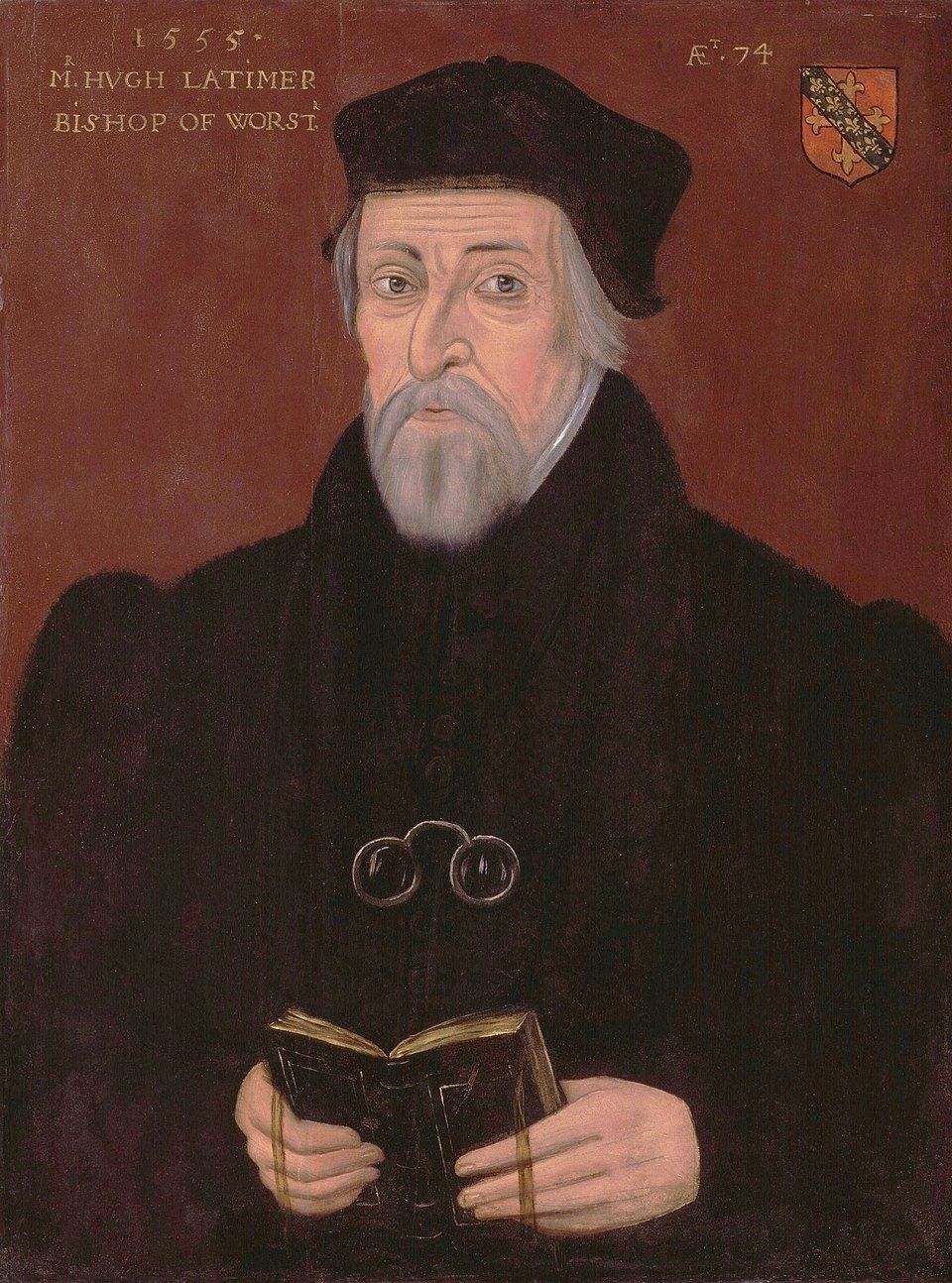
Hugh Latimer and Nicholas Ridley - Reforming Bishops and Martyrs of the English Reformation (1555)
Hugh Latimer and Nicholas Ridley were two of the leading figures of the English Reformation and Protestant bishops who were burned at the stake in Oxford on October 16, 1555, during the persecutions of Mary I. Their names are forever linked as the first two Oxford Martyrs, symbols of Protestant resistance in England.
Life and Formation
Hugh Latimer was born around 1485 and was approximately 15 years older than Nicholas Ridley, who was born around 1500. Both were university-educated men and became prominent figures in the Anglican Church during the period of the English Reformation.
Latimer's conversion was dramatic and transformative. A university colleague named Thomas Bilney asked him to hear his confession, which turned out to be a full confession of faith in Christ as Savior. Latimer was deeply shaken by this encounter, and his own conversion followed. Never a man of half measures, his preaching changed radically, and he soon faced trouble with the Bishop of Ely, although he had friends at court who protected him.
Ministry and Reform Work
Hugh Latimer
Latimer served as Bishop of Worcester and later exchanged the episcopal office for a ministry as an itinerant preacher. His gifts were mainly oratorical, and he became known as an extraordinarily effective preacher. During the reign of Edward VI (1547-1553), Latimer enjoyed his most fruitful years, assisting Archbishop of Canterbury Thomas Cranmer in the reforms of the English Church. According to historian J.C. Ryle, "None of the Reformers probably sowed the seeds of Protestant doctrine so widely and effectively among the middle and lower classes as Latimer."
Nicholas Ridley
Ridley was a distinguished scholar whose academic abilities carried him from one prestigious post to another, even during the capricious reign of Henry VIII. He held positions in Canterbury, Westminster, Soham, Rochester, and finally in London. When he became Bishop of London in 1550, Ridley implemented significant reforms, replacing the stone altars in London churches with simple wooden tables. For Ridley and the Reformers, communion was a spiritual feast, not a sacrifice.
Ridley threw himself enthusiastically into Cranmer's reforms during Edward VI's reign, combining his scholarship with concrete pastoral action.
Persecution and Martyrdom
In 1553, Queen Mary I ascended the throne, marking the end of the reforming era. Latimer, despite his advanced age (67 years old at the start of the trial), was arrested and brought to trial for heresy. Ridley, the Bishop of London, was also imprisoned. Both were incarcerated in the Tower of London for eighteen months.
On September 30, 1555, Ridley and Latimer appeared together in Oxford before a panel of bishops to answer the accusations of heresy. After tedious debates and ridiculous ceremonies aimed at the Protestants, both were condemned to death by burning.
On the day of their death, October 16, 1555, Latimer and Ridley were taken to the stake in Oxford. Latimer, wearing a cassock and cap, and Ridley in his bishop's vestments, spoke and prayed together before being tied to the post. Latimer's final words to Ridley became immortal:
"Be of good cheer, master Ridley, and play the man; we shall this day light such a candle, by God's grace, in England as I trust shall never be put out."
Latimer died relatively quickly, but Ridley's suffering was prolonged and obscene. The wood used on his side was still green, and his feet and legs were roasted while he suffered fastened to the stake by a cruel iron chain.
Faith and Teachings
Both men died because they believed and taught that sinners are justified by faith in Christ alone, without regard to works or sacraments. This was the essence of their Protestant faith and the reason for their condemnation by the Roman Catholic Church, which insisted on the doctrine of Transubstantiation.
Legacy and Memory
Latimer and Ridley, together with Archbishop Thomas Cranmer (who was burned on March 21, 1556), are known as the Oxford Martyrs. Their lives and deaths are commemorated in Oxford by a stone monument called the Martyrs' Memorial, located just outside Balliol College, and by a cross of set stones in the street on Broad Street, marking the site of their burnings.
The courage with which they faced death impressed the crowd and helped keep alive the memory of what it cost to recover the gospel in England. Their words and examples continued to inspire Protestant Christians for centuries, and their memory remains a witness to the power of religious conviction and the willingness to die for the principles of faith.
Birth
Date: Hugh Latimer: c. 1485; Nicholas Ridley: c. 1500
Place: Hugh Latimer: England; Nicholas Ridley: England
Death
Date: October 16, 1555
Place: Oxford, England
Liturgical Feast
October 16
Patronage
- Protestant reformers
- Preachers
- Bishops
- Martyrs of the Christian faith
Written Works
- Sermons and Writings of Hugh Latimer (Various (compiled later)) - Collection of sermons and writings by Hugh Latimer, preserved and compiled by later historians, particularly by the martyr John Foxe
Recommended Books
To deepen your knowledge about this person, we recommend:
- Christian Martyrs of the World - John Foxe (1563 (first edition))
Classic and detailed account of the martyrdom of Latimer and Ridley, written by John Foxe, the leading historian of English Protestant martyrs - The Oxford Martyrs - Various historians (Modern)
Modern historical studies on the Oxford Martyrs, including detailed analyses of Latimer and Ridley
Sources and References
This article was prepared based on the following sources:
- Hugh Latimer and Nicholas Ridley, Bishops and Martyrs - Daily Office 2019 (website)
Liturgical commemoration page with basic information about the two martyred bishops - 16 October 1555 - The Martyrdom of Bishops Latimer and Ridley - The Anne Boleyn Files (website)
Detailed account of the martyrdom with poetry and a description of the circumstances of death - Heritage Heroes - CCH Trust (website)
Information about the trial of Ridley and Latimer on September 30, 1555 - The Marian Martyrs – Hugh Latimer and Nicholas Ridley - Evangelical Times (website)
Detailed analysis of the life, ministry, and death of the two reformers, with information about their ages and roles in the Reformation - The British Candle: Latimer and Ridley - Desiring God (website)
Article on the life and influence of Latimer and Ridley as English reformers - Oxford Martyrs - Wikipedia (website)
Encyclopedic article on the Oxford Martyrs, including information about Latimer, Ridley, and Cranmer - This Week in Church History: Latimer and Ridley Burned 1555 - Davenant Institute (website)
Historical account with quotations of Latimer's last words - Hugh Latimer and Nicholas Ridley, Bishops and Martyrs - Episcopal Church (website)
Liturgical page from the Episcopal Church with information about the two martyred bishops - Hugh Latimer and Nicholas Ridley - Forward Movement (website)
Prayer and commemoration page for the martyred bishops - Latimer and Ridley Burned at the Stake - History Today (website)
Historical article on the martyrdom of the Oxford Martyrs