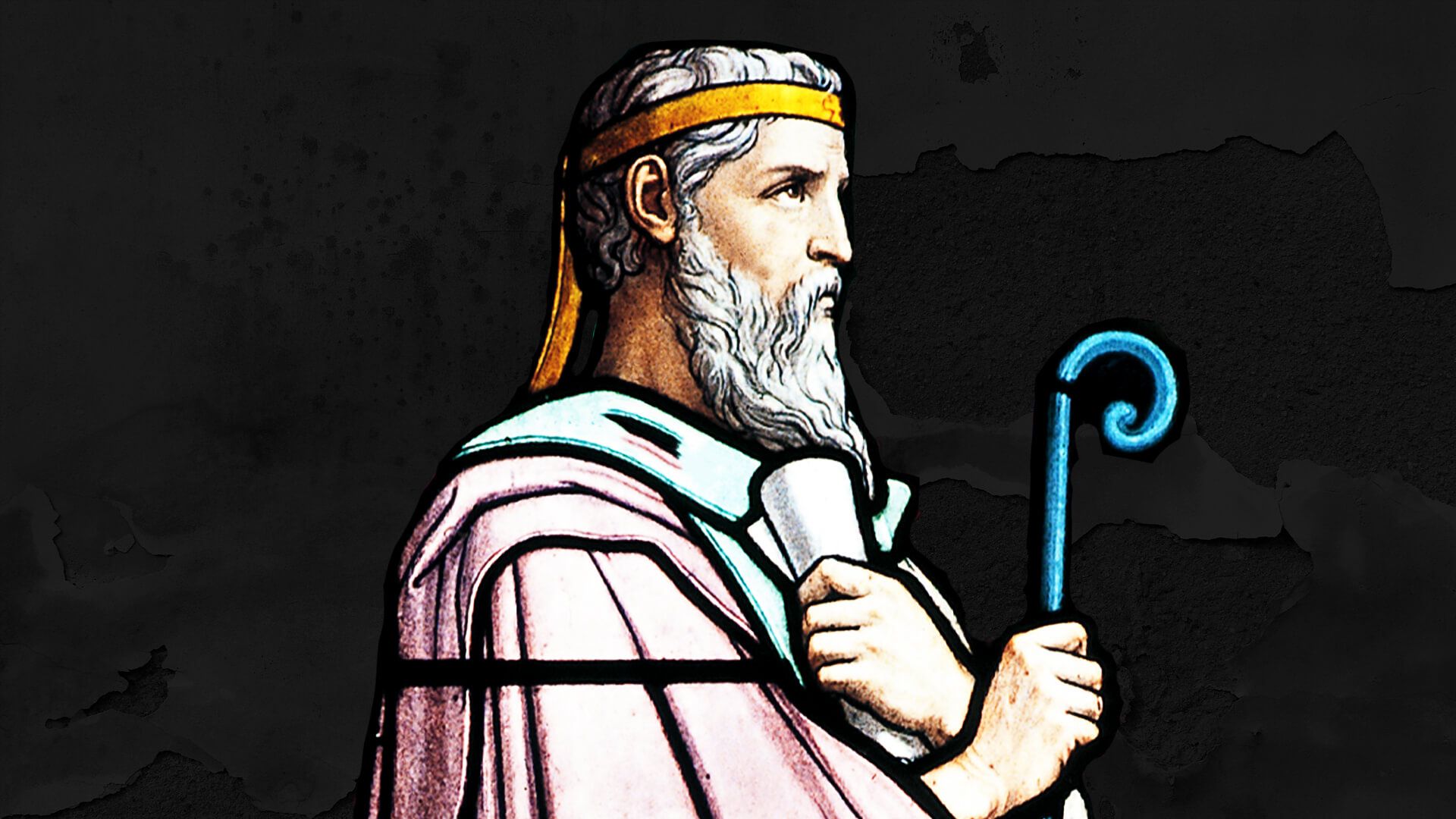
Irenaeus of Lyon - Bishop and Doctor of the Church, Defender of the Christian Faith
Irenaeus of Lyon (c. 120-203 AD) was bishop of Lugdunum and one of the first systematic theologians of the Christian Church, known for his struggle against Gnosticism and his defense of Christian orthodoxy during the 2nd century.
Life and Formation
Irenaeus of Lyon was born around 120-140 AD in Smyrna, in Asia Minor (present-day Turkey), into a family of Greek origin. He received a refined education in his hometown, where he came into contact with the main currents of early Christian thought. He was a disciple of Bishop Polycarp of Smyrna, considered one of the finest teachers of the time, who in turn had been a disciple of the apostle Saint John, thus creating a direct link with the apostolic tradition.
Ministry in Lugdunum (Lyon)
Irenaeus arrived in the region of Gaul (present-day France) as a missionary, where he was ordained priest by Bishop Pothinus in the city of Lugdunum (present-day Lyon). During his early ministry, he devoted himself to converting the pagans of southwestern Gaul to Christianity. Lugdunum was at that time the largest city north of the Alps, serving as an important civic and cultural center of the Roman Empire.
During a local persecution of Christians under the reign of Emperor Marcus Aurelius (161-180 AD), Irenaeus was a priest of the Church of Lyon. The clergy of the city, many of whose members were suffering imprisonment for their faith, sent him to Rome in 177 with a letter to Pope Eleutherius about the heresy of Montanism, demonstrating his merits and importance in the community.
After his return from Rome, in 178 AD, Irenaeus was elected to succeed the martyr Pothinus as bishop of Lyon. He assumed leadership of a community shaken by persecution and martyrdom, bringing hope and confidence in divine providence. As bishop, he not only rebuilt the ecclesial life of the city, but also continued his missionary work, transforming Lugdunum into a Christian city through his preaching.
Fight Against Gnosticism
Irenaeus's main theological work was Against Heresies (Adversus haereses), written around 180 AD, a systematic refutation of Gnosticism, particularly the doctrines of Valentinus. Gnosticism represented a significant threat to the unity and integrity of the Christian faith, presenting an elitist and dualistic view of the world and God, claiming to possess secret wisdom inaccessible to ordinary Christians.
To counter these heretical doctrines, Irenaeus offered three pillars of Christian orthodoxy:
- The Holy Scriptures
- The Apostolic Tradition, transmitted by the apostles
- The teachings of the successors of the apostles
His revolutionary vision presented the Apostolic Tradition not as secret knowledge, but as a living heritage accessible to all Christians. Irenaeus also specifically criticized the Carpocratians and their interpretations of Christian doctrine, questioning their practices and beliefs.
Theology and Doctrinal Contributions
Irenaeus is recognized as the first systematic theologian of the Christian Church, having laid the foundations for the development of ecclesiastical doctrine. His writings addressed several important theological themes, including:
- The Resurrection of Christ as the center of the Christian faith
- The Unity of God and the Trinity
- The Incarnation of the Divine Word
- Liturgical questions, such as the celebration of Easter and Pentecost
- Disciplinary practices, such as the prohibition of kneeling on Sundays
His theological influence extended to other important Christian leaders, such as Cyprian, and his teachings became fundamental for understanding the context of early Christian doctrines.
Role as Ecclesial Mediator
Beyond his theological work, Irenaeus played an important role as a mediator between the different parts of the Church. In 190 AD, he acted as a mediator for Pope Victor I in a dispute between the churches of the eastern and western parts of the Empire over determining the proper date for the celebration of Easter, demonstrating his importance in resolving ecclesial conflicts.
Legacy and Canonization
Irenaeus died around 200-203 AD, probably in Lyon. His death occurred during a period of persecution, and there are traditions that suggest his martyrdom, which is why he is venerated as a Hieromartyr (priest martyr) in some Christian traditions.
Irenaeus's legacy is extraordinary and enduring. His influence shaped both Western and Eastern theology. In 2022, Irenaeus was proclaimed a Doctor of the Church by Pope Francis, an official recognition of his importance as a spiritual guide and theologian. His liturgical feast is celebrated on June 28 in the Western tradition and on August 23 in the Eastern tradition.
As a compassionate and steadfast pastor, Irenaeus was a conciliator among divided churches and a defender of unity without authoritarianism. His work remains relevant for understanding early Christian faith and continues to offer spiritual guidance in times marked by cultural and religious fragmentation.
Birth
Date: c. 120-140 AD
Place: Smyrna (present-day Izmir, Turkey), Asia Minor
Death
Date: c. 200-203 AD
Place: Lugdunum (present-day Lyon, France)
Liturgical Feast
June 28 (Western tradition); August 23 (Eastern tradition)
Patronage
- Theologians
- Defenders of the orthodox faith
- Unity of the Church
Written Works
- Against Heresies (Adversus haereses) (c. 180 AD) - Irenaeus's theological masterpiece, a systematic refutation of Gnosticism, particularly the doctrines of Valentinus. It presents the three pillars of Christian orthodoxy: the Scriptures, Apostolic Tradition, and the teachings of the successors of the apostles.
- On the Detection and Overthrow of the So-Called Gnosis (c. 180 AD) - Full title of the work known as 'Against Heresies', focusing specifically on the exposition and refutation of Gnostic doctrines.
Recommended Books
To deepen your knowledge about this person, we recommend:
- Against Heresies - Translation and Commentary - Irenaeus of Lyon (various modern translators)
Direct reading of Irenaeus's main work, essential for understanding early Christian theology and the struggle against Gnosticism.
Sources and References
This article was prepared based on the following sources:
- Ireneo de Lyon - Wikipedia (website)
Encyclopedia with complete biographical information, dates, main works, and historical context. - Hieromartyr Irenaeus, Bishop of Lyons - Orthodox Church in America (website)
Hagiographic biography from an Orthodox perspective, with details about his life, election as bishop, and legacy. - Saint Irenaeus - EBSCO Research Starters (website)
Academic biographical summary with information about his life, theological work, and historical importance. - Who Was Saint Irenaeus of Lyon? - GotQuestions.org (website)
Informative article about Irenaeus as an opponent of heresies and his influence on the development of the biblical canon. - Saint Irenaeus of Lyon: The Unity of God - YouTube (website)
Audiovisual resource about Irenaeus's life, his arrival in Lyon, persecutions, and theological battle against Gnosticism. - Who is St. Irenaeus, an ancient martyr but new doctor of the church? (website)
Article about Irenaeus's recent proclamation as Doctor of the Church in 2022 and his contemporary importance. - Irenaeus of Lyon: Artisan of Peace and Unity - YouTube (website)
Audiovisual documentary about Irenaeus as a key figure of the early Church, his life in Lyon, and theological contributions. - Saint Irenaeus - Britannica (website)
Britannica encyclopedia with verified biographical information and historical context about Irenaeus. - Meaning of Bishop of Lyon in Christianity - WisdomLib (website)
Article about the concept of Bishop of Lyon in Christian history, focusing on Irenaeus and his influence.