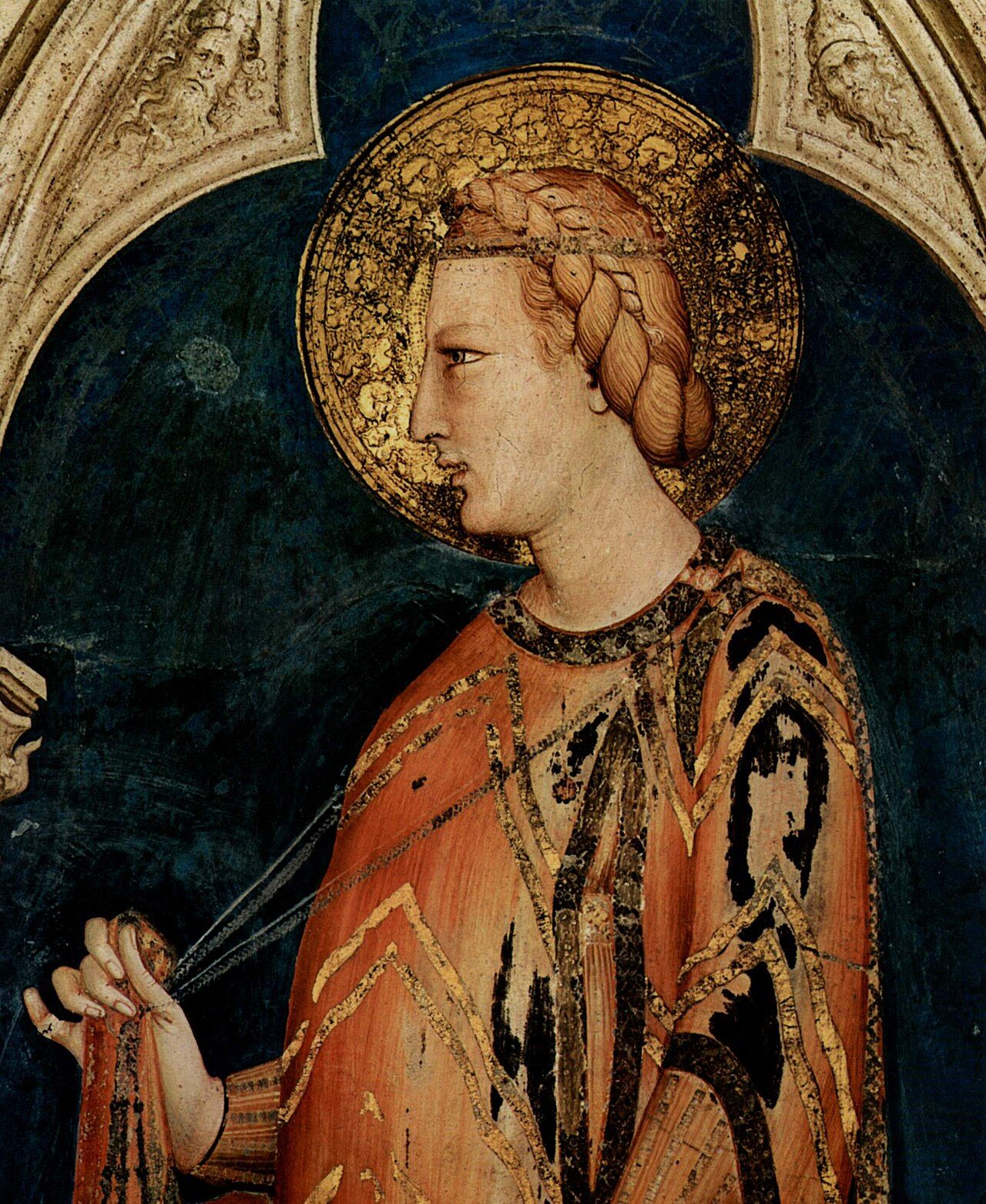
Elizabeth of Hungary - Social Reformer in 1231
Hungarian princess, Duchess of Thuringia, Saint Elizabeth of Hungary devoted her life to charity after becoming widowed at a young age, building hospitals and caring for the poor, becoming a symbol of social and Christian renewal in medieval Europe.
Early Life and Marriage
Elizabeth of Hungary was born on July 7, 1207, in the castle of Sárospatak, the daughter of King Andrew II of Hungary and Gertrude of Merania. From an early age, she was betrothed to Prince Louis IV of Thuringia, following medieval noble customs to strengthen political alliances. At the age of four, in 1211, she was taken to the court of Thuringia, where she grew up educated alongside her future husband.
The marriage took place in 1221, when Elizabeth was 14 years old, at Wartburg Castle. Although arranged, the union was marked by mutual love and respect. The couple had three children: Hermann, Sophie, and Gertrude of Altenberg. As duchess, Elizabeth was already showing piety, helping the poor and lepers, even while facing opposition from the court.
Widowhood and Vocation of Charity
Elizabeth's life changed drastically on September 11, 1227, when Louis died of the plague in Otranto, Italy, while on the way to the Sixth Crusade led by Frederick II. Widowed at 20 and pregnant with her fourth child, she faced slander, expulsion from Wartburg Castle by her brother-in-law, and pressure from her father to return to Hungary. Rejecting proposals of remarriage, Elizabeth embraced evangelical poverty, inspired by Saint Francis of Assisi.
In 1228, she professed in the Third Order of Saint Francis, adopting the gray habit of a penitent. She founded a hospital in Marburg in 1229, under the protection of Saint Francis, where she personally cared for the sick, washing wounds and feeding hundreds of poor people daily with fresh bread. Her devotion included spinning wool for the Franciscans and praying the Te Deum in thanksgiving even in adversity.
Miracles and Recognition
A famous miracle occurred when bread hidden in her cloak was turned into roses to prove her charity to those who doubted her. These acts made her a symbol of Christian charity, renewing society by prioritizing the marginalized in an age of crusades and plagues.
Death and Canonization
Elizabeth died on November 1, 1231, at the age of 24, in Marburg, exhausted by strict fasting and care for the sick, under the guidance of her confessor Conrad of Marburg. Her body was buried in the local church, now St. Elizabeth's Church. Rapidly canonized by Pope Gregory IX on May 27, 1235 (or Pentecost 1235), she was called "the greatest woman of the German Middle Ages". Her cult spread throughout Europe, from German-speaking regions to Italy and Spain.
Legacy
Saint Elizabeth renewed society in 1231 by exemplifying practical charity, founding hospitals, and living Franciscan poverty. Her life unites royalty and sanctity, inspiring social works to this day. Her tomb in Marburg attracts pilgrims, and her gilded altar remains preserved.
"The greatest woman of the German Middle Ages." (Proclaimed at the canonization, 1235)
- Construction of hospitals for the poor and lepers.
- Franciscan inspiration of poverty and service.
- Rapid canonization, a European symbol of charity.
Birth
Date: July 7, 1207
Place: Sárospatak, Hungary
Death
Date: November 1, 1231
Place: Marburg, Germany
Liturgical Feast
November 17
Patronage
- Poor
- Widows
- Hospitals
- Third Order of Saint Francis
Recommended Books
To deepen your knowledge about this person, we recommend:
- Life of Saint Elizabeth of Hungary - Theodoric of Eccleston (13th century)
Contemporary Franciscan biography, a detailed primary source on her life and miracles.
Sources and References
This article was prepared based on the following sources:
- Elizabeth of Hungary - Wikipedia - Wikipedia (website)
Detailed biography with dates, family, and canonization. - Saint Elizabeth of Hungary - Congregation of Saint Elizabeth (website)
Life story, marriage, and works of charity. - Learn about the story of Elizabeth of Hungary - Hospital Santa Isabel (website)
Details on the founding of the hospital and Franciscan influence. - Saint Elizabeth of Hungary: a universal story - Tourism and Society (website)
Information about her birth and Hungarian context. - Elizabeth of Hungary, Saint - Catholic.net (website)
Brief biography with emphasis on marriage and widowhood. - Saint Elizabeth of Hungary - EWTN - EWTN (website)
Summary of family life and sanctity.