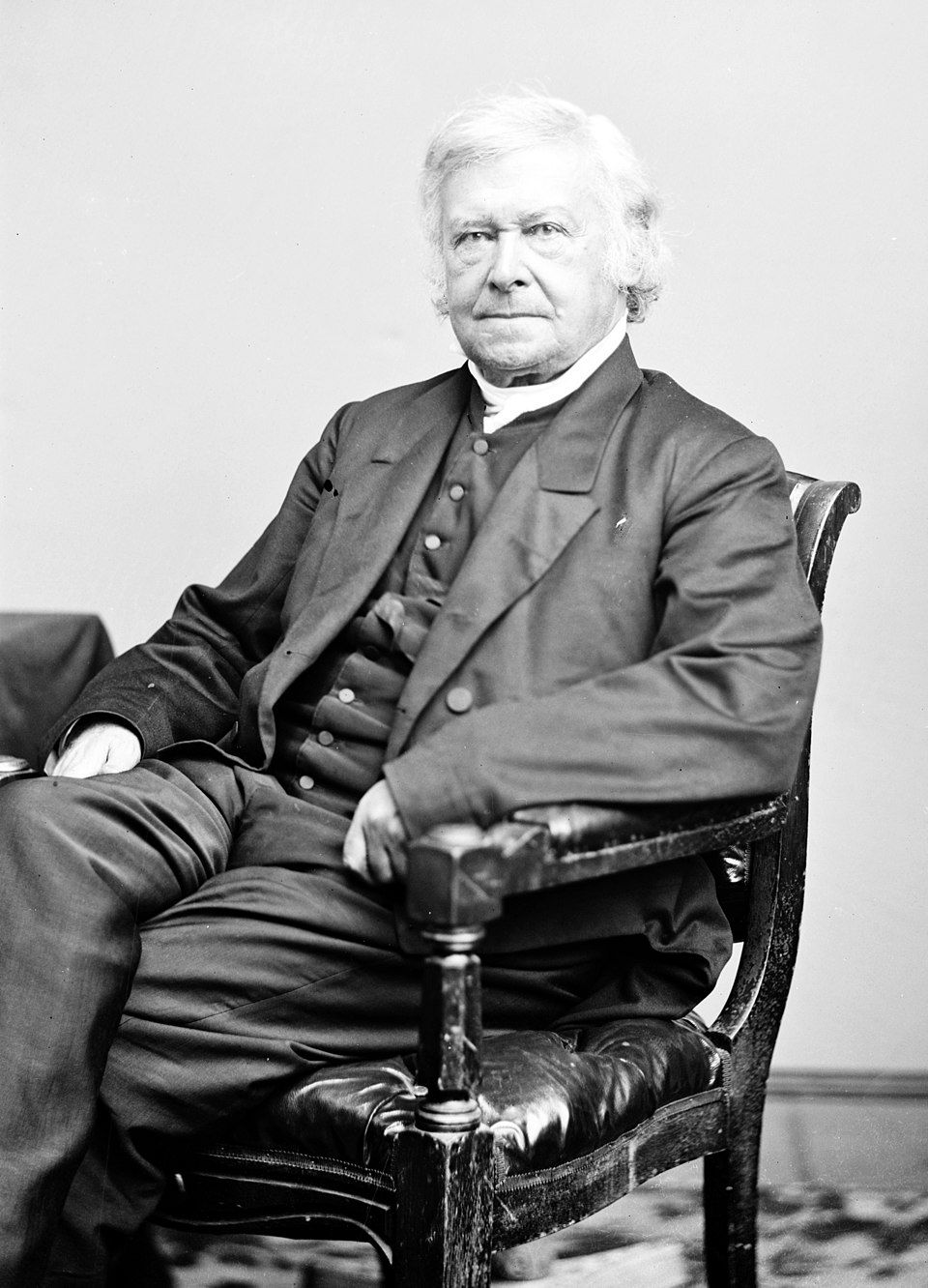
Jackson Kemper - The First Missionary Bishop of the Episcopal Church in the United States
Jackson Kemper (1789-1870) was the first missionary bishop of the Episcopal Church in the United States, consecrated in 1835. A pioneer in expanding the Episcopal faith in the western territories, he founded dioceses, seminaries, and colleges, with special dedication to missionary work among Native American peoples.
Life and Education
Jackson Kemper was born on December 24, 1789 in Pleasant Valley, New York. Showing a religious vocation from a young age, he entered Columbia College at fifteen, where he studied theology under the guidance of Dr. Henry Hobart. He graduated in 1809 as valedictorian of his class, standing out academically among his peers.
After his initial training, Kemper was ordained deacon in the Episcopal Church in 1811 by Bishop William White, and ordained priest in 1814. He served as minister in Philadelphia from 1811 to 1831, where he worked at Christ Church and developed his particular interest in evangelization. During this period, he persuaded his elderly mentor to undertake a missionary journey through western Pennsylvania, during which he founded St. Matthew's Episcopal Church in Wheeling, West Virginia.
Ministry and Missionary Work
Consecration as Missionary Bishop
In 1835, the General Convention of the Episcopal Church decided to consecrate missionary bishops to preach the Gospel in the unsettled western areas. Jackson Kemper was unanimously elected as the first missionary bishop of the Episcopal Church in the United States. His consecration took place on September 25, 1835, performed by Bishop William White, Bishop George Washington Doane, and several other bishops.
Initially, his jurisdiction covered the states of Indiana and Missouri. However, his area of responsibility expanded significantly throughout his ministry, eventually including Indiana, Missouri, Wisconsin, Kansas, Nebraska, Iowa, and Minnesota. After his consecration, Kemper promptly headed west, determined to recruit priests among men already established in the region, since clergy formed in the settled East were reluctant to respond to his call for frontier work.
Work with Native American Peoples
Kemper is especially known for his dedicated work with Native American peoples. He continually urged the Church to expand its reach among these communities and promoted translations of the Scriptures and Church services into their languages. His first official act as Missionary Bishop, in what would become Wisconsin, was to lay the cornerstone for a new church building for Hobart Church in Duck Creek, which served the Oneida Indian Mission.
Founding Educational Institutions
Recognizing the inadequacies of clergy trained in the East for the frontier environment, Kemper undertook the founding of several educational institutions:
- Kemper College in Missouri, founded in 1835
- Nashotah House, a theological seminary in Wisconsin, established in 1841 with the help of J. L. Breck, William Adams, and J. H. Hobart
- Racine College in Wisconsin, founded in 1852
These institutions became prominent examples of ritual observance and high-quality theological education in the western region.
Bishop of the Diocese of Wisconsin
In 1847, when the Diocese of Wisconsin was formed, Kemper became provisional bishop from 1847 to 1854. He was then appointed first diocesan bishop of the Diocese of Wisconsin in 1854, a position he held until his death in 1870. He established his residence in Delafield in 1846, becoming a familiar and much-loved figure in the Northwest.
Legacy and Impact
Jackson Kemper died on May 24, 1870, at the age of 80. His legacy in the history of the Episcopal Church is extraordinary and enduring:
- Responsible for the founding of seven dioceses in the western region
- Founder of three colleges that contributed significantly to religious and secular education
- Opened numerous schools and academies in frontier communities
- Pioneer in the expansion of the Episcopal faith in the western territories of the United States
- Unwavering advocate for the rights and evangelization of Native American peoples
Although not explicitly partisan in church politics, Kemper was known as a high churchman, and his institutions, particularly Nashotah House and Racine College, became prominent examples of ritual observance. In 1868, at age 78, he traveled to England to attend the Council of Bishops, demonstrating his continued involvement in Church life until his final years.
Jackson Kemper is remembered as a church pioneer who devoted his life to spreading the Gospel on the American frontier, with particular attention to marginalized peoples and remote communities. His work established solid foundations for the Episcopal Church’s presence in the American Midwest and West, a legacy that continues to this day.
Birth
Date: December 24, 1789
Place: Pleasant Valley, New York, United States
Death
Date: May 24, 1870
Place: Wisconsin, United States
Liturgical Feast
May 24
Patronage
- Missionaries
- Bishops
- Expansion of the Christian faith on the American frontier
Sources and References
This article was prepared based on the following sources:
- Jackson Kemper - Wikipedia (website)
Complete biographical article about Jackson Kemper with information about his life, ecclesiastical career, and legacy - About Bishop Jackson Kemper (website)
Information about Jackson Kemper as the first missionary bishop and his jurisdiction - History - The Episcopal Diocese of Wisconsin (website)
History of the Diocese of Wisconsin with information about Jackson Kemper's role from 1835 to 1870 - Kemper, Jackson 1789-1870 - Wisconsin Historical Society (website)
Detailed historical record about Jackson Kemper, his education, ordination, and church work - Kemper, Jackson - The Episcopal Church (website)
Official Episcopal Church definition of Jackson Kemper as the first missionary bishop - JACKSON KEMPER, Bishop and Missionary, 1870 (website)
Information about Jackson Kemper as a bishop and missionary and his foundations in the western territories - JACKSON KEMPER PIONEERED THE WEST FOR CHRIST (website)
Historical record of Jackson Kemper's consecration as missionary bishop on September 25, 1835 - Biography: Jackson Kemper, bishop, missionary (24 May 1870) (website)
Biography of Jackson Kemper focusing on his role as Bishop of Wisconsin and his missionary impact - David Jackson Kemper - Encyclopedia of Indianapolis (website)
Indianapolis encyclopedia with information about Jackson Kemper as a priest and missionary bishop