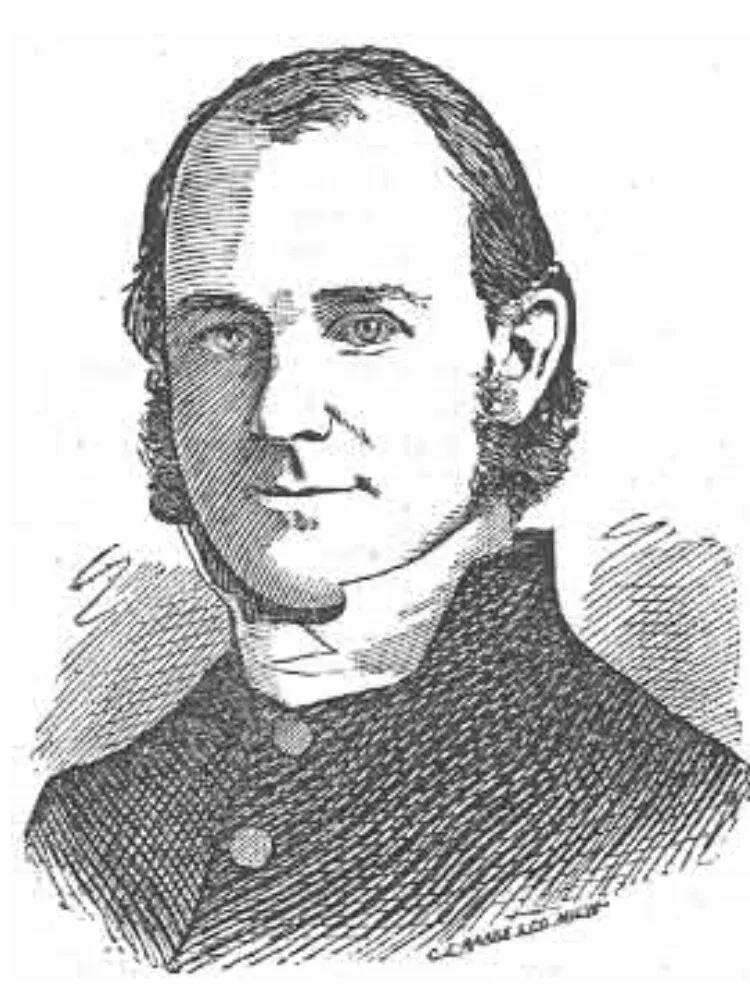
James Lloyd Breck - The Apostle of the Wilderness and Missionary Pioneer of the Episcopal Church
James Lloyd Breck (1818-1876) was a priest, educator, and missionary of the American Episcopal Church, known as 'The Apostle of the Wilderness' for his pioneering work in expanding the Anglican Church into the American frontier, founding educational institutions and missions among Indigenous peoples.
Life and Formation
James Lloyd Breck was born on June 27, 1818 in Philadelphia County, Pennsylvania. He was the fourth of fifteen children and would stand out as the best known of them all. His early education was shaped by the influence of William Augustus Muhlenberg, an important Anglican clergyman who founded the Flushing Institute in New York, where Breck studied. At sixteen, inspired by Muhlenberg's pastoral devotion, liturgical concern, and sacramental emphasis, Breck devoted himself to missionary life.
Breck attended the University of Pennsylvania and later entered General Theological Seminary in New York. During his studies, Bishop Jackson Kemper, an important missionary of the Episcopal Church, gathered a group of young seminarians with the aim of evangelizing the American frontier, inspired by the model of medieval monastic communities.
Ministry and Missionary Work
Founding of Nashotah House (1842)
In 1842, still as a deacon, Breck traveled to the Wisconsin frontier with two seminary classmates under the direction of Bishop Jackson Kemper. His goal was to found Nashotah House, an institution conceived as a monastic community, seminary, and center of theological work. The institution still exists today as a seminary.
On October 9, 1842, Breck was ordained a priest in the Episcopal Church by Missionary Bishop Jackson Kemper at All-Saints Church, near Holmesburg, Pennsylvania. Later, he was also ordained in the Oneida Indigenous community, 150 miles north of Nashotah. As a priest, Breck traveled hundreds of miles on foot or horseback to visit various mission stations, earning the reputation of 'Apostle of the Wilderness'.
Work in Minnesota (1850-1867)
In 1850, Breck moved to Minnesota with few financial resources. Despite initial difficulties, he managed to raise significant funds for his missions. On June 23, 1850, he celebrated the first Episcopal Eucharist in the La Crosse area.
Breck had a remarkable gift for communicating with Indigenous peoples on a deep level. His sincerity, energy, and openness won the trust of the tribes of the Mississippi. He worked especially among the Ojibway (Chippewa), founding the St. Columba Mission at Gull Lake in 1852. His work laid the foundations for Indigenous priests to serve among their own people.
In 1855, Breck married Jane Maria Mills, one of the teachers at St. Columba Mission. During that same period, he opened another mission at Leech Lake in 1856.
In 1857, Breck moved to Faribault, Minnesota, where, together with the Rev. Solon Manney, he founded a missionary school to train clergy to work in Minnesota missions. This institution evolved into Seabury Divinity School, which later became Bexley-Seabury Western Seminary in Chicago, continuing to exist to this day.
Breck worked actively for nine years before a bishop was appointed to Minnesota. In 1859, Henry Whipple began his episcopate, marking a new phase in the ecclesiastical organization of the region.
Jane Breck died in 1862. In 1864, Breck married again, to Sarah Stiles.
Work in California (1867-1876)
In 1867, at age 49, Breck moved to Benicia, California, with his family and about three dozen associates. His goal was to found yet another theological institution. Through providential circumstances, he was able to acquire already built buildings and soon established a functioning boarding school.
Although the schools he founded in California did not survive, the five parishes he established remained, significantly strengthening the Church in the region.
Legacy and Death
Breck died on April 2, 1876, at the age of 57, while still engaged in his missionary work in California. According to reports, after preaching a sermon at night, he felt faint, developed a fatal illness, and died one week later.
James Lloyd Breck is remembered as one of the most important figures in the Episcopal Church in the nineteenth century. His work was essential in expanding the Anglican presence from the American East Coast to the Pacific. He founded educational institutions that continue to exist, worked devotedly among Indigenous peoples, and left a lasting legacy in American religious history.
His liturgical feast is celebrated on April 2 in the Episcopal Church calendar.
Birth
Date: June 27, 1818
Place: Philadelphia County, Pennsylvania, United States
Death
Date: April 2, 1876
Place: Benicia, California, United States
Liturgical Feast
April 2
Patronage
- Missionaries
- Religious educators
- Work among Indigenous peoples
Recommended Books
To deepen your knowledge about this person, we recommend:
- The Life of the Reverend James Lloyd Breck, D.D. - Not specified
Complete biography available at Project Canterbury with letters and historical documents about Breck's life
Sources and References
This article was prepared based on the following sources:
- James Lloyd Breck - Wikipedia (website)
Encyclopedic article with complete biographical information, dates, and institutions founded - James Lloyd Breck, Priest, 1876 (website)
All Saints Tacoma article with information about his life, influences, and missionary work - James Lloyd Breck, Educator and Apostle of the Wilderness - Dan Graves (website)
Christian History Institute article with details about his ordination and frontier work - James Lloyd Breck, Priest, Educator, and Missionary (website)
Episcopal calendar resource with biographical information and quotes from Breck's letters - The Life of the Reverend James Lloyd Breck, D.D. (website)
Project Canterbury with historical documents, letters, and narratives about Breck's life - Breck, James Lloyd - The Episcopal Church (website)
Official Episcopal Church glossary with information about Breck and his foundations - James Lloyd Breck, Priest and Missionary, 1879 - Commemoration (website)
Liturgical commemoration page with information about Breck's life and legacy