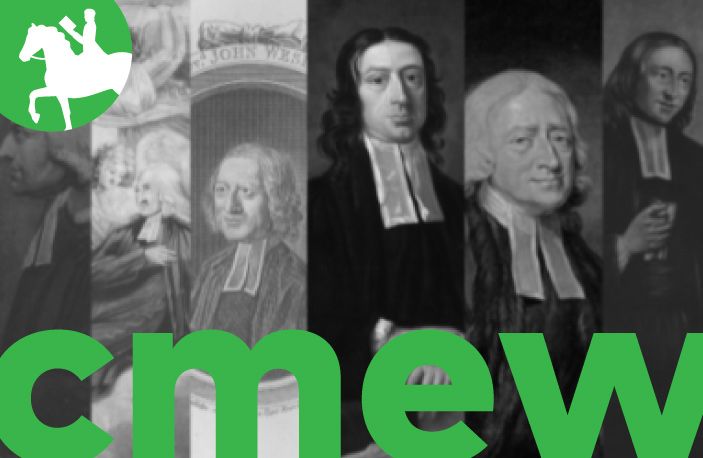
John and Charles Wesley - Founders of the Methodist Movement and Renewers of the Christian Faith
John Wesley (1703-1791) and his brother Charles Wesley (1707-1788) were British Anglican clergy who founded the Methodist Movement, sparking a major religious renewal in England and the United States during the 18th century.
Life and Formation
John Wesley was born on June 28, 1703 in Epworth, Lincolnshire, and his brother Charles Wesley was born on December 18, 1707, in the same place. Both were sons of Samuel and Susanna Wesley, a family with a deep religious tradition that would significantly shape their spiritual lives.
The Wesley brothers received a strict and devout education, which profoundly influenced the formation of their characters and their future contributions to Christianity. This family heritage would be fundamental to the development of their theological convictions and religious practices.
The Holy Club and the Origins of Methodism
In 1729, while studying at Oxford, John and Charles Wesley, together with other young students, began what would become known as the Holy Club. As John Wesley recounted:
In November 1729, the date on which I came to live in Oxford, my brother, two other young gentlemen, and I agreed to meet three or four times a week. On Sunday evenings, we read theology, and on the other nights, the Greek and Latin classics.
The group stood out for its diligence and method in studying the Scriptures and in religious practice. Their fellow university students, noticing the emphasis placed on methodical and systematic study, ironically nicknamed them "Methodists" — a label that Wesley and his followers would later embrace with pride.
The Holy Club's activities included rigorous devotional practices, such as taking communion once a week, praying daily, and setting aside three hours a day to study the Bible. During this period, England was experiencing the Industrial Revolution, and the group was deeply concerned with social issues and the misery of the unemployed and beggars.
The Conversion Experience and the Revival
A crucial moment in John Wesley's life occurred in 1738, when, at the age of 35, during a meeting on Aldersgate Street, London, as recorded in his Journal, he felt his heart strangely warmed while reading a text by Luther on Saint Paul's epistle to the Romans. At that moment, Wesley experienced a certainty of his own salvation that he had never felt before, becoming convinced that faith is the only requirement of religious life.
Charles Wesley was converted three days before John, and both embraced this message of grace, preaching it wherever they could. Influenced by the Moravians, who were the first to teach Wesley about the regenerated spiritual life, the brothers began organizing small societies and classes within the Church of England, led by laypeople.
Ministry and Evangelistic Work
Since the Anglican Church pulpits were closed to the Wesley brothers and their colleague George Whitefield, they decided to preach outdoors, which proved enormously successful. Wesley's first sermon outside the church structure was in Bristol, to more than 3,000 people, many of whom converted. This was the beginning of the Methodist revival.
John Wesley began organizing large outdoor gatherings, preaching especially to those on the margins of society who felt neglected by the Anglican Church. He preached the salvation of all who accepted God's grace, faith in Jesus, and the Christian life.
Wesley taught that conversion to Jesus is proven by practice (testimony), and not by the emotions of the moment. He deeply valued lay preachers who worked side by side with clergy in the mission of evangelization, assistance, and the training of others.
After the spring of 1739, in Bristol, Wesley decided to tirelessly carry the gospel throughout England and Scotland. He grouped believers in each area he reached into societies, and as the movement grew, he appointed other preachers, assigning each one to a specific area. The societies were also divided into fellowships and prayer groups.
Wesley's followers began gathering in smaller weekly groups, where they prayed, studied the Bible, and collected offerings for charity. The movement grew rapidly, as did its critics. Many were often met with violence, while hired men broke up meetings and threatened Wesley's life.
Theological and Practical Contributions
Wesley stated that the center of Christian life is the personal relationship with Jesus Christ. It is Jesus who saves us, forgives us, transforms us, and offers us the abundant life of communion with God.
One of Charles Wesley's greatest contributions to the advancement of the Wesleyan movement lies in the field of Hymnody (hymn composition). Charles Wesley was a prolific composer of hymns that helped spread the Methodist message and strengthen the spiritual life of believers.
Consolidation of the Movement
Charles Wesley's importance to Methodist history extends from the first stage of the movement (the creation of the Holy Club), through the missionary experience in North America, to its consolidation from London and especially Bristol. It is believable that Methodism would hardly have become what it is, historically recognized, without Charles Wesley's contribution.
From 1784 onward, Methodist societies began to function independently, marking the consolidation of the movement as a distinct religious force.
Legacy and Impact
Methodism brought about a great religious renewal in England and the United States, thanks to the missionary activities among English and American Methodists, who spread the movement throughout the world. The seed of a spiritual renewal movement had been planted and was cultivated through the integrity of life of some devout young people who from an early age knew the experience of evangelization, without separating the content and lived practice of the Gospel, uniting the emphases of social work and personal evangelism.
John Wesley died on March 2, 1791 in London, leaving a lasting legacy through his sermons and writings. Charles Wesley died in 1788, also in London. Both left a lasting impact on the history of Christianity and on the formation of a religious tradition that continues to influence millions of people to this day.
Birth
Date: John Wesley: June 28, 1703; Charles Wesley: December 18, 1707
Place: Epworth, Lincolnshire, England
Death
Date: John Wesley: March 2, 1791; Charles Wesley: 1788
Place: London, England
Written Works
- Explanatory Notes on the New Testament (1754-1765) - John Wesley's exegetical work on the New Testament
- Sermons of John Wesley (Various) - Collection of sermons preached by John Wesley throughout his ministerial life
- Journal (John Wesley's Diary) (1735-1790) - John Wesley's personal diary documenting his spiritual and ministerial journey
Recommended Books
To deepen your knowledge about this person, we recommend:
- Genius and Spirit of Wesleyan Methodism - Gonzalo Baèz Camargo
In-depth analysis of the character and spirit of the Methodist movement founded by the Wesleys - The Life and Legacy of the Father of Methodism, John Wesley - Various authors
Comprehensive study of John Wesley's life, work, and legacy
Sources and References
This article was prepared based on the following sources:
- Charles Wesley - Methodist Church (website)
Information about Charles Wesley and his importance to Methodist history - John Wesley – Wikipedia (website)
Complete biography of John Wesley with information about the Holy Club and the Methodist movement - Biography of John Wesley - eBiografia (website)
Detailed biography of John Wesley and the origins of Methodism - The Life and Legacy of the Father of Methodism, John Wesley (article)
Academic article on the life and legacy of John Wesley - Learn about the story of John Wesley, the man who sparked revival in Europe (website)
Article about John Wesley's story and his impact on the European revival - The Methodist Question: Where is John Wesley's birthplace? (website)
Information about John Wesley's birthplace - Walking in the Footsteps of John and Charles Wesley - UM News (website)
Article about the pilgrimage to the Wesleys' historical sites