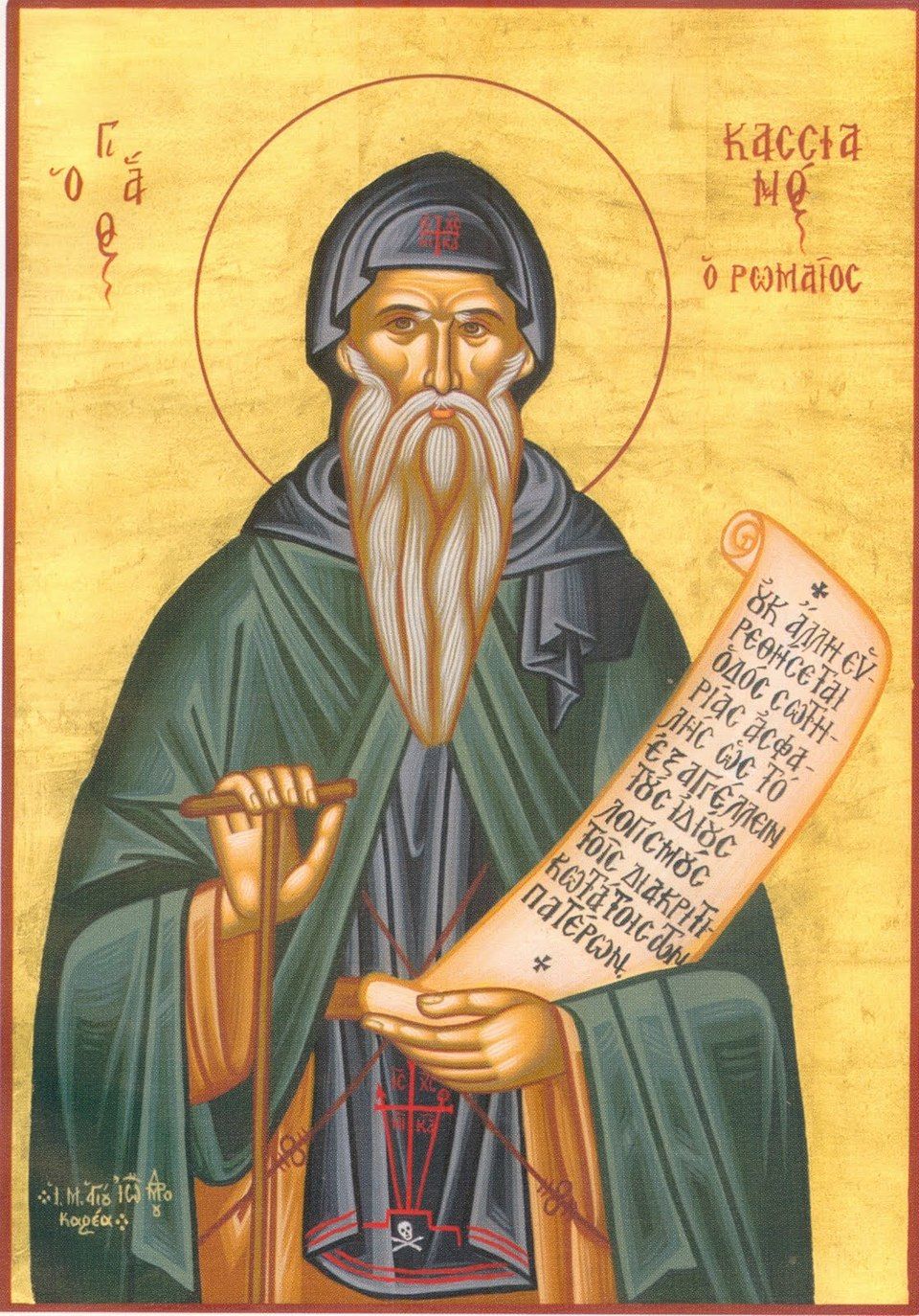
John Cassian - Monk, Theologian, and Founder of Western Monasticism
Saint John Cassian (c. 360-435) was a Christian theologian of the patristic period, monk of Marseilles, and a leading figure in the Semipelagian controversy. Founder of Western monasticism, he established the first monasteries that served as models for the development of medieval monastic life.
Life and Formation
John Cassian was born around the year 360, possibly in the Eastern Roman Empire, in the region of Scythia Minor (present-day Romania). While still young, he entered the monastery of Bethlehem in Palestine, where he spent a decade deepening his knowledge of monastic life.
Desiring to broaden his spiritual formation, Cassian traveled through Egypt, visiting various monasteries and receiving practical teachings from the Egyptian monks, who were recognized as masters of contemplative life. During this formative journey, he reached Constantinople, where he was ordained a deacon by John Chrysostom, the patriarch of the city, with whom he formed a deep friendship.
Ministry and Theological Work
When John Chrysostom was exiled in 404, Cassian was sent to Rome to plead his case before Pope Innocent I, carrying a letter that described the harsh persecutions taking place in Constantinople. This episode marks a crucial moment in his life, consolidating his importance in the early Church.
Later, Cassian settled in Marseilles, France, where he founded his own monastery in 410, following the Egyptian style he had learned. He created two monastic communities that became fundamental to the development of Western monasticism:
- Abbey of Saint Victor - male community, one of the earliest male monasteries in the West
- Monastery of Saint Savior - female community
Both monasteries served as an model for the development of the Western monastic period, consolidating Cassian as the founder of Western monasticism.
Theological Controversy
Cassian is recognized as the leading theologian of the Semipelagian controversy, one of the most important theological disputes of the patristic period. His theological position became the main focus of opposition to the monergistic theory defended by Saint Augustine, especially against the belief in divine predestination upheld by Augustine and his followers.
Works and Intellectual Legacy
Cassian's main works were:
- Institutes of the Cenobitic Life (also known as On the Institution of Monasticism) - a foundational treatise on communal monastic life
- Collationes Patrum (Conferences) - written between 426 and 428, compiling teachings of the Desert Fathers
- Spiritual Discourses
- On the Incarnation of the Lord Against Nestorius - a theological defense against Nestorian heresy
His works exerted a lasting influence on the formation of medieval monastic spirituality and continue to be studied as primary sources of early monasticism.
Death and Veneration
John Cassian died in 435, at about seventy-five years of age. His remains were laid in the Abbey of the Monastery of Saint Victor in Marseilles, where he remains venerated as a saint. He is recognized as one of the Desert Fathers and as a Scythian monk, titles that reflect his importance in both Eastern and Western Christian tradition.
"It is not the one who begins these things who is saved, but the one who continues in them to the end."
Birth
Date: c. 360
Place: Scythia Minor (present-day Romania), possibly in the Eastern Roman Empire
Death
Date: 435
Place: Marseilles, France
Liturgical Feast
July 23
Patronage
- Monks
- Monasteries
- Monastic life
Written Works
- Institutes of the Cenobitic Life - Foundational treatise on communal monastic life, establishing the rules and practices for life in monasteries
- Collationes Patrum (Conferences) (426-428) - Compilation of teachings and conversations with the Egyptian Desert Fathers, recording the spiritual wisdom of the early monks
- Spiritual Discourses - Collection of teachings on spiritual life and Christian asceticism
- On the Incarnation of the Lord Against Nestorius - Theological defense against Nestorian heresy, affirming the correct understanding of Christ's nature
Recommended Books
To deepen your knowledge of this person, we recommend:
- Institutes of the Cenobitic Life - John Cassian
Essential primary reading for understanding the origins of Western monasticism and Cassian's thought - Collationes Patrum - John Cassian
Foundational source for understanding the spirituality of the Desert Fathers and the transmission of monastic wisdom
Sources and References
This article was prepared based on the following sources:
- João Cassiano – Wikipédia (website)
Encyclopedia with complete biographical information, dates, places, and main works of John Cassian - Saint John Cassian - Heralds of the Gospel (website)
Hagiographic page with information about the life, works, and liturgical feast of Saint John Cassian - João Cassiano | Day by day with the Church Fathers (website)
Article about John Cassian as a Church Father, with information about his life, ordination, and main works - Grace and discretio in John Cassian's Collationes Patrum (426-428) (article)
Academic article analyzing the Collationes Patrum and its theological importance - Deia e Tiba Bookstore - John Cassian (website)
Author page with information about John Cassian's works