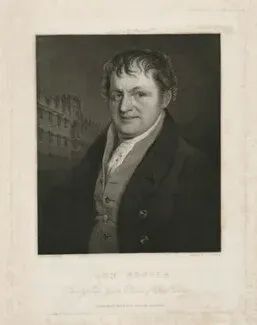
John Hooper - Reformer Bishop and Protestant Martyr (1495-1555)
John Hooper was an English Protestant bishop and leader of the Religious Reformation who refused to back down from his reformist convictions, even in the face of death. Burned at the stake during the reign of Mary I, he became a symbol of Protestant resistance in England.
Life and Education
John Hooper was born around 1495 in Somerset, England. He earned a Bachelor of Arts (B.A.) from the University of Oxford in 1519. During his academic and ministerial training, Hooper developed deeply reformist theological convictions, particularly influenced by the Swiss Protestant movement.
Hooper spent a significant period in Switzerland, where his Zwinglian convictions were confirmed through constant contact with Heinrich Bullinger, successor to Ulrich Zwingli. During this period, he published several works in Zurich that established him as an important defender of Swiss Protestantism against both Lutherans and Catholics.
Return to England and Ecclesiastical Rise
Hooper returned to England in May 1549, during the Protestant-friendly reign of the young King Edward VI. He quickly developed an exceptional reputation as a preacher of theological soundness and charismatic zeal. After delivering a series of Lenten sermons before the king in 1550, he was offered the position of Bishop of Gloucester.
Hooper initially refused the position, but it was a royal appointment, leaving him little choice but to accept. However, a significant problem arose: the Oath of the Bishop required invoking all the saints, not only God, and the enthronement required the use of episcopal vestments — practices Hooper fundamentally rejected. This disagreement caused a major conflict with the Privy Council, resulting in eight months of imprisonment. Arguing from scriptural reasoning, Hooper managed to persuade the young king to remove the offensive clause from the oath.
He was ordained Bishop of Gloucester on 8 March 1551. A year later, this office was expanded to include the Bishopric of Worcester. The See of Gloucester was reduced to an archdeaconry, beginning a period of two and a half years during which Hooper worked to reform old standards.
Ministry and Reform Work
Once established in his bishopric, Hooper devoted himself to his episcopal duties with exemplary vigor. He regularly visited Gloucester and Worcester, preaching in both places. Reports indicate that he preached three or four times a day.
His pastoral visitation revealed a condition of almost unbelievable ignorance among the clergy. Less than half of the clergy could recite the Ten Commandments; some could not even repeat the Lord's Prayer in English. To remedy this situation, Hooper:
- Prepared a document of fifty articles for clergy instruction
- Issued an extensive list of injunctions and interrogatories
- Conducted personal examinations of his clergy on their knowledge of the Ten Commandments, the Apostles' Creed, and the Lord's Prayer
- Followed the Zurich practice by appointing superintendents instead of rural deans and archdeacons
Hooper also gained a reputation for his severe censure of moral irregularities. When he cited Sir Anthony Kingston, a man of great power and influence, for adultery, Kingston became so enraged that he threatened to strike him. Unmoved, Hooper reported the case to the Privy Council in London, which fined Kingston 500 pounds. Ironically, on the day before his execution, Kingston visited Hooper, thanked him for reforming his morals, and urged him to recant to save his life.
Despite his severity, Hooper was loved in Gloucester. His generosity toward the poor was boundless. From 1551, he was a member of the committee of thirty-two tasked with reporting on ecclesiastical laws.
Persecution and Martyrdom
Hooper's ministry was interrupted by the death of King Edward VI and the accession of Mary I in 1553. The queen was determined to return England to Catholicism and eliminate Protestantism. His Zwinglian convictions placed him even further beyond the acceptable limits than other Protestant bishops.
Hooper was imprisoned and, during his incarceration in Newgate Prison, was visited by Bishop Bonner, the Catholic bishop of London, who pressed him to recant. Rumors were spread that he had recanted in order to damage his reputation, but Hooper denied this from his cell. He also refused to divorce his wife, which seemed to be a final demand.
Hooper was sentenced to death by burning at the stake on 29 January 1555 and was stripped of his bishoprics of Gloucester and Worcester. He arrived in Gloucester on 7 February 1555, where he was placed under guard. Sir Anthony Kingston, now the Queen's representative, visited him and begged him to recant in order to live. Hooper refused, stating that he would rather suffer a horrible death than deny the truth of God's word and endanger his eternal life.
On the day of his execution, 9 February 1555, Hooper was burned at the stake in view of Gloucester Cathedral, on the very grounds of the church he had pastored. He spent between 45 minutes and an hour in the flames. His last words were memorable:
"Lord Jesus, have mercy on me! Lord Jesus, receive my spirit!"
Hooper was the first of the bishops to suffer during the Marian persecution, becoming a lasting symbol of Protestant resistance and fidelity to reformist convictions.
Legacy
John Hooper is remembered as a Protestant martyr whose life exemplified dedication to the principles of the Reformation. His unwavering refusal to recant, even in the face of death, inspired generations of Protestants. Hooper is often cited as the "father of nonconformity" in the English Protestant tradition, having established standards of ecclesiastical discipline and reform that influenced the Anglican Church.
Birth
Date: c. 1495
Place: Somerset, England
Death
Date: 9 February 1555
Place: Gloucester, England
Liturgical Feast
9 February
Written Works
- Several works published in Zurich (c. 1549) - Hooper published several theological works during his time in Switzerland that established him as a defender of Swiss Protestantism
Recommended Books
To deepen your knowledge about this person, we recommend:
- Dictionary of National Biography, 1885-1900 - Various authors (1885-1900)
Fundamental historical source containing a detailed biography of John Hooper with documentation of his actions and martyrdom
Sources and References
This article was prepared based on the following sources:
- Bishop John Hooper: Cleric, Reformist, Martyr (Part 2) - Worcester Cathedral Library (website)
Detailed source on John Hooper's life, ordination, conflicts with the Privy Council, and martyrdom - John Hooper, Bishop of Gloucester and Worcester (1495? - 1555) - Luminarium (website)
Historical encyclopedia with information on his education, Zwinglian convictions, episcopal appointment, and execution - Dictionary of National Biography, 1885-1900/Hooper, John - Wikisource (website)
Fundamental historical source with details about his life, ministry, ecclesiastical discipline, and execution - Bishop John Hooper (1495-1555) - Find a Grave Memorial - Find a Grave (website)
Memorial record with information about his life, preaching, refusal to recant, and last words - The Life And Martyrdom Of John Hooper - The Baptist Particular (website)
Article on John Hooper's life, preaching, vestments controversies, and martyrdom - John Hooper - Truth Remains - Truth Remains (website)
Source with information on his consecration as bishop, reform of the clergy, and conflict with Sir Anthony Kingston - Biography of Bishop John Hooper 1495-1555 - All About History (website)
Biography with details about his life, family, ministry, and execution ordered by Queen Mary I