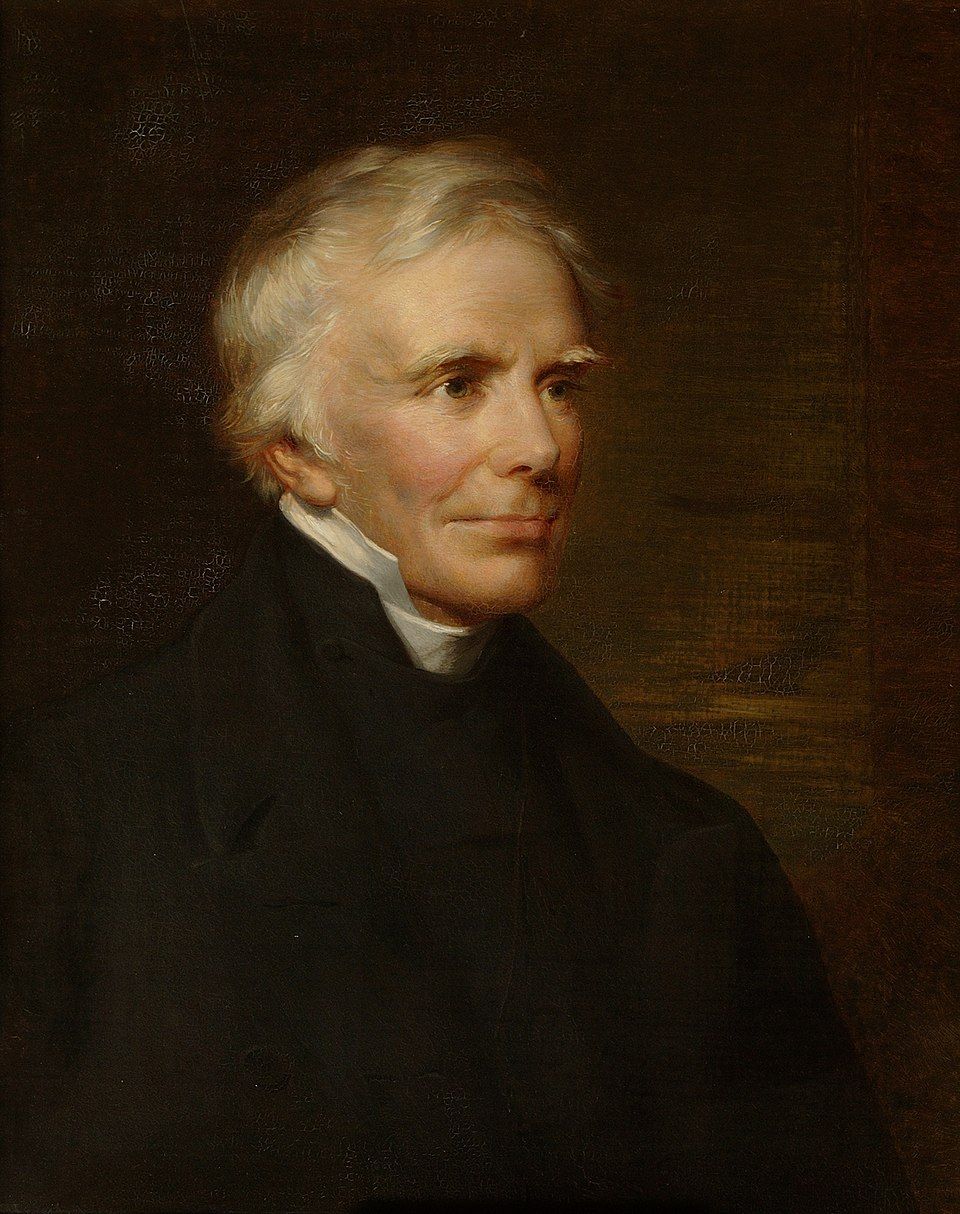
John Keble - Priest, Poet, and Reformer of the Anglican Church
John Keble (1792-1866) was an Anglican priest, poet, and British theologian who stood out as one of the main leaders of the Oxford Movement. His famous Assize Sermon on 'National Apostasy,' preached in 1833, marked the beginning of an important movement of religious renewal in the Anglican Church.
Life and Education
John Keble was born on 25 April 1792 in Fairford, Gloucestershire, England. Coming from a devout Anglican family, he received a solid education that prepared him for a distinguished academic and ecclesiastical career. While still studying at Oxford, he was ordained priest in 1816, beginning his ministry as his father's curate and later as curate of St Michael and St Martin's Church in Eastleach Martin, Gloucestershire.
After his mother's death in 1823, Keble left Oxford and returned to live with his father and two surviving sisters in Fairford. During this period, he consolidated his reputation as a poet and theologian, developing a theological vision that combined spiritual depth with poetic expression.
Academic and Literary Career
Keble served as tutor at Oxford from 1818 to 1823 and later as Professor of Poetry at the University of Oxford from 1831 to 1841. In 1827, he published his most celebrated work, The Christian Year: Thoughts in Verse for the Sundays and Holy-Days throughout the Year, a book of liturgical poems that achieved wide circulation and recognition. Many readers recognized in this work the voice of a spiritual prophet.
In addition to his original poetic compositions, Keble devoted himself to significant scholarly work. In 1836, he published an edition of the works of Richard Hooker, an important Anglican theologian. From 1838 onward, he worked with Edward Bouverie Pusey and John Henry Newman on the edition of the Library of the Fathers, an ambitious project to translate and comment on the writings of the Church Fathers.
The Oxford Movement and National Apostasy
The decisive moment in Keble's life came on 14 July 1833, when he preached the Assize Sermon titled National Apostasy at the University of Oxford. This sermon, addressed to judges and court officials, denounced the nation for turning away from God and for treating the Church as a mere social institution rather than recognizing it as God's prophetic voice commissioned to warn and instruct the people.
The sermon caused a sensation throughout the nation and is considered the starting point of the Tractarian Movement, also known as the Oxford Movement. This religious movement, named after a series of 90 tracts or pamphlets addressed to the public, sought to renew the Anglican Church through a recovery of its Catholic traditions and patristic theology.
Keble became one of the movement's three pillars, forming a triumvirate with Edward Bouverie Pusey and John Henry Newman. His spiritual influence was particularly profound; Newman regarded Keble as his spiritual director during his years as an Anglican, and he celebrated the 1833 sermon as the beginning of the religious movement.
Ministry in Hursley
From 1836 until his death in 1866 — a period of thirty years — Keble served as priest of the small parish of Hursley, near Winchester. During this time, he not only carried out his pastoral ministry with dedication, but also continued his intellectual and literary activities. He was responsible for the construction of a new church in Otterbourne, an adjacent parish.
In 1841, he collaborated with his neighbor Charlotte Mary Yonge in compiling The Child's Christian Year: Hymns for every Sunday and Holy-Day, for which he contributed four poems, including Bethlehem, above all cities blest.
Later Theological Works
In 1847, he published a volume of Academical and Occasional Sermons. In 1857, he wrote one of his most important works: a treatise on Eucharistical Adoration, written in support of George Denison, who had been attacked for his views on the Eucharist.
After his death, his Letters of Spiritual Counsel and twelve volumes of Parish Sermons were published, demonstrating the richness of his spiritual and intellectual legacy.
Legacy and Influence
John Keble's legacy transcended his time and denomination. The emphases of the Oxford Movement, particularly the insistence that it was normal practice for all Christians to receive the sacrament of Communion every Sunday, influenced many Christians who would never identify as Anglicans or Tractarians.
Keble College, Oxford, founded in 1870, perpetuates his memory and remains a prominent institution at the University of Oxford. The college represents the enduring recognition of Keble's importance to the intellectual and spiritual life of the university and the Anglican Church.
His unique combination of poetic talent, theological depth, genuine piety, and pastoral dedication established him as a central figure in nineteenth-century British religious history. The Oxford Movement, which he helped to begin, remains a significant force in contemporary Anglicanism.
Birth
Date: 25 April 1792
Place: Fairford, Gloucestershire, England
Death
Date: 29 March 1866
Place: Hursley, Hampshire, England
Liturgical Feast
29 March
Patronage
- Poets
- Theologians
- Anglican priests
- Religious reformers
Written Works
- The Christian Year: Thoughts in Verse for the Sundays and Holy-Days throughout the Year (1827) - Collection of liturgical poems that became his most famous and widely read work, recognized as a profound expression of Anglican spirituality
- Edition of Hooker's Works (1836) - Scholarly edition of the works of Richard Hooker, an important Anglican theologian
- Library of the Fathers (co-editor) (1838 (start)) - Collaborative project with Edward Bouverie Pusey and John Henry Newman to translate and comment on the Church Fathers
- Academical and Occasional Sermons (1847) - Volume containing academic and occasional sermons preached throughout his career
- Treatise on Eucharistical Adoration (1857) - Important theological work written in defense of George Denison's positions on the Eucharist
- Letters of Spiritual Counsel (Published posthumously) - Collection of letters offering spiritual guidance, published after his death
- Parish Sermons (Published posthumously (12 volumes)) - Collection of sermons preached during his ministry in Hursley
Recommended Books
To deepen your knowledge of this person, we recommend:
- John Keble: A Biography - Walter Lock (1893)
Classic and comprehensive biography of Keble, written by a scholar close to his era - The Oxford Movement and Its Leaders - Various authors (Various)
Studies on the Oxford Movement that contextualize Keble's importance as one of its three main pillars
Sources and References
This article was prepared based on the following sources:
- John Keble - Wikipedia (English) - Wikipedia contributors (website)
Comprehensive encyclopedic article on John Keble with biographical information, works, and legacy - John Keble - Satucket Lectionary - Satucket (website)
Page dedicated to John Keble with information about his life, works, and influence on the Oxford Movement - John Keble - Wikipedia (Spanish) - Wikipedia contributors (website)
Spanish-language article with basic biographical information about John Keble - The Friends of John Henry Newman, and an Old Blue Cloak - Revista Scripta Theologica (article)
Academic article on the relationship between John Keble and John Henry Newman in the context of the Oxford Movement - Theological of the Oxford Movement - Revista Theologica (article)
Academic article on the theological aspects of the Oxford Movement and Keble's role - Anglo-Catholicism and Ritualism in England - Royal Academy of Moral and Political Sciences (article)
Academic document on Anglo-Catholicism and ritualism in England, including discussion of Keble and his contemporaries - John Keble - Biography - Walter Lock (book)
Classic 1893 biography of John Keble, an important primary source for studies of his life and work