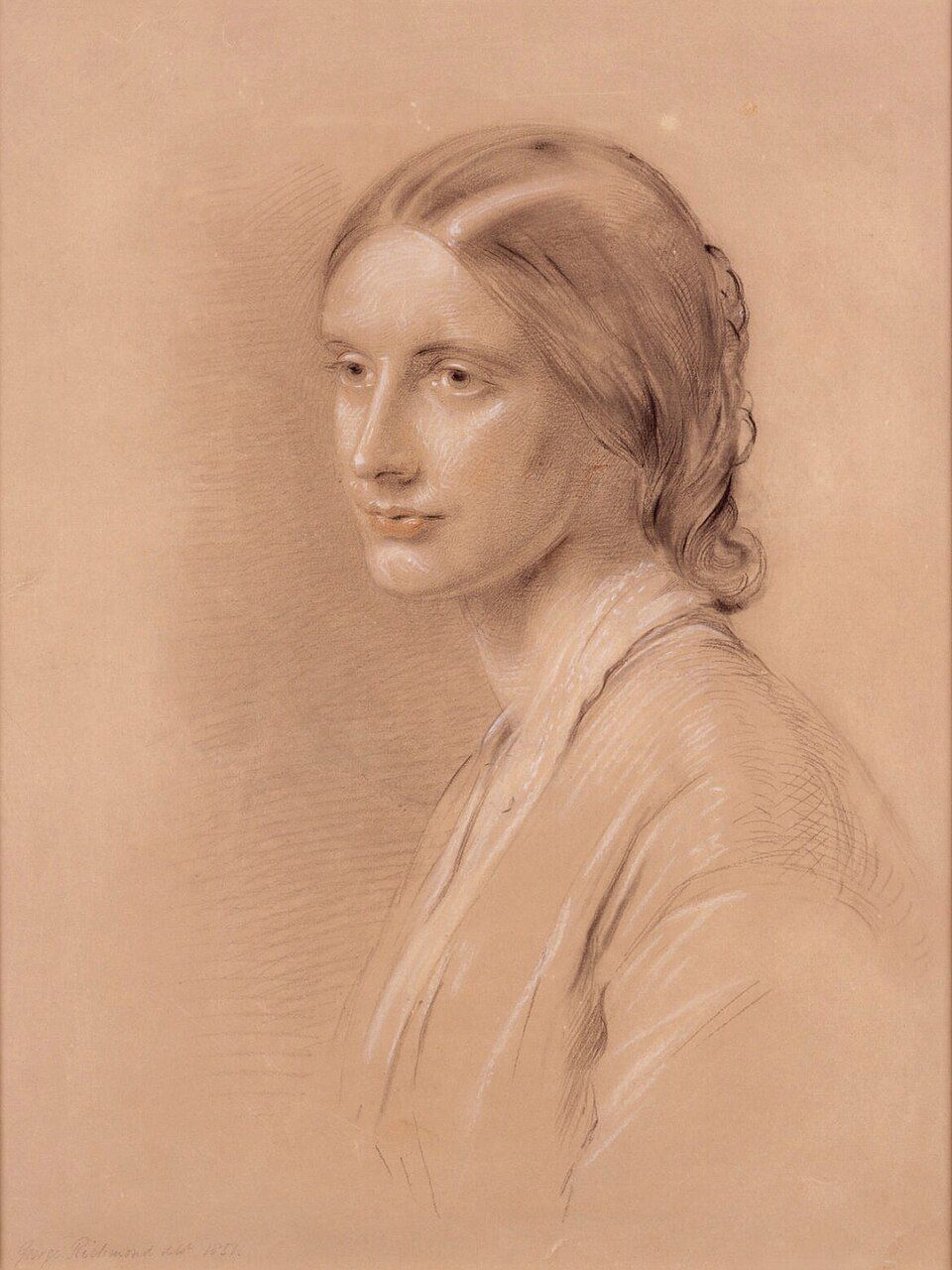
Josephine Butler - Social Reformer and Advocate for Women’s Rights in the Victorian Era
Josephine Butler (1828-1906) was an English feminist and Victorian social reformer who stood out for her fight against sexual exploitation, for the abolition of the trafficking of women and children, and for the successful campaign to repeal the Contagious Diseases Acts in 1886.
Life and Education
Josephine Elizabeth Butler was born on 13 April 1828 in Milfield Hill, Northumberland, England, as the seventh of nine surviving children of John Grey and Hannah Annett Grey. Her father, a Northumbrian farmer, treated all his children equally, while her mother instilled in her a strong Christian faith that would shape her entire life and work. Josephine was educated at home, where she studied English and Italian literature, as well as translations of classical works, which gave her a solid intellectual foundation for the time.
Her deep religious conviction and sense of social justice were fundamental to her path. Butler believed she was carrying out God’s will by dedicating herself to the cause of women marginalized by Victorian society.
Activism and Main Campaigns
The Campaign against the Contagious Diseases Acts
The major turning point in Josephine Butler’s life came in 1869, when she became involved in the campaign to repeal the Contagious Diseases Acts. These laws, implemented to control the spread of venereal diseases, particularly in the British Army and the Royal Navy, allowed the forced medical examination of women suspected of being prostitutes. Butler described this procedure as "surgical rape" or "steel rape", recognizing the violence and humiliation inflicted on women.
During her investigations into the effects of these laws, Butler was horrified to discover that some of the prostitutes were only 12 years old, and that there was a trade in enslaved women and children from England to the European continent for prostitution purposes. This discovery deepened her commitment to the cause.
Butler undertook an extraordinarily courageous campaign that lasted until 1886, when the laws were finally repealed. Her strategy included writing pamphlets and letters, parliamentary lobbying, petition gathering, and speeches throughout the country. Although she had a dedicated group of followers, the campaign aroused considerable hostility, putting her in physical danger. In 1872, in Pontefract, a barn where she was speaking was set on fire. Even so, she remained unwavering in her determination.
Fight against the International Trafficking of Women
Not satisfied with the domestic campaign, Butler extended her concerns to the European continent. She had important contacts in Europe, especially through her sister Hatty, who had married a Swiss banker based in Italy. From 1874 onward, she traveled regularly to the continent, especially to Paris, Geneva, and Brussels, where she inspected state-run brothels and challenged the activities of the police responsible for regulating prostitution.
In March 1875, Butler founded the British and Continental Federation for the Abolition of Prostitution (later renamed the International Abolitionist Federation - IAF), a European organization that fought similar systems on the continent. The federation was established in Liverpool and aimed to campaign against state regulation of prostitution and the "abolition of female slavery and the raising of public morality among men".
Her influence was significant: in Brussels, she succeeded in demonstrating that several underage English girls were being held involuntarily as prostitutes with police connivance. As a result, the chief of police and his deputy were dismissed. Through her influence, the laws of state regulation of vice were reformed in Switzerland, the Netherlands, Norway, France, and Italy to prevent the enslavement of prostitutes.
Other Social Reform Campaigns
Butler did not limit her activism to the issue of prostitution. She was a passionate advocate for women’s rights on multiple fronts:
- Campaign for women’s suffrage and women’s right to better education
- Fight to end coverture in British law, which gave husbands total control over wives’ property
- Work with the Married Women's Property Committee, alongside Elizabeth Wolstenholme, to reform matrimonial property laws
- Campaign to raise the age of consent for marriage from 13 to 16, protecting girls from exploitation
- Presidency of the North of England Council for the Higher Education of Women from 1866 onward, helping establish the first university-level lectures in northern England through the University Extension movement
- Campaigns for the rights of poor women, opposing restrictive labor laws
Butler differed from other social reformers of her time by insisting that prostitutes could be redeemed not through punishment, but through affection and the promise of paid work outside prostitution. This compassionate approach was revolutionary for the period.
Legacy and Influence
Josephine Butler died on 30 December 1906 in Wooler, Northumberland, leaving a profound legacy centered on compassion and social justice for women. Although her health declined in her later years, her dedication to the cause never wavered.
Butler was one of the leading British feminist figures of the nineteenth century, but she often went against the current of the mainstream feminist movement. While most feminist agitation of that era sought rights that primarily benefited middle- and upper-class women, Butler devoted herself to the problems of poor and marginalized women. Her insistence on recognizing the dignity and rehabilitation potential of prostitutes was virtually unique among her contemporaries.
Her conviction that she was carrying out God’s will sustained her through criticism and threats. Butler left a lasting legacy in the history of women’s rights, the fight against human trafficking, and the defense of the rights of marginalized populations.
Intellectual Contributions
In addition to her practical activism, Butler was a prolific writer. She published articles in newspapers, essays, and more substantial works promoting social reform, women’s education, and equality. Her best-known work, Personal Reminiscences of a Great Crusade, published in 1896, documented her experiences and reflections on her campaigns, serving as a historical testament to her struggle.
"There is much more exact correspondence between the natural and moral world than we usually notice."
Birth
Date: 13 April 1828
Place: Milfield Hill, Northumberland, England
Death
Date: 30 December 1906
Place: Wooler, Northumberland, England
Written Works
- Personal Reminiscences of a Great Crusade (1896) - Her most famous work, in which Butler documents her experiences and reflections on her campaigns for the abolition of prostitution and women’s rights
Recommended Books
To deepen your knowledge about this person, we recommend:
- Josephine Butler - Pioneer Worker Among Women - Not specified
Biography that explores her life as a pioneer in work for women’s rights
Sources and References
This article was compiled based on the following sources:
- Josephine Butler - Wikipedia - Wikipedia (website)
Comprehensive encyclopedic article on Josephine Butler with biographical information, main campaigns, and legacy - Josephine Butler (1828-1906) - Towards Emancipation? - University of North Carolina (website)
Detailed academic resource on Josephine Butler’s life and work, including historical context - Josephine Butler, Pioneer Worker Among Women - Anglican Church Resources (website)
Biography focused on her pioneering work among women and her impact on social reform - Josephine Butler | Research Starters - EBSCO - EBSCO (website)
Research summary on Josephine Butler as a Victorian social reformer and advocate for women’s rights - Josephine Butler biography - Josephine Butler Page (website)
Detailed biography with information about her campaigns, travels in Europe, and reform activities - Josephine Butler Bibliography - Wikipedia - Wikipedia (website)
Bibliographic reference on the works written by Josephine Butler - Josephine Butler Biography - Northumberland Archives - Northumberland Archives (website)
Archive biography with information about her life in Northumberland and main campaigns - Josephine Butler - Dangerous Women Project - Dangerous Women Project (website)
Profile of Josephine Butler as a woman who challenged the established social order