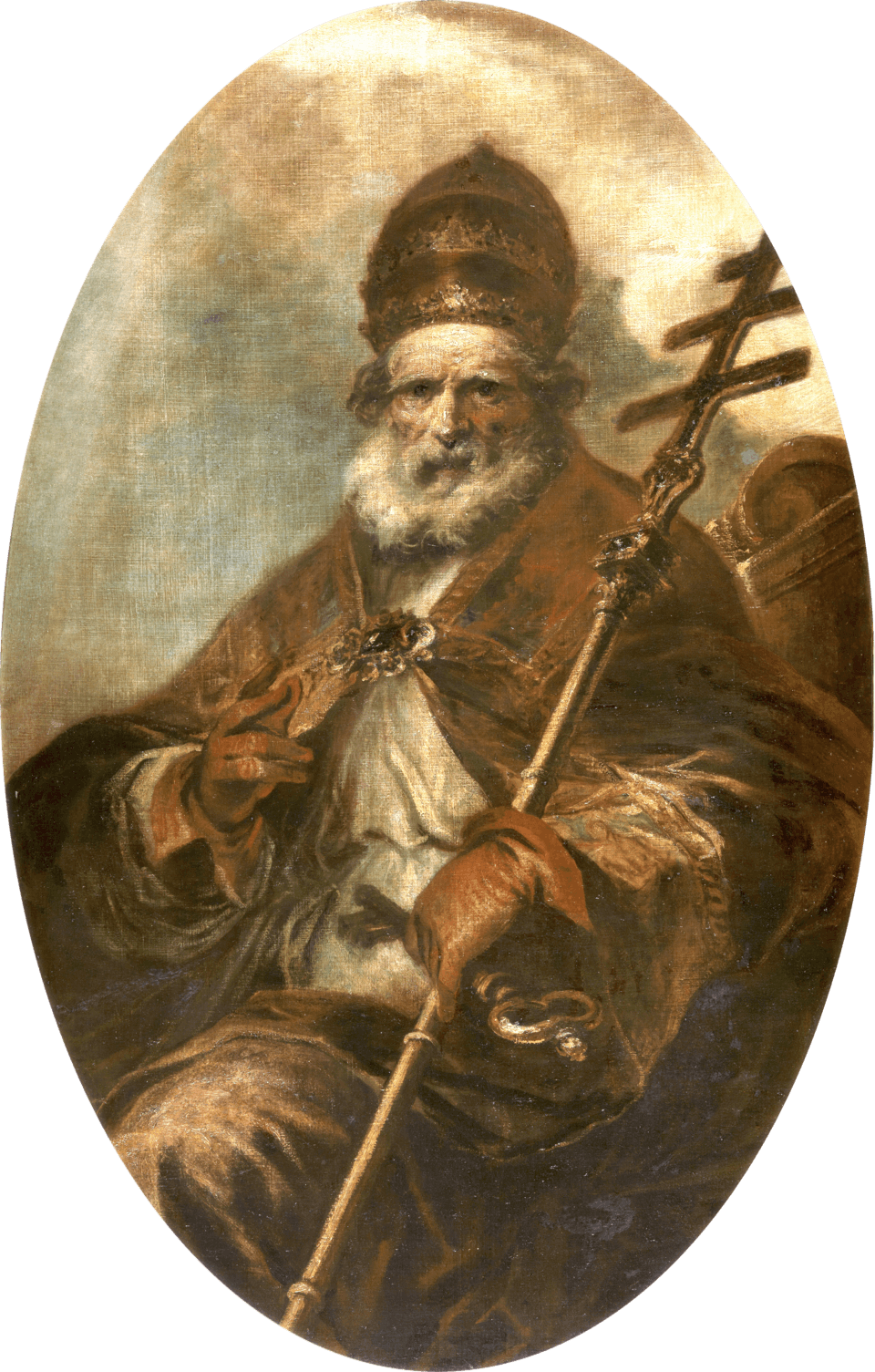
Leo the Great - Bishop of Rome and Teacher of the Faith in 461
<p><strong>Leo the Great</strong> (c. 400-461) was the 45th Pope of the Catholic Church, the first to receive the title of 'the Great' and Doctor of the Church. He stood out for defending the orthodox faith at the Council of Chalcedon, for the diplomacy that stopped barbarian invasions in Rome, and for asserting Petrine primacy.</p>
Life and Formation
Born around the year 400 in Tuscany, a region near Rome, Leo I showed a remarkable ecclesiastical vocation from a young age. Ordained a priest early, he quickly rose in the hierarchy of the Roman Church, becoming archdeacon around 430. In this position, he served as a close adviser to the popes Celestine I and Sixtus III, gaining a reputation as a man of great wisdom and diplomacy[1][2][3][4].
In 440, even before his papal election, Leo was sent by the empress Placidia to Gaul to mediate a conflict between the general Aetius and the praetorian prefect Albinus, demonstrating his skill in political and ecclesiastical negotiations[1][2].
Election and Pontificate
The death of Sixtus III paved the way for his election as the 45th Pope, with consecration on 29 September 440. His pontificate, which lasted 21 years, was marked by historic firsts: the first Bishop of Rome named Leo, the first successor of Peter nicknamed 'the Great', and, centuries later, one of the two popes (along with Gregory the Great) proclaimed Doctor of the Church by Benedict XIV in 1754[1][4][7].
Defense of the Faith and Councils
Leo devoted himself intensely to doctrinal orthodoxy. He inspired the Council of Chalcedon (451), which affirmed the union of the two natures of Christ - divine and human - while combating the heresy of Eutyches, who denied the humanity of the Son of God. His epistles, such as the Tomus ad Flavianum, were essential to this definition[2][4][5]. He also reinforced Petrine primacy, based on Matthew 16:16-19, and obtained from Emperor Valentinian III the decree of 6 June 445, recognizing the supreme authority of the Bishop of Rome[4].
Diplomacy and Protection of Rome
Amid the collapse of the Western Roman Empire, Leo exercised extraordinary political leadership. In 452, he met Attila the Hun near Mantua, convincing him to withdraw from Rome - an achievement immortalized in legends with the ظهور of the apostles Peter and Paul[1][3][4]. Three years later, in 455, he negotiated with the Vandal king Genseric, preventing the city from being burned; Rome was sacked, but basilicas such as St. Peter's, St. Paul's, and St. John Lateran were spared, serving as refuge for the population[2].
'Leo's moral, spiritual, and diplomatic strength convinced Attila not to invade Rome.'His action extended to Gaul, Hispania, and Africa, sending instructions to bishops to combat heresies such as Donatism and Eutychianism, promoting unity and ecclesiastical discipline[3][5].
Liturgical and Spiritual Legacy
Leo consolidated the Roman liturgy and strengthened Rome's universal jurisdiction. He left 96 sermons and epistles that emphasized Peter's primacy as the foundation of the Church. After his death on 10 November 461, he was buried in the Vatican Basilica, the first pope to be interred there. Canonized immediately, his title of Doctor of the Church reflects his masterful preaching[1][4][6].
His life exemplifies courage in times of crisis, uniting theology, pastoral care, and diplomacy to safeguard the Christian faith in the West[5].
Birth
Date: c. 400
Place: Tuscany, Italy
Death
Date: 10 November 461
Place: Rome, Italy
Liturgical Feast
10 November
Patronage
- Catholic Church
- Rome
Written Works
- Tomus ad Flavianum (449) - Key doctrinal epistle that defined Christological orthodoxy at the Council of Chalcedon.
- Sermons and Epistles (440-461) - Collection of 96 sermons and letters defending Petrine primacy and combating heresies.
Recommended Books
To deepen your knowledge about this person, we recommend:
- Lives of the Popes - Book of the Popes (ancient tradition)
Primary historical record on the pontificate of Leo I, including the exact length of his reign.
Sources and References
This article was prepared based on the following sources:
- St. Leo the Great, pope and doctor of the Church - Vatican News (website)
Official Vatican biography on the life, election, and diplomatic achievements of Leo the Great. - Saint Leo the Great, the 45th Pope of the Catholic Church - Canção Nova (website)
Details on his origins, negotiations with the Vandals, and role in the Council of Chalcedon. - Pope Leo I - Wikipédia (website)
Encyclopedia with verified chronological, theological, and political data. - Saint Leo the Great, Pope and Doctor of the Church - Arautos do Evangelho (website)
Focus on priestly formation and combating heresies. - Saint Leo the Great: Guardian of the Faith and Doctor of Unity - Caminho de Fé (website)
Analysis of theological legacy and missionary actions.