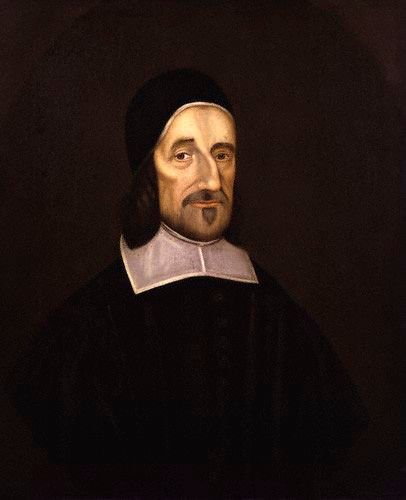
Richard Baxter - Pastor, Writer, and Peacemaker of the Faith in the 17th Century
Richard Baxter (1615-1691) was an English Puritan minister who stood out as a peacemaker among Protestant factions, transformed the parish of Kidderminster into a model of pastoral ministry, and left a legacy of more than 200 theological and devotional works that influenced 17th-century English Protestantism.
Life and Education
Richard Baxter was born on November 12, 1615 in Rowton, Shropshire, England, the son of Richard and Beatrice Baxter. Unlike many clergymen of his time, he received a predominantly informal education, studying at Wroxeter Grammar School under the guidance of the schoolmaster John Owen, who became his mentor. Under Owen’s persuasion, Baxter did not attend university, continuing his formation through private study and dedicated reading.
His life was deeply marked by the turbulent events of his generation—ecclesiastical, theological, and political conflicts that shook Great Britain during the 17th century. In 1638, he was ordained to the priesthood by the Church of England, being ordained by the Bishop of Worcester, John Thornborough. After a brief period as a schoolmaster in Dudley, he became an assistant minister in Bridgnorth, Shropshire, before his transformative move to Kidderminster in 1641.
Ministry and Pastoral Work
The Ministry in Kidderminster (1641-1660)
The most fruitful and significant period of Baxter’s life was his approximately 17-year ministry in the parish of Kidderminster, Worcestershire (1641-1660, with interruption by the English Civil War). Kidderminster was a town of handloom weavers, with a population of about 2,000 people, initially described as "a very ignorant, dead-hearted people".
Baxter implemented a revolutionary method of pastoral ministry that combined powerful preaching with intensive pastoral counseling. His approach included:
- Systematic house-to-house visitation to speak with each person about their faith and sins
- Catechesis and personal discipleship
- Regular pastoral counseling with all parish members
- Consistent preaching of the doctrine of complete trust in God and daily Christian obedience
The transformation was extraordinary. Virtually the entire town was converted, with most people having not previously sought the Christian faith. The change was so dramatic that visitors walking through the streets on Sundays could hear psalm singing and sermon rehearsals echoing from countless homes. The church had to be enlarged multiple times—some accounts indicate up to five expansions—to accommodate the crowds who came to hear him preach.
This ministry in Kidderminster became a model for many other ministers of the Church of England and formed the basis of his classic work The Reformed Pastor.
Involvement in the English Civil War
During the English Civil War, Baxter briefly served as chaplain to the Parliamentary Army under Cromwell. Although he initially supported the parliamentary cause, he actively worked to bring about the restoration of the monarchy in 1660, demonstrating his consistent role as a peacemaker among factions.
Ministry in London and Persecution (1660-1688)
After leaving Kidderminster in 1661, Baxter moved to London, where he preached in several churches, including St. Bride's, Milk Street, and Blackfriars. However, his life took a more difficult turn after the Restoration.
In 1662, while maintaining a nonconformist position, Baxter refused to conform to the Act of Uniformity 1662 and left the Church of England on May 25, 1662, before the law was fully enforced. This marked the beginning of a period of persecution that would last more than 20 years.
In 1669, Baxter was accused of preaching illegally, resulting in his imprisonment for six months in Clerkenwell. After his release, he received a license in 1672 through the Royal Declaration of Indulgence for nonconformists, which allowed him some freedom in ministry. Despite this, he continued to suffer persecution and the seizure of his property.
In 1685-1686, he was again imprisoned for 18 months during the reign of James II. The Glorious Revolution of 1688-1689, which replaced James II with William and Mary, brought the Toleration Act, which finally freed Baxter from most of the persecutions he had suffered for his views.
Intellectual Legacy and Works
Literary Output
Despite political difficulties and persecution, Baxter was a prolific author. He produced more than 200 works that include devotional manuals, pastoral guides, and highly controversial theological writings. His best-known works are:
- The Saints' Everlasting Rest (1650) - Written during a long and severe illness when death seemed imminent, this work exhorts Christians to contemplate eternal heavenly rest as a way of life, keeping the focus on the new heavens and new earth.
- The Reformed Pastor (1656) - A pastoral manual that became one of the most popular devotional books for generations, based on his experience in Kidderminster.
- Aphorismes of Justification (1649) - A controversial theological work on justification.
- Reliquiae Baxterianae (1696) - His autobiography, published after his death and edited by another, titled Mr. Richard Baxter's Narrative of the Most Memorable Passages of His Life and Times. This work remains of historical interest and offers an account of his inner spiritual struggles.
Theological Influence
Baxter is known for his position of Modified Amyraldianism, a political theological marker, and for his willingness to accommodate different theological viewpoints. His prominence came through various theological issues raised against him, including nonconformity and his pursuit of unity among conflicting Protestant denominations.
Although circumstances placed him at the center of nearly every major controversy in England in his turbulent time, Baxter saw his true vocation as parish ministry. He summed up his ministry poetically as "Dying Man to Dying Men"—an expression of his conviction that pastoral ministry was about bringing the message of salvation and eternal hope to people facing mortality.
Death and Commemoration
Richard Baxter died on December 8, 1691 in London, at the age of 76. He is commemorated liturgically on June 15. His legacy as a model pastor, prolific theological writer, and peacemaker among Protestant factions continues to influence Protestant Christianity to this day.
Pastors and Christian leaders still study his writings and follow his example of thoroughness and urgency in proclaiming and applying the gospel. His life demonstrates the transformative power of a dedicated pastoral ministry, committed to personal visitation, discipleship, and genuine pastoral counseling.
Birth
Date: November 12, 1615
Place: Rowton, Shropshire, England
Death
Date: December 8, 1691
Place: London, England
Liturgical Feast
June 15
Written Works
- The Saints' Everlasting Rest (1650) - Devotional work written during a severe illness, exhorting Christians to contemplate eternal heavenly rest as a way of life
- The Reformed Pastor (1656) - Pastoral manual based on his experience in Kidderminster, which became one of the most popular devotional books for generations
- Aphorismes of Justification (1649) - Controversial theological work on justification
- Reliquiae Baxterianae (1696) - Posthumously published autobiography, an account of his inner spiritual struggles and memorable passages of his life
Recommended Books
To deepen your knowledge about this person, we recommend:
- The Reformed Pastor - Richard Baxter (1656)
Essential work for understanding Baxter's pastoral philosophy and his transformative impact in Kidderminster - The Saints' Everlasting Rest - Richard Baxter (1650)
Classic devotional work offering insight into Baxter's spirituality and theology during a time of suffering - Reliquiae Baxterianae - Richard Baxter (1696)
Autobiography that provides historical and personal context about Baxter's life during a turbulent period in English history
Sources and References
This article was prepared based on the following sources:
- Biography: Richard Baxter, pastor and writer (website)
Biography of Richard Baxter with information about his life, ministry, and major works - Richard Baxter | Puritanism, Nonconformity, Clergyman | Britannica - Encyclopaedia Britannica (website)
Comprehensive encyclopedia article about Richard Baxter, his life, ministry, and influence on English Protestantism - Richard Baxter Born to Preach and Write | It Happened Today - Christian History Institute (website)
Article about Richard Baxter's birth and calling to ministry - A Biography of Richard Baxter (1615-1691) - John Paul Arceno (website)
Detailed biography of Richard Baxter covering his ministry, persecution, and legacy - Richard Baxter Author Biography - Banner of Truth - Banner of Truth (website)
Biography of Richard Baxter focusing on his pastoral transformation in Kidderminster - Richard Baxter: 400 Years Later, Still a Model Pastor - The Gospel Coalition (website)
Article analyzing Richard Baxter's legacy as a pastoral model for later generations - The Puritans: Richard Baxter - Tim Challies (website)
Analysis of Richard Baxter in the context of the English Puritan movement