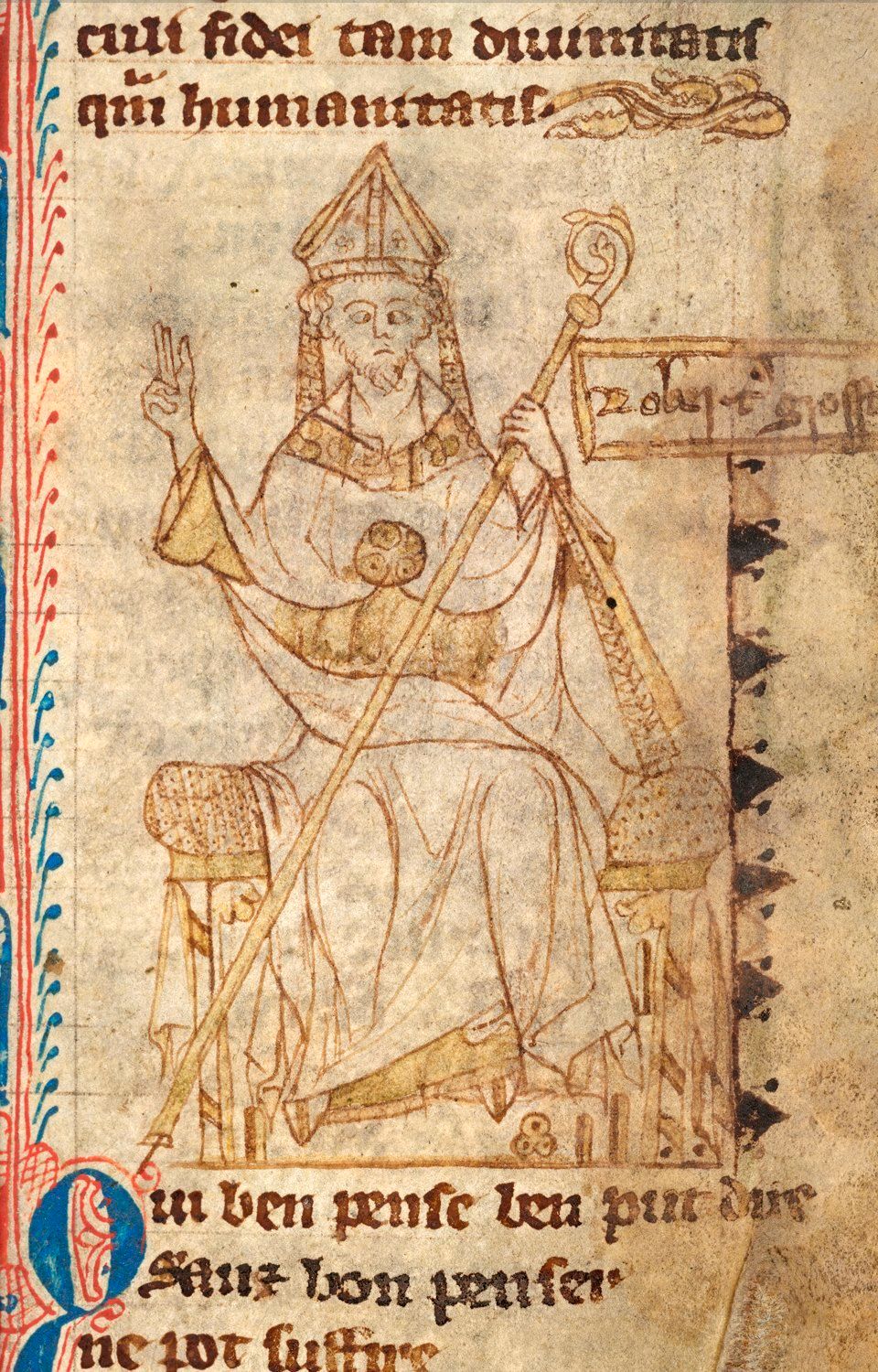
Robert Grosseteste - Bishop of Lincoln, Medieval Scholar and Scientist
Robert Grosseteste was an English bishop, philosopher, theologian, and pioneering scientist who served as Bishop of Lincoln from 1235 until his death in 1253. Known for introducing Latin translations of Greek and Arabic texts to Christian Europe, he championed scientific experimentation and challenged secular and ecclesiastical authorities in pursuit of Church reform.
Life and Education
Robert Grosseteste was born around 1175 in Suffolk, England, possibly in Stradbroke, to a humble family. His modest background was often mentioned, including by himself, as he described himself as born of poor parents.[1][5]
Educated at the University of Oxford, where he became chancellor around 1215 to 1221, Grosseteste stood out as a versatile scholar. He studied and taught theology, philosophy, mathematics, optics, and astronomy, profoundly influencing the Franciscans as the first lecturer in theology for the order from 1229 to 1235.[1][2][6]
Early Academic Career
During this period, he wrote commentaries on works by Aristotle, such as Posterior Analytics and Physics, as well as independent scientific treatises and biblical commentaries. Grosseteste emphasized experimentation to verify theories, using mirrors and lenses in optical studies, and advocated a rational view of the natural and divine world, blending Aristotelian and Neoplatonic ideas.[1][2]
Episcopal Ministry
In 1235, after the death of Hugh de Wells, Grosseteste was elected bishop of Lincoln, the most populous diocese in England, and consecrated in June 1236 at Reading Abbey by Saint Edmund Rich, Archbishop of Canterbury.[5][6] He remained in office until his death, exercising strict administration.
As bishop, he prioritized the care of souls, visited monasteries, deposed seven abbots and four priors in his first year, and built the existing nave of Lincoln Cathedral. He faced conflicts with the Lincoln chapter over visitation rights, with King Henry III over royal policies, and with the papacy over the appointment of papal relatives to ecclesiastical benefices.[3][4][5]
Conflicts and Defenses
He took part in the Council of Lyon in 1245 and addressed the papal curia in 1250, criticizing abuses. In 1253, he refused to provide for a papal nephew in his diocese, declaring:
"By filial reverence and obedience, I disobey, resist, and rebel"against orders destructive to the Church.[1][5][6] Despite criticism of the pope, he was never canonized.[3]
- He challenged pluralism and corruption in ecclesiastical benefices.
- He defended a centralized ecclesiastical hierarchy and the superiority of the Church over the state.
- He witnessed the confirmation of the Magna Carta in 1236.
Scientific and Theological Legacy
Grosseteste translated philosophical and scientific works from Greek and Arabic, such as Aristotle's Nicomachean Ethics, introducing them to the Christian European world. His work in geometry, optics, and astronomy anticipated modern experimental methods, and his cosmology of primordial light is seen as a precursor to theories such as the Big Bang.[1][2][9]
He died on 9 October 1253, at about 78 years of age, in Buckden, and was buried in Lincoln Cathedral. His tomb remains in a memorial chapel. A multifaceted scholar, Grosseteste united faith and reason, leaving a lasting impact on medieval science and ecclesiastical reform.[6][7]
Birth
Date: c. 1175
Place: Suffolk, England (possibly Stradbroke)
Death
Date: 9 October 1253
Place: Buckden, Buckinghamshire, England
Writings
- Commentary on Aristotle's Posterior Analytics (c. 1229-1235) - Philosophical commentary emphasizing experimental verification.
- Commentary on Aristotle's Physics (Pre-1235) - Treatise on natural physics and scientific principles.
- Translation of Aristotle's Nicomachean Ethics (During episcopate (1235-1253)) - Direct translation from Greek into Latin.
Recommended Books
To deepen your knowledge about this person, we recommend:
- Robert Grosseteste - Encyclopaedia Britannica
Authoritative encyclopedia article covering life, works, and legacy.
Sources and References
This article was prepared based on the following sources:
- Robert Grosseteste | Medieval Scholar, Philosopher, Scientist - Encyclopaedia Britannica (website)
Detailed biography focusing on academic contributions and the episcopate. - Robert Grosseteste - Biography - MacTutor History of Mathematics (website)
Emphasis on mathematical and scientific contributions. - Catholic Encyclopedia: Robert Grosseteste - New Advent (website)
Catholic perspective on life and ecclesiastical conflicts. - Robert Grosseteste - Wikipedia - Wikipedia (website)
Comprehensive summary with historical references. - Dictionary of National Biography, 1885-1900/Grosseteste, Robert (website)
Classic nineteenth-century biographical entry.