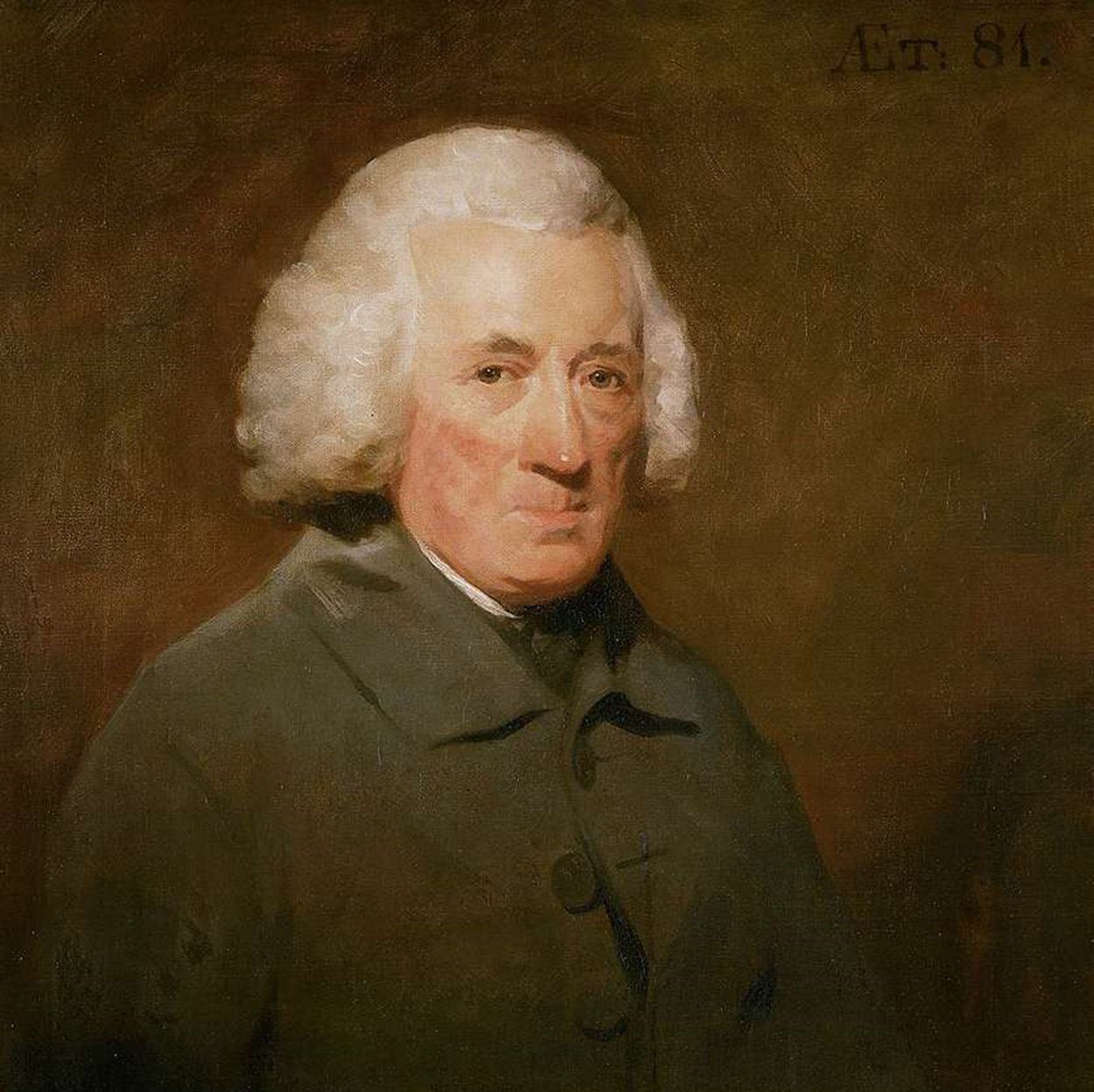
William Law - Priest and Master of the Faith in 1761
William Law (1686-1761) was an English Anglican priest, mystical author, and theologian whose work profoundly influenced the Evangelical revival, including John Wesley and Samuel Johnson. Known for his refusal to swear allegiance to King George I, he devoted himself to spiritual writing and charitable works until his death in 1761.
Early Life and Education
William Law was born in 1686 in Kings Cliffe, a village in Northamptonshire, England, the son of Thomas Law, a grocer, and his wife Margaret Farmery. He was the fourth of eleven children in a modest family. In 1705, he entered Emmanuel College at the University of Cambridge as a sizar, studying classics, Hebrew, philosophy, and mathematics. He graduated Bachelor of Arts in 1708 and Master of Arts in 1712.
In 1711, he was ordained a priest in the Anglican Church and elected a fellow of his college, beginning a promising academic and ministerial career.
Political Conflict and Refusal of the Oath
Law's life changed drastically with the accession of George I in 1714. Loyal to the House of Stuart, he refused to swear allegiance to the new Hanoverian monarch, becoming a second-generation non-juror. This resulted in the loss of his position at Cambridge. For a few years, he served as a curate in London, but without the oath, his ministerial options were limited.
In 1727, he became tutor to the young Edward Gibbon (father of the famous historian) in the household of Edward Gibbon, the elder, in Putney. There, he earned the family's esteem as a spiritual friend and guide. The arrangement lasted until 1737.
Life in Kings Cliffe and Works of Charity
When he inherited a house and small estate from his father in Kings Cliffe around 1740, Law returned to his native village. He was joined by Elizabeth Hutcheson, the wealthy widow of a friend, and Hester Gibbon, his former pupil's sister. The trio devoted themselves to prayer, study, and charity for the next 21 years. Law founded local schools and charitable homes, helping the poor with support from Gibbon's father.
- Daily practice of devotion and ascetic meditation.
- Mystical influence from Thomas à Kempis, Jan van Ruusbroec, and later Jacob Boehme.
- He emphasized glorifying God in all ordinary virtues.
Writings and Spiritual Influence
As a prolific writer, Law opposed deism in essays such as The Case of Reason. His masterpiece, A Serious Call to a Devout and Holy Life (1728), called Christians to practical holiness, influencing John Wesley, Charles Wesley, William Wilberforce, and Samuel Johnson. Later, The Spirit of Love (1752-1754) explored mystical themes.
"The virtues of everyday life must be directed toward the glorification of God."
His ascetic and mystical spirituality marked the English Evangelical revival, even though he was not an evangelical in the strict sense. Law died peacefully on 9 April 1761, at the age of 75, in his home in Kings Cliffe.
Lasting Legacy
The legacy of William Law endures in his defense of authentic devotion against Enlightenment rationalism. His books continue to be published, inspiring generations in the pursuit of a living and holy faith. His personal integrity and theological writings make him an 18th-century master of the faith.
Birth
Date: 1686
Place: Kings Cliffe, Northamptonshire, England
Death
Date: 9 April 1761
Place: Kings Cliffe, Northamptonshire, England
Written Works
- A Serious Call to a Devout and Holy Life (1728) - A call to a devout and holy life, influenced by medieval mystics, emphasizing daily devotion to glorify God.
- The Case of Reason - An essay against the emerging deism of his time.
- The Spirit of Love (1752-1754) - A work on the spirit of love, reflecting spiritual concerns and the influence of Jacob Boehme.
Recommended Books
To deepen your knowledge of this person, we recommend:
- An Appeal to a Life of Devotion and Holiness - William Law
Modern edition of his principal work, recommended for recovering classical wisdom for contemporary readers.
Sources and References
This article was prepared based on the following sources:
- CLIE.es - Author William Law (website)
Detailed biography in Spanish on his life, ordination, refusal of the oath, and main works. - Wikipedia - William Law (website)
English encyclopedia entry with precise dates, education, tutoring, and death in 1761. - Dictionary of National Biography - William Law (website)
Detailed historical biography from 1885-1900, with family, studies, and connections with Gibbon. - Plough Publishing - William Law (website)
Summary of influences on Wilberforce and Wesley.