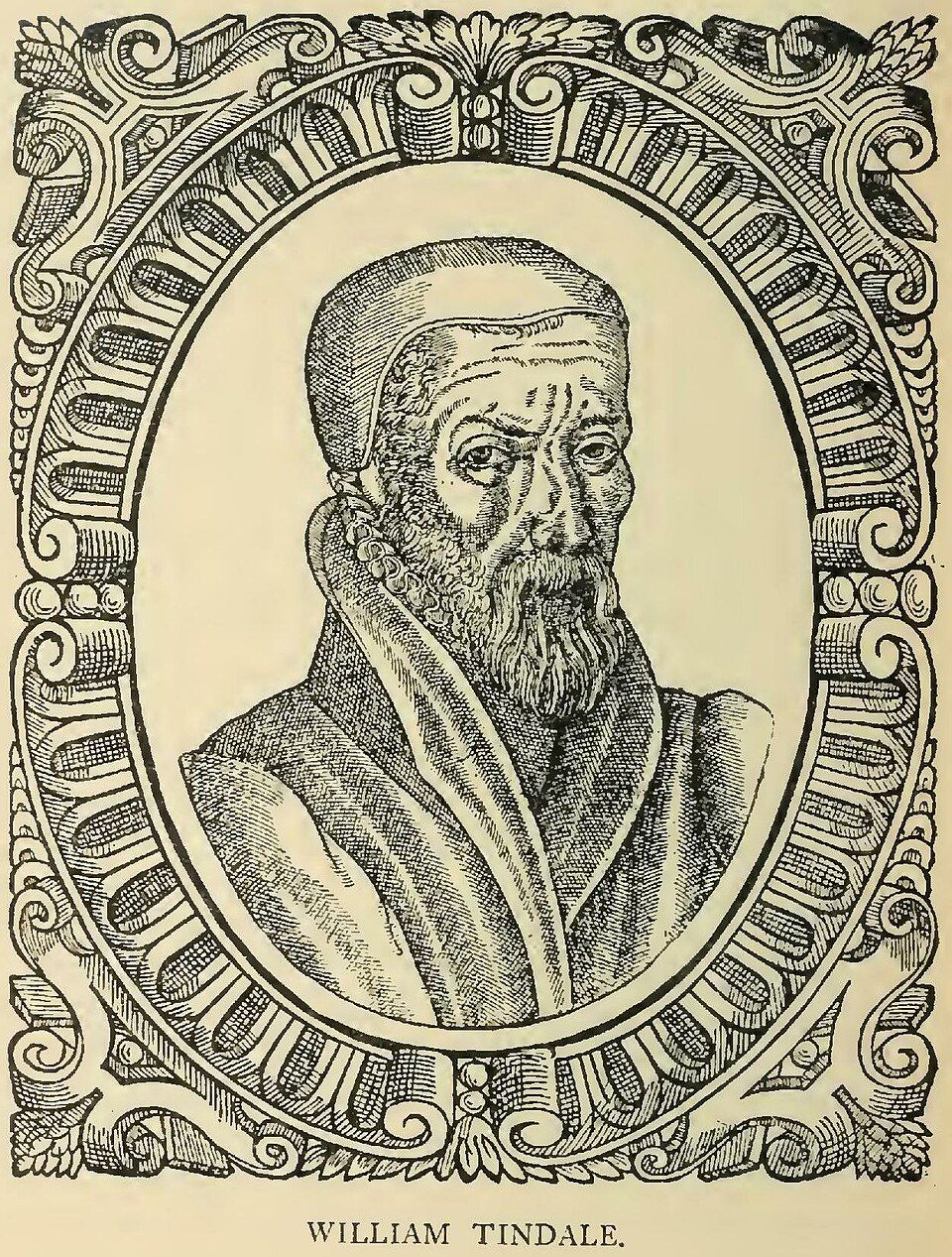
William Tyndale - Martyr of the Faith in the 16th Century
William Tyndale was an English scholar and translator of the Bible into early Modern English, becoming a central figure in the Protestant Reformation. Despite persecution, his work profoundly influenced the King James Bible and the spread of Scripture in the vernacular.
Life and Education
William Tyndale, born around 1484 in Gloucestershire, England, was an English scholar and priest who earned a Master of Arts degree at the University of Oxford. Influenced by Renaissance humanism and the works of Erasmus of Rotterdam and Martin Luther, Tyndale devoted his life to translating the Bible directly from the original languages into English, with the dream that "the plowman would sing a passage of Scripture at his plow and the weaver would hum it to the sound of his shuttle".
During his studies, Tyndale began to defend reformist theses, considered heretical by the Catholic Church. At the age of 30, he vowed to translate the Scriptures so that all people, from peasants to nobles, could understand them in their mother tongue.
Ministry and Work
In 1523, Tyndale tried to obtain permission from the English ecclesiastical authorities to translate the Bible, but was denied. A clergyman replied: "It is better to be without God's laws than without the pope". Determined, he went to Germany in 1524, with support from wealthy London merchants. There, he completed the translation of the New Testament in 1525, directly from Greek, consulting Erasmus's editions and Luther's German translation.
He worked in cities such as Hamburg, Wittenberg (where he possibly met Luther), and Cologne. Despite the persecution, more than 6,000 copies of his New Testament circulated. In 1530, he published the Pentateuch in Marburg and wrote The Practyse of Prelates, opposing the annulment of Henry VIII's marriage to Catherine of Aragon, which made him an enemy of the Crown and the Church.
In The Obedience of a Christian Man (1528), he defended caesaropapism, influencing Henry VIII in the break with Rome. He fled to the Low Countries, under Emperor Charles V.
Death and Martyrdom
In 1535, betrayed by a false friend, Tyndale was arrested in the castle of Vilvoorde, near Brussels. After more than a year in prison, he was condemned for heresy. On October 6, 1536, strangled and burned at the stake, his last words were a fervent prayer: "Lord, open the King of England's eyes."
Legacy
Tyndale's work revolutionized biblical English, influencing 80-90% of the King James Bible of 1611. His 18,000 printed copies democratized access to the Scriptures, driving the Reformation in the English-speaking world. In 2002, he was voted the 26th greatest Briton by the BBC. His courage as an martyr of the faith inspired generations.
- The first complete translation of the New Testament into modern English.
- A balance of scholarship, simplicity, and literary grace.
- A foundation for future Bible versions for nearly 400 years.
"I wish God that the plowman might sing a passage of Scripture at his plow." – William Tyndale
Birth
Date: c. 1484
Place: Gloucestershire, England
Death
Date: October 6, 1536
Place: Vilvoorde, near Brussels, Seventeen Provinces
Written Works
- New Testament (English translation) (1525) - The first complete translation of the New Testament directly from Greek into early Modern English.
- The Obedience of a Christian Man (1528) - Defense of caesaropapism and influence on Henry VIII's break with Rome.
- The Practyse of Prelates (1530) - Opposition to Henry VIII's annulment of marriage, based on Scripture.
- Pentateuch (translation) (1530) - Translation of the first five books of the Old Testament.
Recommended Books
To deepen your knowledge about this person, we recommend:
- William Tyndale - The Father of the English Bible - Unknown
Detailed biography about his life and martyrdom, highlighting his dedication to Bible translation.
Sources and References
This article was prepared based on the following sources:
- William Tyndale – Wikipédia, a enciclopédia livre (website)
Complete biography with dates, works, and historical context of the Reformation. - William Tyndale - Wikipedia (website)
Details about works such as The Obedience of a Christian Man and opposition to Henry VIII. - William Tyndale | Biography, Bible, Death, & Facts - Britannica - Britannica Editors (website)
Verified facts about birth, translations, and execution, with emphasis on linguistic legacy. - William Tyndale – A Story Every Christian Should Know (website)
Narrative about education, promise of translation, and martyrdom. - 1 - William Tyndale - The Father of the English Bible (1490-1536) (document)
Famous quote and details about persecution and execution.